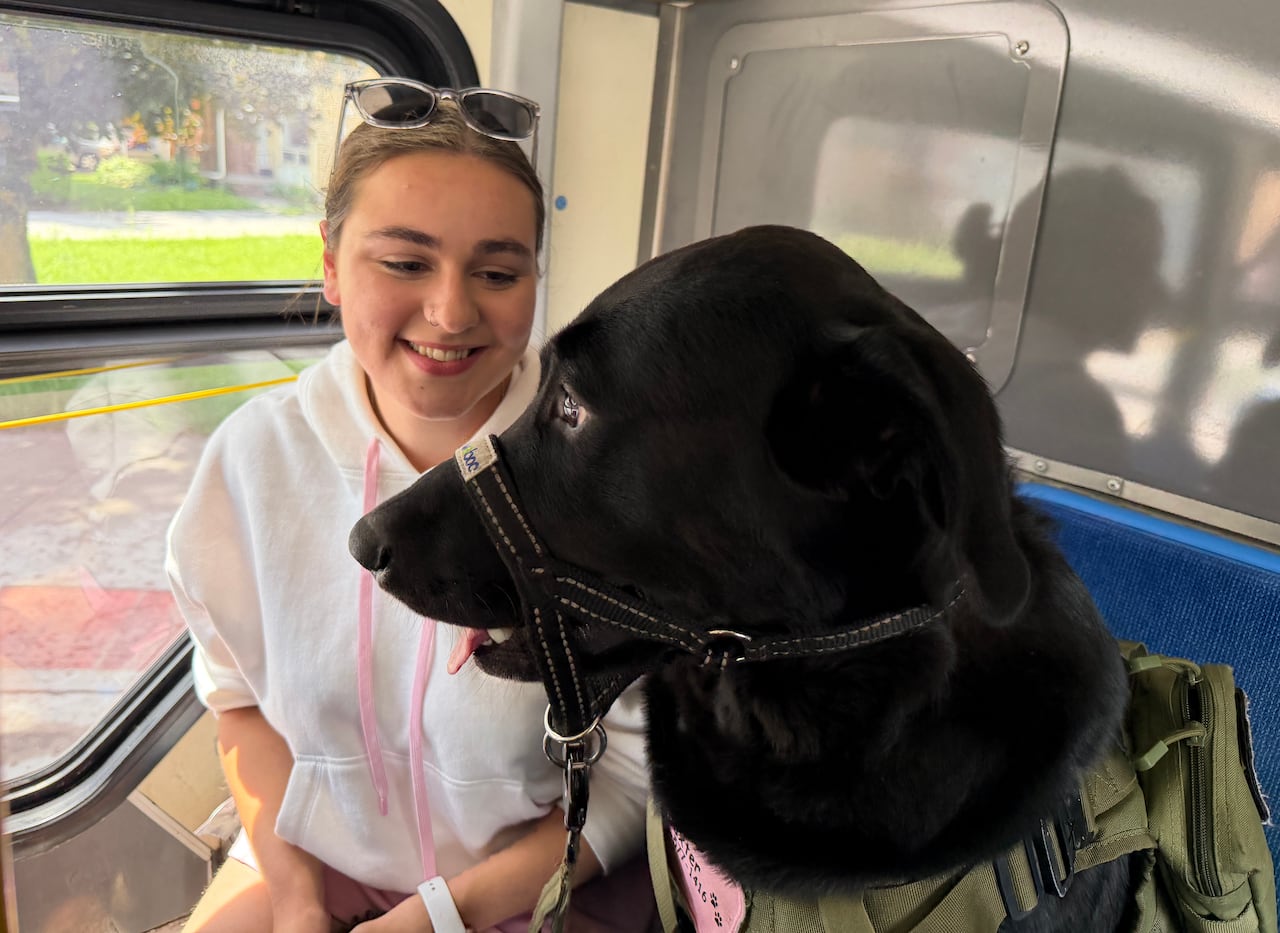






When Chloe Towns gets on a London Transit bus, she says she relies on two things for her journey: the bus itself and her service dog, Baxter.
However, in the last three months, the London, Ont., woman has experienced several awkward encounters with drivers about where Baxter should sit.
“With bus drivers, I’ve had them yell, tell us to get off, stop the bus and refuse to continue driving until we get off the bus,” Towns said.
The issue revolves around Baxter’s training. Towns explains that her dog, who helps her manage complex post-traumatic stress disorder (C-PTSD) and Crohn’s disease, is trained to sit beside her so he can assist with tasks related to her disabilities.
Chloe Towns says her service dog Baxter is trained to sit next to her in order to complete tasks related to complex post-traumatic stress disorder and Crohn’s disease. (Kendra Seguin/)
“If I’m feeling anxious or having difficulties, he will do deep pressure therapy. Sometimes he does it on command, sometimes he does it when he feels it’s necessary for me,” Towns said.
“He will lay across my lap applying pressure to help reduce anxiety. He does that a lot on the bus, which really helps me.”
The London Transit Commission’s policy states that “service animals are permitted on buses if working in aid of the person making the trip,” adding that animals must “remain in the care and control of the owner at all times.” The policy does not specify where the animal must sit.
Towns mentioned she reached out to LTC customer service and was informed that Baxter could sit in the seat next to her. She noted some drivers have also accepted this arrangement without any issues.
However, LTC spokesperson Caroline Roy stated in an email that it is expected for animals not to occupy a seat. has asked for further clarification on how this expectation is communicated to staff and riders but hasn’t received a response by publication time.
The mixed messages have left Towns feeling frustrated.
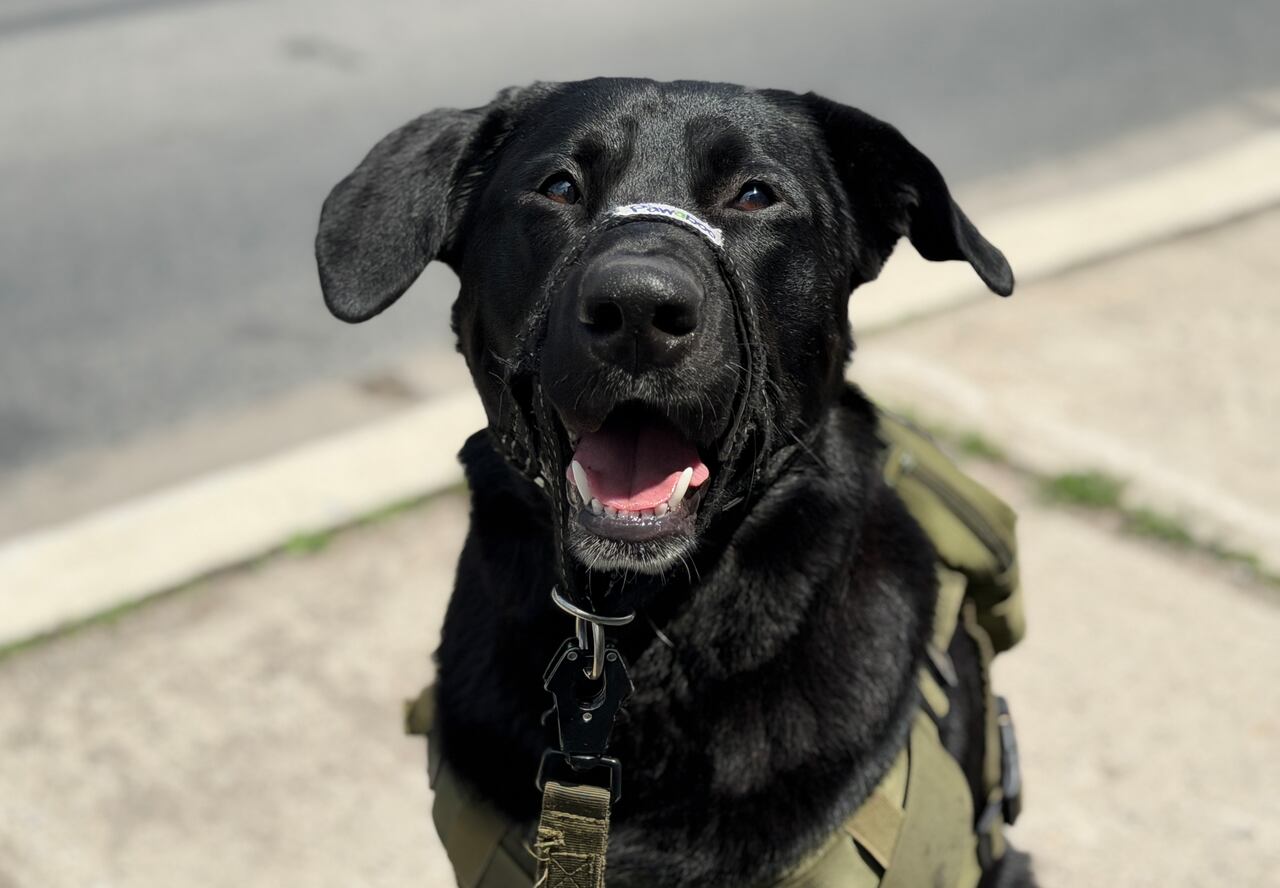
Baxter is a service dog in London, Ont. (Kendra Seguin/)
“I shouldn’t have to explain all the reasons why I have a service animal and explain my legal rights constantly,” she said.
“It is very embarrassing and anxiety-provoking. Lots of passengers are hearing, and I feel like I shouldn’t have to explain myself.”
Need for Education and Consistency
Towns wants more consistency in how this policy is enforced along with better education for both transit workers and passengers.
“I’m not the first, and definitely not the last, to bring a service dog on the bus,” she said. “I think they need to know the rules, the laws and the rights of a handler of a service dog.”
Source link
“There needs to be a lot more education and training around that.”.......
Source link
also reached outto ATU Local 741, which represents London transit operators , but did not receive a response.
Service animal rightsin Ontario<strong.
Under Ontario ‘ s Accessibility for Ontarians with Disabilities Act ( AODA ),service animals do not requiretraining certificate or identification card. strong > em ><p class ="highlighted_text ".
With except i o n s guide dogs , Ontario accessibility standards do not prescribe specific training requirements for assisting people with disabilities. Service animals may be trained by professional trainers or by their handlers. WATCH | Some rideshare drivers reject passengers with service dogs:
Uber drivers called out for leaving service dogs at curb | Go Public p >People with disabilities have legal rights when traveling with their service animals; however, some individuals reported incidents where Uber drivers left them behind.<p To qualify as a( here ) strong = _corrected true )=””>service animal , its owners should readily identify them through visible signs like vests or harnesses. Alternatively , they may present documents from regulated health professionals confirming their need.
Towns makes sure Baxter has both-a green vest marked “service dog in training” plus his documentation from St. Joseph ’ s hospital tucked away inside one of his vest pockets.
The AODA’ s Integrated Accessibility Standards doesn’t differentiate between fully-trained or-in-training service dogs.