

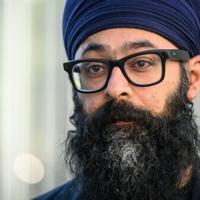
Five United Nations rights experts have called on Canada to implement all possible measures to ensure the safety of Sikh activist Moninder Singh, who has received repeated warnings from Canadian authorities about credible threats to his life.
In a letter addressed to the Canadian government on June 3, which was made public two months later as part of standard procedure, the UN experts highlighted “worrying claims of foreign intimidation and reprisals” aimed at Singh, a citizen of Canada.
They noted that since 2022, Singh has been issued four so-called “duty to warn” notices by Canadian authorities concerning credible and imminent threats against him.
The letter urged Canada to “take all feasible measures at its disposal to protect Mr Moninder Singh and his family, as well as similarly-situated individuals on Canadian soil.”
“We also urge the authorities to speed up investigations into these allegations, hold perpetrators accountable, provide adequate remedies for victims, and take all necessary steps to prevent reoccurrence.”
This correspondence was authored by special rapporteurs focused on protecting rights during counter-terrorism efforts; freedom of peaceful assembly; human rights defenders; freedom of religion; along with an expert promoting a democratic international order.
UN special rapporteurs and experts are independent individuals appointed by the Human Rights Council to share their findings. They do not represent the United Nations itself.
A copy of this letter was also forwarded to the Indian government.
– Khalistan Campaign –
This year, Singh visited the United Nations in Geneva seeking international action against India’s alleged targeting of Sikh activists overseas, along with broader concerns about transnational repression.
Sikh activists accuse India of going after members of their community globally, including accusations of orchestrated killings via organized crime groups – charges that India denies.
The most notable incident involved the 2023 killing of Hardeep Singh Nijjar, a close associate of Singh’s who was shot dead near the Sikh temple he led in a Vancouver suburb.
Canada’s then-prime minister Justin Trudeau publicly alleged India’s involvement in that assassination, a claim later echoed by Canadian intelligence agencies.
India rejected these allegations, leading to strained relations between both countries and resulting in each expelling several diplomats in 2024.
Relations improved after Prime Minister Mark Carney took office last year. This included a visit to India in March where multiple trade agreements were signed while Canadian authorities softened their previous threat assessment.
Like Nijjar, Singh is part of a fringe group advocating for an independent Sikh state known as Khalistan.
The Khalistan movement dates back to India’s independence in 1947 and has been linked with significant incidents like the assassination of a prime minister and bombing a passenger jet.
This issue remains contentious between India and several Western nations with large Sikh populations.
The experts expressed appreciation for Ottawa’s actions taken so far warning Singh about credible threats against him and his family.
While acknowledging that law enforcement and intelligence operations might need some level of secrecy, they voiced concerns over claims that Canadian authorities haven’t implemented any further protective or monitoring actions since February. They emphasized “the necessity of continuing vigilance”.