





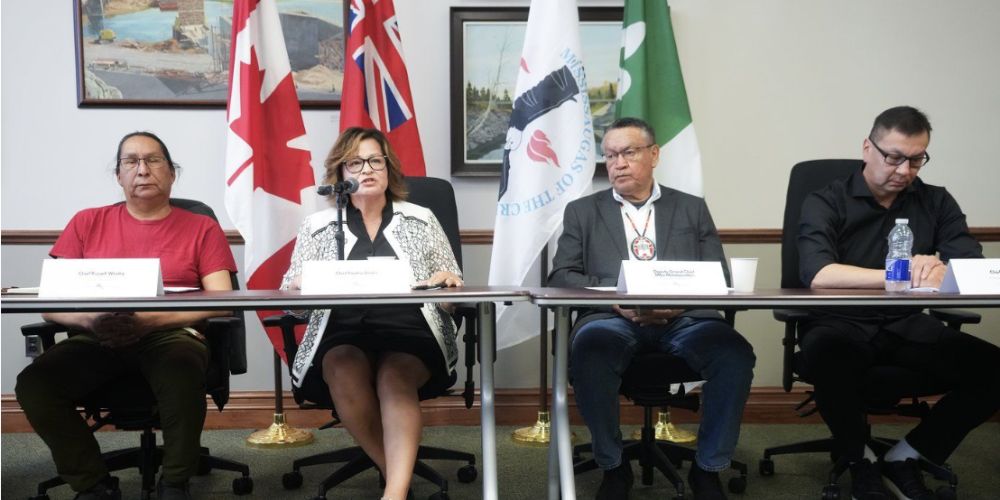
Whitewater First Nation Chief Pauline Drake, second left, speaks as Cat Lake First Nation Chief Russell Wesley, left, Nishnawbe Aski Nation Deputy Grand Chief Mike Metatawabin, second right, and Mishkeegogamang Ojibway Nation Chief Merle Loon look on during a press conference at Queen’s Park in Toronto on Thursday, July 30, 2026. THE CANADIAN PRESS/Nathan Denette
First Nations leaders criticized Ontario Premier Doug Ford’s government for not committing to a public inquiry regarding the severe wildfires in the northwest and for failing to release the province’s debrief.
In their call for a public inquiry, First Nations stated that the province did not give them timely warnings about several rapidly spreading fires that destroyed two communities and noted that communication with the province has been lacking or entirely absent.
During a press conference at Queen’s Park on Thursday, several First Nation chiefs expressed frustration over not receiving answers from Premier Ford or ministers Mike Harris (Natural Resources), Jill Dunlop (Emergency Preparedness), and Greg Rickford (Indigenous Affairs).
🎧 Local news stories that matter most to you
Subscribe on Spotify, Apple Podcasts and wherever you get your podcasts to get notified of new episodes every day.
Earlier in the day, while giving an update on the wildfire situation, Harris avoided questions about initiating a public inquiry. He mentioned that the province would conduct its annual review but indicated it might not be made public.
“We do a very deep dive internally, and I think there’ll be lots of recommendations that will come forward and at the time, we’ll see what makes sense to talk about,” Harris said.
He reported an improvement in conditions with over 80 fires extinguished in the past two weeks but added that 159 wildfires are still active, with 30 of them out of control.
Harris described this wildfire season as unprecedented but noted signs of progress.
“We’ve had a fire season in the last two weeks like we’ve never seen before,” he said at a news conference. “Thankfully, things are calming down now. They’re getting back to normal, and we’re able to manage the situation a lot better.”
He expressed hope that this would be an isolated incident for fire seasons.
“You can’t predict what things are going to look like as you move forward,” he acknowledged. “But obviously we’ve seen the northwest be a little bit drier over the last couple of years.” He also pointed out rising temperatures.
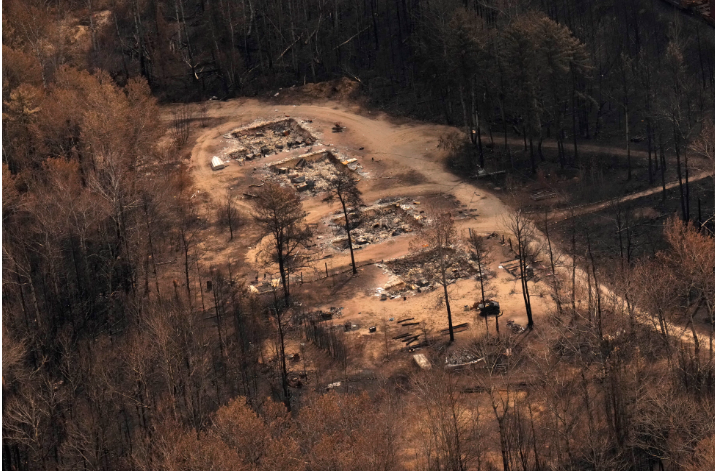
Wildfire damage is pictured from the air in Collins First Nation, a small remote Ojibwa community located in northwestern Ontario, about 250 km north of Thunder Bay, Ont., on Wednesday, July 22, 2026. THE CANADIAN PRESS/Chris Young
However, several First Nation leaders felt that their government’s mistakes regarding fire management have been underestimated.
“That’s why we need a public inquiry,” said Chief Merle Loon of Mishkeegogamang Ojibway Nation.
Deputy Grand Chief Mike Metatawabin from Nishnawbe Aski Nation remarked: “There are questions that need to be answered.”
Chief Pauline Drake from Whitewater First Nation shared her sorrow regarding her community’s loss due to fires.
“Wildfires that swept across our region have changed my community,” she explained. “It’s gone; we have to start from scratch.”
Drake mentioned bush pilots informed her community about spotting a fire on July 8. She stated they didn’t hear anything from provincial officials for another week but began making evacuation plans thanks to those pilots’ help.
Finally contacting them on July 15 was too late for any real warning.
‘There wasn’t a warning really; they just told us that day: ‘Get everybody out,” Drake recalled. ‘But thank God we already had a preplanned flight.’
While everyone managed to evacuate safely, the wildfire devastated their remote community afterwards.
“We can rebuild,” she stated sadly. “But it’s going to take time.” She added how it took over three decades to establish their community and anticipated another thirty years given their isolated location reliant solely on float planes for supplies and rebuilding materials.
Cat Lake First Nation Chief Russell Wesley emphasized his belief in establishing an Indigenous-led wildfire authority during this crisis.
“First Nations would share jurisdictions alongside federal and provincial agencies,” Wesley proposed during his comments at the press conference.
He also advocated for enhanced evacuation strategies along with improved communication methods while securing stable funding for multi-year preparedness efforts since current budgeting is often exceeded after each wildfire season ends.
Wesley further recommended implementing Indigenous-led fire stewardship programs incorporating prescribed burns within broader provincial preventative fire management strategies.
The wildfires have forced thousands primarily from Indigenous communities into fleeing their homes while generating clouds of smoke drifting across southern Ontario as well as parts of America; early estimates indicate this year’s flames have severely impacted more forest area than ever recorded previously by far.
Harris announced over one hundred fifty firefighters statewide are combating these blazes supported by recent cooler rain patterns plus reinforcements sent recently including teams arriving from Prince Edward Island along with one hundred Mexican firefighters joining efforts earlier this week too.
Emergency Preparedness Minister Jill Dunlop reported fourteen communities were evacuated due specifically due directly caused by ongoing wildfires although five returned home already while another community heads back currently too. p >
More than two thousand people remain displaced according Dunlop notes still awaiting resolution. p >
Harris highlighted examining various approaches which could help enhance future operations suggesting methods monitoring possible outbreaks swiftly notifying affected neighborhoods instantly aiming proactively safeguard critical infrastructures especially around vulnerable zones enduring evacuations. p >< pp ; Namaygoosisagagun , also called Collins First nation was obliterated similarly through uncontrolled infernos spreading quickly unnoticed until nearing its doorstep according remarks made by minister previously responding queries concerning adequacy response plans enacted towards minimizing consequences resulting similar crises happening again down line. pp >< pp ; During press conference held Thursday afternoon , minister stood firm defending government's proactive measures insisting no lives lost thus far owing multifaceted strategy adopted protecting citizens efficiently ensuring optimal resource allocation available continuously deployed throughout entire duration emergencies faced head-on successfully warding off threats posed effectively encountered daily basis across regions affected most severely impacted areas witnessed unprecedented devastation levels inflicted upon inhabitants localities trying regrouping rebuilding slowly following massive disruptions life incurred hereafter experiencing traumatic events unfold around them firsthand seeking return norm amidst chaos endured momentarily till all settled finally once again restored former states equilibrium achieved sustainably onwards future paths lay ahead open wide unto brighter horizons away darkness left behind lingering shadows past hardships endured present situations tackled bravely onward moving forward together united strength resilience shared amongst individuals families friends alike always striving improve circumstances living quality sustainability flourishing prosperity eventually cultivated future generations thrive thereafter planting seeds today nurturing growth flourish tomorrow blossoming bright vibrant landscapes painted vivid colors hopes dreams aspirations realized uniting everyone together harmonious symphony orchestrated beautifully playing tunes fate intertwined eternally..< pp ; This report first Canadian Press dated July thirty , twenty twenty-six enlightening audience understanding challenges navigating territory surrounding emergency response preparedness recovery journey undertaken collectively both indigenous non-indigenous populations coming together mutual support compassion empathy share burdens losses suffered paving paths peace reconciliation justice restore harmony respect dignity preserve cultures traditions values cherished deeply rooted hearts minds forever intertwined woven tapestries life journeys tread carefully traversed through time space bridging gaps creating connections fostered nurturing understanding acceptance embracing diversity unity belonging finding solace strength resilience within embrace larger family humanity standing strong face adversity overcoming obstacles standing shoulder shoulder reclaiming narratives shaping futures anew! …”
Source link