


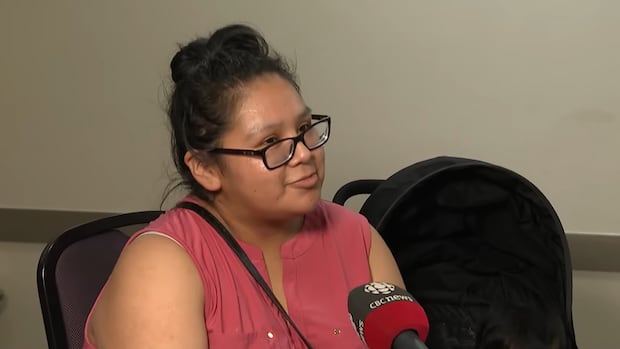
Yolanda Sakanee expresses her desire to return home, but uncertainty looms over her First Nation, which declared a state of emergency last week due to wildfires in northwestern Ontario.
Sakanee is among more than 130 evacuees from Neskantaga First Nation, a remote Ojibway community located about 440 kilometres northeast of Thunder Bay.
The chief and council declared an emergency on July 16. Families, including those with children, seniors, and individuals with health issues, were initially sent to Thunder Bay before being flown further south to Toronto. They are now residing in Mississauga.
“There [were] no rooms in Thunder Bay for everybody and we all like to be in one place,” Sakanee told on Tuesday.
More than 2,800 wildfire evacuees are currently staying in various host communities across the province.
First Nations have been hit hardest by these evacuations. In addition to immediate safety concerns posed by the wildfires, leaders mention ongoing challenges related to mental health as well as substance use issues.
WATCH | First Nations leaders call for public inquiry into Ontario wildfire management: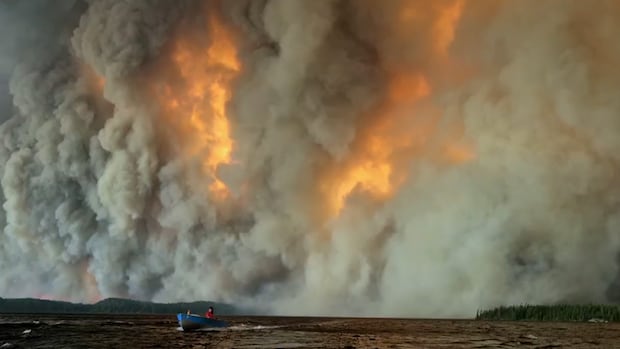 First Nations leaders call for public inquiry into Ontario wildfire management
A group of First Nations leaders is pushing for a public inquiry into how Ontario has managed this year’s wildfires, which forced people from their remote communities after they became cut off from essential supplies like water, fuel, and food.
Sakanee mentioned that the heavy smoke from the wildfires caused her children to experience nosebleeds and breathing difficulties.
Furthermore, supply chain disruptions meant one of her daughters went two days without proper baby formula.
Ryan Moonias, a member of Neskantaga staying in Mississauga with his pregnant wife and kids, explained that food for their community is shipped from Winnipeg to Pickle Lake before it’s flown up north.
First Nations leaders call for public inquiry into Ontario wildfire management
A group of First Nations leaders is pushing for a public inquiry into how Ontario has managed this year’s wildfires, which forced people from their remote communities after they became cut off from essential supplies like water, fuel, and food.
Sakanee mentioned that the heavy smoke from the wildfires caused her children to experience nosebleeds and breathing difficulties.
Furthermore, supply chain disruptions meant one of her daughters went two days without proper baby formula.
Ryan Moonias, a member of Neskantaga staying in Mississauga with his pregnant wife and kids, explained that food for their community is shipped from Winnipeg to Pickle Lake before it’s flown up north.
![]() Ryan Moonias is a member of Neskantaga First Nation. He’s staying in Mississauga with his pregnant wife and their children due to northwestern Ontario’s wildfires. Moonias says his older children are sensing the stress he and his wife are feeling. (CBC)
However, due to road closures on Highway 599 last week because of the fires, delivery trucks had to reroute through Red Lake. Afterward, heavy smoke made it unsafe for planes to deliver supplies northward.
“One flight did make it in with half a load,” Moonias said. “The pilot said they barely landed and [the smoke] was so thick and it was dangerous.”
Ryan Moonias is a member of Neskantaga First Nation. He’s staying in Mississauga with his pregnant wife and their children due to northwestern Ontario’s wildfires. Moonias says his older children are sensing the stress he and his wife are feeling. (CBC)
However, due to road closures on Highway 599 last week because of the fires, delivery trucks had to reroute through Red Lake. Afterward, heavy smoke made it unsafe for planes to deliver supplies northward.
“One flight did make it in with half a load,” Moonias said. “The pilot said they barely landed and [the smoke] was so thick and it was dangerous.”
![]() A Canadian CC-130J Hercules lands in Eabametoong First Nation on Sunday to assist with the evacuation of members from the community affected by nearby wildfires. (Master Cpl. Natasha Punt)
A number of First Nations in the northwest are dry communities where alcohol or drugs aren’t permitted. This includes Eabametoong First Nation (EFN), which has relocated over 940 members to Niagara Falls.
The community advises against substance use while away from home.
“EFN staff on site in Niagara Falls will be implementing programming to assist and support members who are having issues following our policies and receiving EFN support,” said a statement from chief and council on Tuesday.
With alcohol and drugs more accessible in host communities compared to their northern homes , “that’s a worry for community members , for their family,” says Janet Gordon , vice-president of community health for the Sioux Lookout First Nations Health Authority (SLFNHA), representing 33 First Nations in the area.
A Canadian CC-130J Hercules lands in Eabametoong First Nation on Sunday to assist with the evacuation of members from the community affected by nearby wildfires. (Master Cpl. Natasha Punt)
A number of First Nations in the northwest are dry communities where alcohol or drugs aren’t permitted. This includes Eabametoong First Nation (EFN), which has relocated over 940 members to Niagara Falls.
The community advises against substance use while away from home.
“EFN staff on site in Niagara Falls will be implementing programming to assist and support members who are having issues following our policies and receiving EFN support,” said a statement from chief and council on Tuesday.
With alcohol and drugs more accessible in host communities compared to their northern homes , “that’s a worry for community members , for their family,” says Janet Gordon , vice-president of community health for the Sioux Lookout First Nations Health Authority (SLFNHA), representing 33 First Nations in the area.
![]() Janet Gordon is vice-president of community health for the Sioux Lookout First Nations Health Authority (SLFNHA), which represents 33 First Nations in the region. (Submitted by SLFNHA)
As far as keeping busy goes , many evacuees might not afford dining out or visiting local attractions.
Reports have also surfaced regarding racism experienced by some residents. Gordon commented,“ It is something that leadership and communities worry about regarding their families.”
Janet Gordon is vice-president of community health for the Sioux Lookout First Nations Health Authority (SLFNHA), which represents 33 First Nations in the region. (Submitted by SLFNHA)
As far as keeping busy goes , many evacuees might not afford dining out or visiting local attractions.
Reports have also surfaced regarding racism experienced by some residents. Gordon commented,“ It is something that leadership and communities worry about regarding their families.”
This situation comes along with an ever-present uncertainty about what’s happening back home.
Gordon emphasized that reaching out to community leaders and liaisons for mental health support during this time is essential.
“I think host communities need to play a part in supporting evacuated individuals by identifying organizations that could offer activities or assistance.”
The Hope for Wellness Helpline provides immediate emotional support via toll-free telephone or online chat services available around-the-clock for Indigenous people throughout Canada. This service operates continuously in English and French upon request available also in Cree, Ojibway, and Inuktitut.
Source link
First Nations leaders call for public inquiry into Ontario wildfire management
A group of First Nations leaders is pushing for a public inquiry into how Ontario has managed this year’s wildfires, which forced people from their remote communities after they became cut off from essential supplies like water, fuel, and food.
Sakanee mentioned that the heavy smoke from the wildfires caused her children to experience nosebleeds and breathing difficulties.
Furthermore, supply chain disruptions meant one of her daughters went two days without proper baby formula.
Ryan Moonias, a member of Neskantaga staying in Mississauga with his pregnant wife and kids, explained that food for their community is shipped from Winnipeg to Pickle Lake before it’s flown up north.
Racism , isolation far from home
Evacuees already face numerous stressors such as cramped hotel rooms and unfamiliar surroundings. Many elders struggle with language barriers while adapting to non-traditional meals , Gordon noted.This situation comes along with an ever-present uncertainty about what’s happening back home.
Gordon emphasized that reaching out to community leaders and liaisons for mental health support during this time is essential.
“I think host communities need to play a part in supporting evacuated individuals by identifying organizations that could offer activities or assistance.”
The Hope for Wellness Helpline provides immediate emotional support via toll-free telephone or online chat services available around-the-clock for Indigenous people throughout Canada. This service operates continuously in English and French upon request available also in Cree, Ojibway, and Inuktitut.
Source link