





This section is Presented This section was produced by the editorial department. The client was not given the opportunity to put restrictions on the content or review it prior to publication. by HAVEN HOME HEATING & AIR CONDITIONING Jun 23, 2026 • Last updated Jun 23, 2026 • 9 minute read
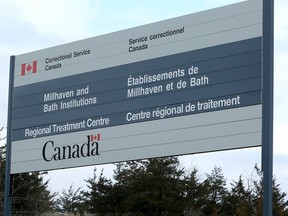
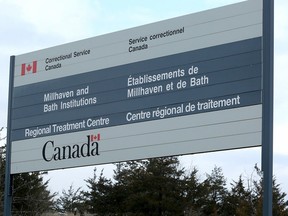 The sign at the entrance to Millhaven and Bath Institutions on Friday, Nov. 21, 2025. Photo by Meghan Balogh /Postmedia
More than three decades after a forensic psychiatric patient walked away from Kingston Psychiatric Hospital, abducted a teenager from Lake Ontario Park and triggered a massive search that ended near Napanee, authorities recently concluded Denis McCullough remains a significant threat to public safety.
This has not loaded yet, but your article continues below.
The sign at the entrance to Millhaven and Bath Institutions on Friday, Nov. 21, 2025. Photo by Meghan Balogh /Postmedia
More than three decades after a forensic psychiatric patient walked away from Kingston Psychiatric Hospital, abducted a teenager from Lake Ontario Park and triggered a massive search that ended near Napanee, authorities recently concluded Denis McCullough remains a significant threat to public safety.
This has not loaded yet, but your article continues below.
 Subscribe now to read the latest news in your community.
Unlimited online access to all articles on thewhig.com.Access to subscriber-only content, including History: As We Saw It, a weekly newsletter that rips history from our archives, which span almost 190 years.Enjoy insights and behind-the-scenes analysis from our award-winning journalists.Support local journalism and the next generation of journalists.
Subscribe now to read the latest news in your community.
Unlimited online access to all articles on thewhig.com.Access to subscriber-only content, including History: As We Saw It, a weekly newsletter that rips history from our archives, which span almost 190 years.Enjoy insights and behind-the-scenes analysis from our award-winning journalists.Support local journalism and the next generation of journalists.
Access more articles from thewhig.com..Get email updates from your favourite journalists.
.
.
Access articles from across Canada with one accountShare your thoughts and join the conversation in the commentsEnjoy additional articles per monthGet email updates from your favourite authors
or
The finding, contained in an Ontario Review Board decision, revisits one of the most dramatic criminal cases to emerge from the Kingston area in the 1990s and raises fresh questions about the strange path that brought McCullough to Kingston Psychiatric Hospital (KPH) in the first place.
According to court records, at about 2 p.m. on Saturday, June 6, 1992, a 16-year-old girl was working at the small amusement park midway at Kingston’s Lake Ontario Park. As she was sweeping the steps leading to the waterfront, a man approached her.
An hour later, another employee went looking for the girl, only to discover her discarded broom.
Co-workers reported the girl missing at approximately 4:30 p.m. Around the same time, staff at KPH notified police that one of their patients was also missing.
Witnesses reported seeing a man and a teenage girl matching their descriptions walking along railway tracks north of the park.
A massive search began. More than 170 municipal employees who worked with the girl’s father spread out across marshes, conservation lands, and forests near railway corridors in Kingston’s west end.
This has not loaded yet, but your article continues below.
Kingston Police, Ontario Provincial Police (OPP) officers from several detachments, police dogs, military personnel from Canadian Forces Base Trenton, and hundreds of civilians joined the search.
Police established a command post in the parking lot of what was then the Apple Mill on Bath Road, just west of the CN Rail line crossing Bath Road near Armstrong Road. The search continued as darkness fell Saturday night. It would be nearly 24 hours later before hope was renewed.
At around 3:30 p.m. on Sunday, June 7, an OPP helicopter arriving from Brampton to assist Kingston Police spotted the young woman and her abductor.
As the helicopter approached, the man grabbed the girl by the hand and ran into a nearby field.
Police landed the helicopter in a farm field just as colleagues in a cruiser arrived on scene. As officers gained on their quarry, the girl broke free.
Denis Russell McCullough was arrested moments later.
The girl, whose identity remains protected, was reunited with her family.
The Kingston Whig-Standard’s Noon News Roundup
Your weekday lunchtime roundup of curated links, news highlights, analysis and features.
By signing up you consent to receive the above newsletter from Postmedia Network Inc.
!
A welcome email is on its way. If you don’t see it, please check your junk folder.
The next issue of The Kingston Whig-Standard’s Noon News Roundup will soon be in your inbox.
We encountered an issue signing you up. Please try again
This has not loaded yet, but your article continues below.
Reports from the time describe her “tired but relieved” father thanking police and volunteers, including many of his co-workers with the City of Kingston, for helping find his daughter. She was exhausted, he said, and her feet were swollen from walking roughly 43 kilometres.
McCullough was charged with escape from lawful custody, forcible confinement, sexual assault with a weapon, possession of a weapon, and uttering threats.
It is unsurprising that Kingstonians were livid. Letters to the editor and testimony in subsequent court proceedings reveal a community struggling to understand how a man with a lengthy criminal history, including a previous kidnapping that ended with one victim stabbed and left tied to a tree in British Columbia, had progressed through Ontario’s forensic psychiatric system to the point where he could walk away from Kingston Psychiatric Hospital and abduct a teenager from the park next door.
To many residents, the abduction was not simply a violent crime; it appeared to expose a system that had allowed a man with a history of kidnapping and serious violence to move from maximum security psychiatric care into the community.
This has not loaded yet, but your article continues below.
At the time, McCullough was living in a medium security unit at Kingston Psychiatric Hospital under a Lieutenant-Governor’s Warrant, the legal framework then used for people found not guilty by reason of insanity for serious criminal offences.
His journey to this moment had been long and troubled.
This wasn’t even his first kidnapping.
The road to Kingston
Born in 1941, McCullough was involved with the criminal justice system from childhood, according to court records. Between the ages of 10 and 13, he resided in one of Ontario’s notorious training schools, youth institutions intended to rehabilitate troubled or “unmanageable” children but which later became the subject of allegations of widespread physical, sexual, and psychological abuse.
His criminal record officially began in 1955, when he was 14 years old and sentenced in adult court to two years for property offences. In 1957, he was sent to the Guelph Reformatory but escaped later that year.
This has not loaded yet, but your article continues below.
In 1963, McCullough was convicted of two counts each of robbery and break and enter. Following those offences, he purchased a car and fled to Texas, but was deported back to Canada and sentenced to 12 years’ imprisonment.
Released on parole in October 1969, he absconded to the United States.
Some time afterward, he was convicted of armed robbery in Nevada. Court records show he spent 18 months in a psychiatric facility before beginning a sentence of five years to life in Carson City prison. In 1976, he was returned to Canada, where he completed his sentence at Kingston Penitentiary.
Paroled again in 1978, he disappeared once more.
In August 1979, while unlawfully at large after failing to return from day parole from Kingston Penitentiary, McCullough picked up two 17-year-old hitchhikers outside Sudbury.
The teenage couple was returning to British Columbia after a cross-country trip. What began as an ordinary ride quickly turned into a six-day hostage-taking ordeal.
7
This has not loaded yet, but your article continues below.
Near Winnipeg, McCullough pulled a knife and informed the teenagers they could not leave because he was a wanted man. He then held them captive as he drove west across the Prairies. The woman later testified that he held several picnics along the way, providing food and spreading a blanket.
At some point during the trip, McCullough stabbed the male victim in the back, puncturing a lung. Rather than seek medical help for the boy, McCullough attempted to close the wound himself using a safety pin, needle, and thread before continuing west.
McCullough made unwanted sexual advances toward the teenage girl throughout the ordeal.
Once in British Columbia, he tied the boy to a tree in the wilderness and left him behind.
The girl later testified that McCullough told her he was going to rape her, but she feigned illness to make it through another night. The next morning, she managed to leave a note in an Alberta gas station washroom.
Alberta police set up a roadblock and arrested McCullough.
8
This has not loaded yet, but your article continues below.
The verdict that followed would shape the next decade of his life.
On July 4, 1980, a jury found McCullough not guilty by reason of insanity on charges that included attempted murder and kidnapping. The verdict sent him into Ontario’s forensic psychiatric system rather than a federal penitentiary.
McCullough moved through that system for more than a decade.
By 1985, he was living at Oak Ridge, the maximum security forensic unit at the Penetanguishene Mental Health Centre.
A Globe and Mail article from that year described him as chairman of a patient fundraising committee that helped raise nearly $1,000 for victims of devastating southern Ontario tornadoes. Speaking on behalf of his fellow patients, McCullough said they wanted to show they remained part of the broader community despite their circumstances.
The article offers a glimpse of why clinicians evidently believed he was progressing.
He cascaded from maximum security forensic care to the medium security forensic unit at KPH, where rehabilitation and gradually increasing patient freedoms were the norm.
9
This has not loaded yet, but your article continues below.
KPH officials later explained that medium-security institutions relied on patient self-control and clinical assessment, along with physical barriers and periodic monitoring.
On June 6, 1992, that system failed.
McCullough walked away from the hospital grounds to Lake Ontario Park next door. Evidence later showed he had hidden provisions on hospital property in advance of the escape.
Court records show he abducted the Kingston teenager at knifepoint and tied her to himself with a shoelace. Then, shockingly, he immediately led her back to KPH, where he checked in via intercom and the two were seen on camera by an employee.
As on his previous crime spree, he held an elaborate picnic — described by one lawyer as “the picnic from hell” — during which he sexually assaulted the girl before forcing her to walk from Kingston to Napanee.
The case generated intense publicity and renewed scrutiny of the forensic mental health system.
Questions were raised about how a man with a history of serious violence had progressed to a medium security facility and been granted enough freedom to leave hospital grounds and participate in community activities.
10
This has not loaded yet, but your article continues below.
At the time, one Kingston woman told Whig reporter Jack Chiang she was horrified to recognize McCullough from a sign language class she had taken at St. Lawrence College.
“I nearly had a heart attack,” she said in reference to seeing his photograph on television. “I never knew that Mr. McCullough was a patient at the psychiatric hospital just across the street from the community college.”
Hospital officials argued that rehabilitation depended on allowing patients to gradually regain privileges and maintained that incidents of this nature were extremely rare.
Publicity surrounding the case became so extensive that McCullough’s trial was eventually moved from Kingston to Ottawa.
In November 1992, a jury convicted him of sexual assault with a weapon, forcible confinement, and related offences. This time, jurors rejected his argument that he was not criminally responsible because of a mental disorder.
The conviction did not end the matter.
11
This has not loaded yet, but your article continues below.
The Crown applied to have McCullough declared a dangerous offender, one of the most serious designations available under Canadian law. At a lengthy hearing in Ottawa, the court revisited not only the Kingston-area abduction but also McCullough’s earlier crimes, including the 1979 kidnapping of the two teenage hitchhikers.
Psychiatric experts testified that McCullough suffered from what the court described as an incurable personality disorder and posed an ongoing danger to the public. Justice Hector Soublière ultimately accepted the evidence and, in October 1994, declared McCullough a dangerous offender.
The designation was paired with an indeterminate sentence, meaning he could be imprisoned for the rest of his life unless authorities were some day satisfied that he no longer posed a threat to society.
“It’s sad when you think somebody is so dangerous they have to spend the rest of their life in a cage,” Kingston Crown attorney Jack McKenna said after the ruling. “There’s nothing to rejoice about.”
12
This has not loaded yet, but your article continues below.
Looking back, the statement seems prophetic. The designation was later upheld on appeal, and more than 30 years later, McCullough remains under detention.
This year, the Review Board heard that the 84-year-old now suffers from significant health problems, including lung cancer, heart disease, and mobility limitations. He sometimes uses a wheelchair but remains able to walk independently.
However, the Board found that the concerns that led to his designation as a dangerous offender have not abated.
“In recent years,” the decision reads, “Mr. McCullough has grabbed at nurses delivering medication, assaulted other inmates, and engaged in sexually inappropriate activity.”
Then there is McCullough’s own testimony.
According to the panel, “He forthrightly testified that if he perceived an individual as a danger to him, he would react aggressively.”
The board concluded that McCullough remains “highly institutionalized” and that it was reasonable to expect more problematic behaviour if he were ever placed in a less structured environment.
13
This has not loaded yet, but your article continues below.
“Mr. McCullough’s past patterns of conduct demonstrate he has a low threshold for aggressive behaviour and, despite his age, is sexually demonstrative and physically aggressive,” the panel wrote.
It further concluded that “he has not aged out of posing a physical and sexual aggression risk.”
The board ordered that if McCullough’s federal incarceration ever ends while he is still living, he be detained at Waypoint Centre for Mental Health Care in Penetanguishene.
While most residents of eastern Ontario may not remember McCullough’s name nor the terror he inflicted, the Ontario Review Board’s decision is a reminder that the consequences of those events — and the questions they raised about public safety, rehabilitation, and risk — have never completely disappeared.
McCullough was last reported to be incarcerated at Bath Institution in Loyalist Township, just west of Kingston. While the Correctional Service of Canada (CSC) was unable to confirm that McCullough is at Bath Institution for privacy reasons, the federal correctional agency did confirm that McCullough remains in CSC custody.
Michelle Dorey Forestell is a with the Kingstonist. The LJI is funded through the federal government.
Share this article in your social network
Subscribe now to read the latest news in your community.
Unlimited online access to all articles on thewhig.com.Access to subscriber-only content, including History: As We Saw It, a weekly newsletter that rips history from our archives, which span almost 190 years.Enjoy insights and behind-the-scenes analysis from our award-winning journalists.Support local journalism and the next generation of journalists.
Subscribe now to read the latest news in your community.
Unlimited online access to all articles on thewhig.com.Access to subscriber-only content, including History: As We Saw It, a weekly newsletter that rips history from our archives, which span almost 190 years.Enjoy insights and behind-the-scenes analysis from our award-winning journalists.Support local journalism and the next generation of journalists.
Access more articles from thewhig.com..Get email updates from your favourite journalists.
.
.
Access articles from across Canada with one accountShare your thoughts and join the conversation in the commentsEnjoy additional articles per monthGet email updates from your favourite authors
or
The finding, contained in an Ontario Review Board decision, revisits one of the most dramatic criminal cases to emerge from the Kingston area in the 1990s and raises fresh questions about the strange path that brought McCullough to Kingston Psychiatric Hospital (KPH) in the first place.
According to court records, at about 2 p.m. on Saturday, June 6, 1992, a 16-year-old girl was working at the small amusement park midway at Kingston’s Lake Ontario Park. As she was sweeping the steps leading to the waterfront, a man approached her.
An hour later, another employee went looking for the girl, only to discover her discarded broom.
Co-workers reported the girl missing at approximately 4:30 p.m. Around the same time, staff at KPH notified police that one of their patients was also missing.
Witnesses reported seeing a man and a teenage girl matching their descriptions walking along railway tracks north of the park.
A massive search began. More than 170 municipal employees who worked with the girl’s father spread out across marshes, conservation lands, and forests near railway corridors in Kingston’s west end.
This has not loaded yet, but your article continues below.
Kingston Police, Ontario Provincial Police (OPP) officers from several detachments, police dogs, military personnel from Canadian Forces Base Trenton, and hundreds of civilians joined the search.
Police established a command post in the parking lot of what was then the Apple Mill on Bath Road, just west of the CN Rail line crossing Bath Road near Armstrong Road. The search continued as darkness fell Saturday night. It would be nearly 24 hours later before hope was renewed.
At around 3:30 p.m. on Sunday, June 7, an OPP helicopter arriving from Brampton to assist Kingston Police spotted the young woman and her abductor.
As the helicopter approached, the man grabbed the girl by the hand and ran into a nearby field.
Police landed the helicopter in a farm field just as colleagues in a cruiser arrived on scene. As officers gained on their quarry, the girl broke free.
Denis Russell McCullough was arrested moments later.
The girl, whose identity remains protected, was reunited with her family.
The Kingston Whig-Standard’s Noon News Roundup
Your weekday lunchtime roundup of curated links, news highlights, analysis and features.
By signing up you consent to receive the above newsletter from Postmedia Network Inc.
!
A welcome email is on its way. If you don’t see it, please check your junk folder.
The next issue of The Kingston Whig-Standard’s Noon News Roundup will soon be in your inbox.
We encountered an issue signing you up. Please try again
This has not loaded yet, but your article continues below.
Reports from the time describe her “tired but relieved” father thanking police and volunteers, including many of his co-workers with the City of Kingston, for helping find his daughter. She was exhausted, he said, and her feet were swollen from walking roughly 43 kilometres.
McCullough was charged with escape from lawful custody, forcible confinement, sexual assault with a weapon, possession of a weapon, and uttering threats.
It is unsurprising that Kingstonians were livid. Letters to the editor and testimony in subsequent court proceedings reveal a community struggling to understand how a man with a lengthy criminal history, including a previous kidnapping that ended with one victim stabbed and left tied to a tree in British Columbia, had progressed through Ontario’s forensic psychiatric system to the point where he could walk away from Kingston Psychiatric Hospital and abduct a teenager from the park next door.
To many residents, the abduction was not simply a violent crime; it appeared to expose a system that had allowed a man with a history of kidnapping and serious violence to move from maximum security psychiatric care into the community.
This has not loaded yet, but your article continues below.
At the time, McCullough was living in a medium security unit at Kingston Psychiatric Hospital under a Lieutenant-Governor’s Warrant, the legal framework then used for people found not guilty by reason of insanity for serious criminal offences.
His journey to this moment had been long and troubled.
This wasn’t even his first kidnapping.
The road to Kingston
Born in 1941, McCullough was involved with the criminal justice system from childhood, according to court records. Between the ages of 10 and 13, he resided in one of Ontario’s notorious training schools, youth institutions intended to rehabilitate troubled or “unmanageable” children but which later became the subject of allegations of widespread physical, sexual, and psychological abuse.
His criminal record officially began in 1955, when he was 14 years old and sentenced in adult court to two years for property offences. In 1957, he was sent to the Guelph Reformatory but escaped later that year.
This has not loaded yet, but your article continues below.
In 1963, McCullough was convicted of two counts each of robbery and break and enter. Following those offences, he purchased a car and fled to Texas, but was deported back to Canada and sentenced to 12 years’ imprisonment.
Released on parole in October 1969, he absconded to the United States.
Some time afterward, he was convicted of armed robbery in Nevada. Court records show he spent 18 months in a psychiatric facility before beginning a sentence of five years to life in Carson City prison. In 1976, he was returned to Canada, where he completed his sentence at Kingston Penitentiary.
Paroled again in 1978, he disappeared once more.
In August 1979, while unlawfully at large after failing to return from day parole from Kingston Penitentiary, McCullough picked up two 17-year-old hitchhikers outside Sudbury.
The teenage couple was returning to British Columbia after a cross-country trip. What began as an ordinary ride quickly turned into a six-day hostage-taking ordeal.
7
This has not loaded yet, but your article continues below.
Near Winnipeg, McCullough pulled a knife and informed the teenagers they could not leave because he was a wanted man. He then held them captive as he drove west across the Prairies. The woman later testified that he held several picnics along the way, providing food and spreading a blanket.
At some point during the trip, McCullough stabbed the male victim in the back, puncturing a lung. Rather than seek medical help for the boy, McCullough attempted to close the wound himself using a safety pin, needle, and thread before continuing west.
McCullough made unwanted sexual advances toward the teenage girl throughout the ordeal.
Once in British Columbia, he tied the boy to a tree in the wilderness and left him behind.
The girl later testified that McCullough told her he was going to rape her, but she feigned illness to make it through another night. The next morning, she managed to leave a note in an Alberta gas station washroom.
Alberta police set up a roadblock and arrested McCullough.
8
This has not loaded yet, but your article continues below.
The verdict that followed would shape the next decade of his life.
On July 4, 1980, a jury found McCullough not guilty by reason of insanity on charges that included attempted murder and kidnapping. The verdict sent him into Ontario’s forensic psychiatric system rather than a federal penitentiary.
McCullough moved through that system for more than a decade.
By 1985, he was living at Oak Ridge, the maximum security forensic unit at the Penetanguishene Mental Health Centre.
A Globe and Mail article from that year described him as chairman of a patient fundraising committee that helped raise nearly $1,000 for victims of devastating southern Ontario tornadoes. Speaking on behalf of his fellow patients, McCullough said they wanted to show they remained part of the broader community despite their circumstances.
The article offers a glimpse of why clinicians evidently believed he was progressing.
He cascaded from maximum security forensic care to the medium security forensic unit at KPH, where rehabilitation and gradually increasing patient freedoms were the norm.
9
This has not loaded yet, but your article continues below.
KPH officials later explained that medium-security institutions relied on patient self-control and clinical assessment, along with physical barriers and periodic monitoring.
On June 6, 1992, that system failed.
McCullough walked away from the hospital grounds to Lake Ontario Park next door. Evidence later showed he had hidden provisions on hospital property in advance of the escape.
Court records show he abducted the Kingston teenager at knifepoint and tied her to himself with a shoelace. Then, shockingly, he immediately led her back to KPH, where he checked in via intercom and the two were seen on camera by an employee.
As on his previous crime spree, he held an elaborate picnic — described by one lawyer as “the picnic from hell” — during which he sexually assaulted the girl before forcing her to walk from Kingston to Napanee.
The case generated intense publicity and renewed scrutiny of the forensic mental health system.
Questions were raised about how a man with a history of serious violence had progressed to a medium security facility and been granted enough freedom to leave hospital grounds and participate in community activities.
10
This has not loaded yet, but your article continues below.
At the time, one Kingston woman told Whig reporter Jack Chiang she was horrified to recognize McCullough from a sign language class she had taken at St. Lawrence College.
“I nearly had a heart attack,” she said in reference to seeing his photograph on television. “I never knew that Mr. McCullough was a patient at the psychiatric hospital just across the street from the community college.”
Hospital officials argued that rehabilitation depended on allowing patients to gradually regain privileges and maintained that incidents of this nature were extremely rare.
Publicity surrounding the case became so extensive that McCullough’s trial was eventually moved from Kingston to Ottawa.
In November 1992, a jury convicted him of sexual assault with a weapon, forcible confinement, and related offences. This time, jurors rejected his argument that he was not criminally responsible because of a mental disorder.
The conviction did not end the matter.
11
This has not loaded yet, but your article continues below.
The Crown applied to have McCullough declared a dangerous offender, one of the most serious designations available under Canadian law. At a lengthy hearing in Ottawa, the court revisited not only the Kingston-area abduction but also McCullough’s earlier crimes, including the 1979 kidnapping of the two teenage hitchhikers.
Psychiatric experts testified that McCullough suffered from what the court described as an incurable personality disorder and posed an ongoing danger to the public. Justice Hector Soublière ultimately accepted the evidence and, in October 1994, declared McCullough a dangerous offender.
The designation was paired with an indeterminate sentence, meaning he could be imprisoned for the rest of his life unless authorities were some day satisfied that he no longer posed a threat to society.
“It’s sad when you think somebody is so dangerous they have to spend the rest of their life in a cage,” Kingston Crown attorney Jack McKenna said after the ruling. “There’s nothing to rejoice about.”
12
This has not loaded yet, but your article continues below.
Looking back, the statement seems prophetic. The designation was later upheld on appeal, and more than 30 years later, McCullough remains under detention.
This year, the Review Board heard that the 84-year-old now suffers from significant health problems, including lung cancer, heart disease, and mobility limitations. He sometimes uses a wheelchair but remains able to walk independently.
However, the Board found that the concerns that led to his designation as a dangerous offender have not abated.
“In recent years,” the decision reads, “Mr. McCullough has grabbed at nurses delivering medication, assaulted other inmates, and engaged in sexually inappropriate activity.”
Then there is McCullough’s own testimony.
According to the panel, “He forthrightly testified that if he perceived an individual as a danger to him, he would react aggressively.”
The board concluded that McCullough remains “highly institutionalized” and that it was reasonable to expect more problematic behaviour if he were ever placed in a less structured environment.
13
This has not loaded yet, but your article continues below.
“Mr. McCullough’s past patterns of conduct demonstrate he has a low threshold for aggressive behaviour and, despite his age, is sexually demonstrative and physically aggressive,” the panel wrote.
It further concluded that “he has not aged out of posing a physical and sexual aggression risk.”
The board ordered that if McCullough’s federal incarceration ever ends while he is still living, he be detained at Waypoint Centre for Mental Health Care in Penetanguishene.
While most residents of eastern Ontario may not remember McCullough’s name nor the terror he inflicted, the Ontario Review Board’s decision is a reminder that the consequences of those events — and the questions they raised about public safety, rehabilitation, and risk — have never completely disappeared.
McCullough was last reported to be incarcerated at Bath Institution in Loyalist Township, just west of Kingston. While the Correctional Service of Canada (CSC) was unable to confirm that McCullough is at Bath Institution for privacy reasons, the federal correctional agency did confirm that McCullough remains in CSC custody.
Michelle Dorey Forestell is a with the Kingstonist. The LJI is funded through the federal government.
Share this article in your social network
Source link