




Landowners along the proposed northern corridor for Canada’s upcoming high-speed rail line may have breathed a little easier after the federal government expressed a preference for a southern route instead.
However, one property owner who might now be off the hook said his worries haven’t really disappeared.
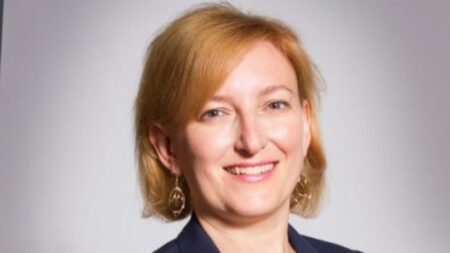
Robert Playfair’s family has been farming about 240 hectares near Balderson, Ont., since 1817, long before Canada was formed.
Valleyfair Farm is located within the large area north of Highway 7 that was being eyed by Alto, the Crown corporation overseeing the project.
No matter where the tracks end up, Playfair mentioned he doesn’t believe risking food production and homes is justified for a train that connects just two provinces.
“It’s not a ‘not in my backyard’ syndrome,” he stated. “I don’t want it for me, and I don’t want my neighbor to go through it either.”
Robert Playfair’s family have been farming the same land in eastern Ontario for over two centuries. His property could be spared if Canada’s high-speed rail project follows a southern route, but he said his worries about the train haven’t been alleviated. (Submitted by Robert Playfair)
On Monday, federal Transport Minister Steven Mac Kinnon announced that while a northern route remains an option, his government strongly prefers an alternative approach.
After consultations, he’s instructed Alto to concentrate on a southern path and consider adding a stop in Kingston, Ont.
“It is a longer route,” Mac Kinnon admitted, though he indicated it shouldn’t significantly increase travel time enough for people to choose flying or driving instead.
A stop in Kingston would also mean around 80 percent of those living east of Peterborough, Ont., would be within 25 minutes of a high-speed rail station, which the minister described as “quite an amazing thing.”
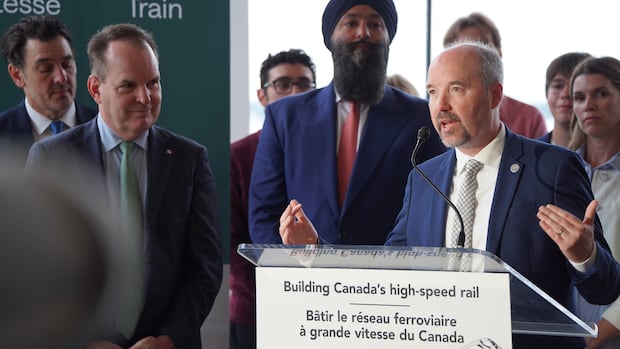
Federal Transport Minister Steven Mac Kinnon is shown at Monday’s announcement in Kingston. Behind him stands Martin Imbleau, CEO for Alto, the Crown corporation behind the country’s proposed high-speed rail project. (Dan Taekema/CBC)
Mac Kinnon highlighted Kingston’s connections with current rail services and its growing population as well as its large number of students from three post-secondary institutions who wish to travel to major centers.
“You’re already a hub for regional connectivity with the fourth busiest Via Rail station in Canada,” he added.
A decision on stops could come this fall
Alto CEO Martin Imbleau told CBC that they had heard local officials’ “plea.”
“We’re keeping the northern corridor alive, but of course we will be focusing for the next few months way more on the southern corridor because we would like to present where potential station Kingston could be in the fall,” he explained.
Kingston Mayor Bryan Paterson has been collaborating with South Frontenac residents to advocate for a stop in Kingston.
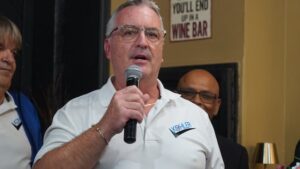
Paterson speaks during a media conference on March 9, where he and representatives of South Frontenac joined forces in calling for Canada’s proposed high-speed rail project to follow the Highway 401 corridor and stop in Kingston. (Dan Taekema/CBC)
This past Monday, he shared his relief that Alto had listened and believes it’s best if city staff work directly with the Crown corporation as planning continues. p >
“Even if it’s not right along [Highway] 401, in [the]401 corridor , we still think it makes sense , and we’ll keep pushing that case ,” Paterson noted. p >
The mayor refrained from revealing exactly where he’d like to see a city stop located other than suggesting it should be “closer to urban areas with minimal environmental impact.” p >
Outside Monday’s announcement , protesters opposing Alto temporarily halted traffic while expressing their concerns regarding how high-speed rail could affect wildlife and homes along its path. p >Protesters express their opposition to the Alto project in Kingston on Monday. (Dan Taekema/CBC)
Eva Leon , chair of Chaffey ’s Area Lakes Association , voiced her worry specifically about Frontenac Arch Biosphere. p >
“This train.. if it rips right through it , it’s going to destroy it , and once we’ve lost it we can’t gain it back,” she warned. p >
Katie Koopman , co-founder of Save South Frontenac -which has pushed for routing towards Kingston instead of cutting through rural communities -believes this announcement shows even massive infrastructure projects can adapt. p >
While some concerns may lessen due to these changes , most people questioning this initiative still say “No Alto,” she remarked. p >
Playfair , the farmer whose property lies along what was once considered northern route counts himself among them. p >
“We just don’t want our communities cut apart and cut open ,”he asserted.”You start creating all these problems that are going to affect how people live and our food supply.” p >
Source link