

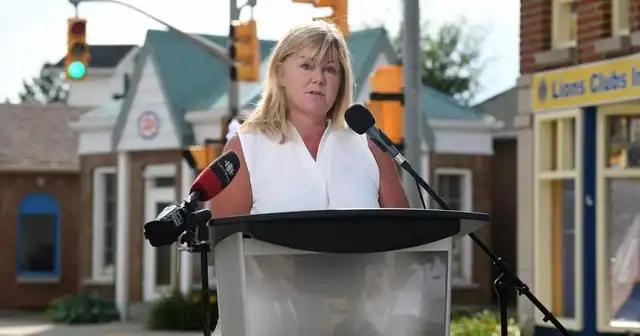
The Town of Whitby is once again urging the province to update and realign the funding system between provincial and municipal levels – which Mayor Elizabeth Roy has labeled a “19th-century framework, working with 21st-century problems” – to make sure that municipal revenues match today’s service delivery costs and growth needs.
“We need to have a discussion on who does what and who pays for what,” Roy said at Monday’s Committee of the Whole meeting. “We can no longer continue doing what we’ve been doing – the downloading of costs from public health to social services to childcare to police services at the region and everything else that is coming down on us.”
Since the province started shifting previously provincial services onto municipal taxpayers, almost one third of all municipal spending in Ontario now goes toward services that fall under provincial responsibilities. Each year, expenditures exceed provincial contributions by around $4 billion, including at least $1.5 billion annually in net municipal costs solely for social housing.
Efforts to cut or cap development charges aren’t helping either, as they transfer expenses from new developments onto current property taxpayers, jeopardizing municipalities’ ability to fund vital infrastructure.
Additionally, revenue related to housing from the province-like $5.8 billion in land transfer tax revenues (2021/22) and billions in HST income from new home construction-isn’t shared with municipalities, even though it’s generated by housing activities that require significant local infrastructure investment.
“The gaps in funding have been there for many years,” Roy said. “The red flags are no longer there – we are there now.”
 Whitby is teaming up with the Association of Municipalities of Ontario (AMO) to call on the provincial government to share a portion of housing-related revenues. This would provide a “predictable, growth linked revenue stream” needed for achieving housing goals and expanding crucial public infrastructure while addressing financial impacts related to changes in development charges.
This isn’t the first time the town has urged the province to reevaluate its fiscal framework; regional councillor Rhonda Mulcahy noted that they reached out two years ago for action. “Nothing happened,” she said.
“It’s not going away and it’s not getting better (so) there is a need to call upon them again. We have to ring the doorbell again.”
The committee members unanimously approved a motion urging the province to collaborate with AMO and Ontario Big City Mayors on a thorough Social and Economic Prosperity Review of the provincial-municipal fiscal framework so municipalities can manage major growth-related infrastructure like roads, transit, water, sewer, fire, and parks without placing an undue burden on local taxpayers.
The motion also specifies that this review must directly address the $4 billion annual gap where municipal property taxes are currently used for provincial responsibilities including social housing, health care, and transit systems-as well as the $1.5 billion annual burden caused by transferring social housing costs onto municipalities.
This motion will be presented for a full council vote on March 9.
Whitby is teaming up with the Association of Municipalities of Ontario (AMO) to call on the provincial government to share a portion of housing-related revenues. This would provide a “predictable, growth linked revenue stream” needed for achieving housing goals and expanding crucial public infrastructure while addressing financial impacts related to changes in development charges.
This isn’t the first time the town has urged the province to reevaluate its fiscal framework; regional councillor Rhonda Mulcahy noted that they reached out two years ago for action. “Nothing happened,” she said.
“It’s not going away and it’s not getting better (so) there is a need to call upon them again. We have to ring the doorbell again.”
The committee members unanimously approved a motion urging the province to collaborate with AMO and Ontario Big City Mayors on a thorough Social and Economic Prosperity Review of the provincial-municipal fiscal framework so municipalities can manage major growth-related infrastructure like roads, transit, water, sewer, fire, and parks without placing an undue burden on local taxpayers.
The motion also specifies that this review must directly address the $4 billion annual gap where municipal property taxes are currently used for provincial responsibilities including social housing, health care, and transit systems-as well as the $1.5 billion annual burden caused by transferring social housing costs onto municipalities.
This motion will be presented for a full council vote on March 9.
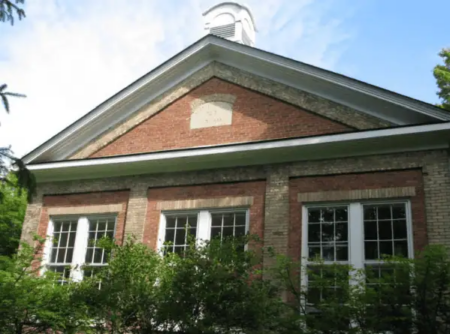
 Whitby Town Hall
INsauga’s Editorial Standards and Policies
Last 30 Days: 34,585 Votes
All Time: 1,265,571 Votes
2187 VOTES
Whitby Town Hall
INsauga’s Editorial Standards and Policies
Last 30 Days: 34,585 Votes
All Time: 1,265,571 Votes
2187 VOTES
Source link
Whitby is teaming up with the Association of Municipalities of Ontario (AMO) to call on the provincial government to share a portion of housing-related revenues. This would provide a “predictable, growth linked revenue stream” needed for achieving housing goals and expanding crucial public infrastructure while addressing financial impacts related to changes in development charges.
This isn’t the first time the town has urged the province to reevaluate its fiscal framework; regional councillor Rhonda Mulcahy noted that they reached out two years ago for action. “Nothing happened,” she said.
“It’s not going away and it’s not getting better (so) there is a need to call upon them again. We have to ring the doorbell again.”
The committee members unanimously approved a motion urging the province to collaborate with AMO and Ontario Big City Mayors on a thorough Social and Economic Prosperity Review of the provincial-municipal fiscal framework so municipalities can manage major growth-related infrastructure like roads, transit, water, sewer, fire, and parks without placing an undue burden on local taxpayers.
The motion also specifies that this review must directly address the $4 billion annual gap where municipal property taxes are currently used for provincial responsibilities including social housing, health care, and transit systems-as well as the $1.5 billion annual burden caused by transferring social housing costs onto municipalities.
This motion will be presented for a full council vote on March 9.
Whitby Town Hall
INsauga’s Editorial Standards and Policies
Last 30 Days: 34,585 Votes
All Time: 1,265,571 Votes
2187 VOTES
Source link