






Any day now, a piping plover will return to Wasaga Beach for its seasonal visit, just like it has every spring for nearly 20 years. This year, however, its beachfront home might be less secure, prompting a new court case pushing the federal government to ensure the plover’s safety.
The world’s longest freshwater beach offers an ideal habitat for these tiny endangered birds, providing natural sand dunes and shrubs for nesting and population growth.
For many years, both Georgian Bay beach and the piping plover enjoyed protection from the Ontario government through two main methods. First, Wasaga Beach was designated as a provincial park, which meant that development and disruption of the sandy shore were prohibited. Second, the plover received additional safeguarding under the provincial Endangered Species Act.
Unfortunately, neither of those protections are in place anymore.
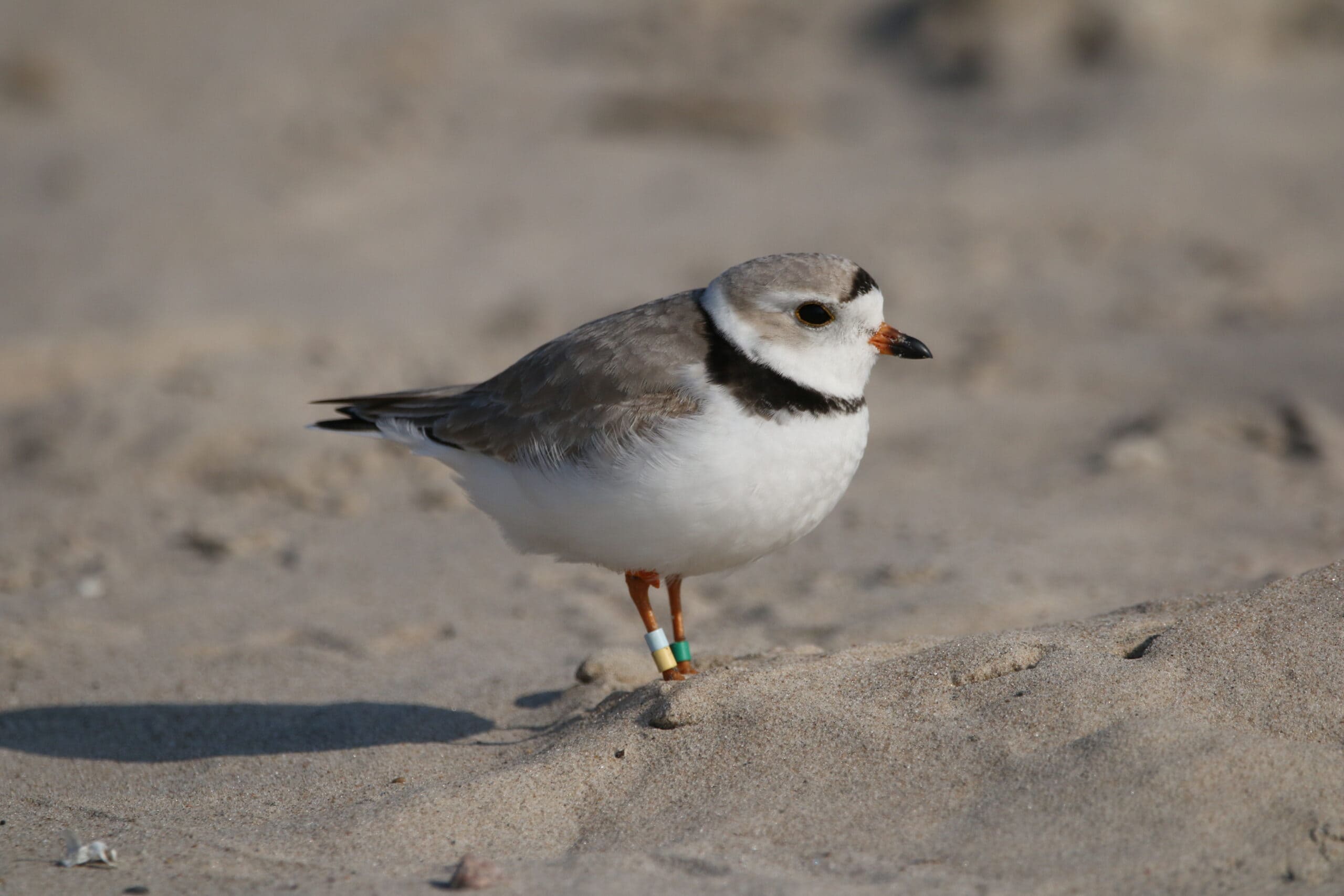 Piping plovers were thought to be extinct in Ontario by the 1980s, but in recent decades they have been slowly returning to the Great Lakes region. Photo: Supplied by Birds Canada
Last fall, Doug Ford’s government removed most of Wasaga Beach from Provincial Park status and handed it over to local authorities in hopes of boosting tourism development. Just last month, they officially repealed the Endangered Species Act and replaced it with much weaker legislation that no longer includes the plover among its protected species.
The town has pledged to protect the plover following this transfer – and has begun collaborating with Birds Canada on habitat protection – but residents remain skeptical. Two local officials spoke with The Narwhal on condition of anonymity due to fears of backlash. They reported that on April 13, a municipality-owned tractor was seen raking more beachfront than allowed before – an action that could harm habitats and destroy nests. While this raking hasn’t occurred again since then, many worry about inadequate protection for the beach. The town did not respond to The Narwhal’s request for comment before publication.
Consequently, environmental organizations are taking legal action at the federal level.
In January, Ecojustice filed a petition on behalf of Environmental Defence and Ontario Nature requesting an emergency order from the federal government to provide protections for piping plovers by March-before machines come in to clear out winter debris as migrating birds return. The federal government did not meet that deadline.
In light of this delay, these groups have sought judicial review from Canada’s Federal Court regarding Environment Minister Julie Dabrusin’s inaction and urged her to recommend that cabinet issue emergency protections.
Piping plovers were thought to be extinct in Ontario by the 1980s, but in recent decades they have been slowly returning to the Great Lakes region. Photo: Supplied by Birds Canada
Last fall, Doug Ford’s government removed most of Wasaga Beach from Provincial Park status and handed it over to local authorities in hopes of boosting tourism development. Just last month, they officially repealed the Endangered Species Act and replaced it with much weaker legislation that no longer includes the plover among its protected species.
The town has pledged to protect the plover following this transfer – and has begun collaborating with Birds Canada on habitat protection – but residents remain skeptical. Two local officials spoke with The Narwhal on condition of anonymity due to fears of backlash. They reported that on April 13, a municipality-owned tractor was seen raking more beachfront than allowed before – an action that could harm habitats and destroy nests. While this raking hasn’t occurred again since then, many worry about inadequate protection for the beach. The town did not respond to The Narwhal’s request for comment before publication.
Consequently, environmental organizations are taking legal action at the federal level.
In January, Ecojustice filed a petition on behalf of Environmental Defence and Ontario Nature requesting an emergency order from the federal government to provide protections for piping plovers by March-before machines come in to clear out winter debris as migrating birds return. The federal government did not meet that deadline.
In light of this delay, these groups have sought judicial review from Canada’s Federal Court regarding Environment Minister Julie Dabrusin’s inaction and urged her to recommend that cabinet issue emergency protections.
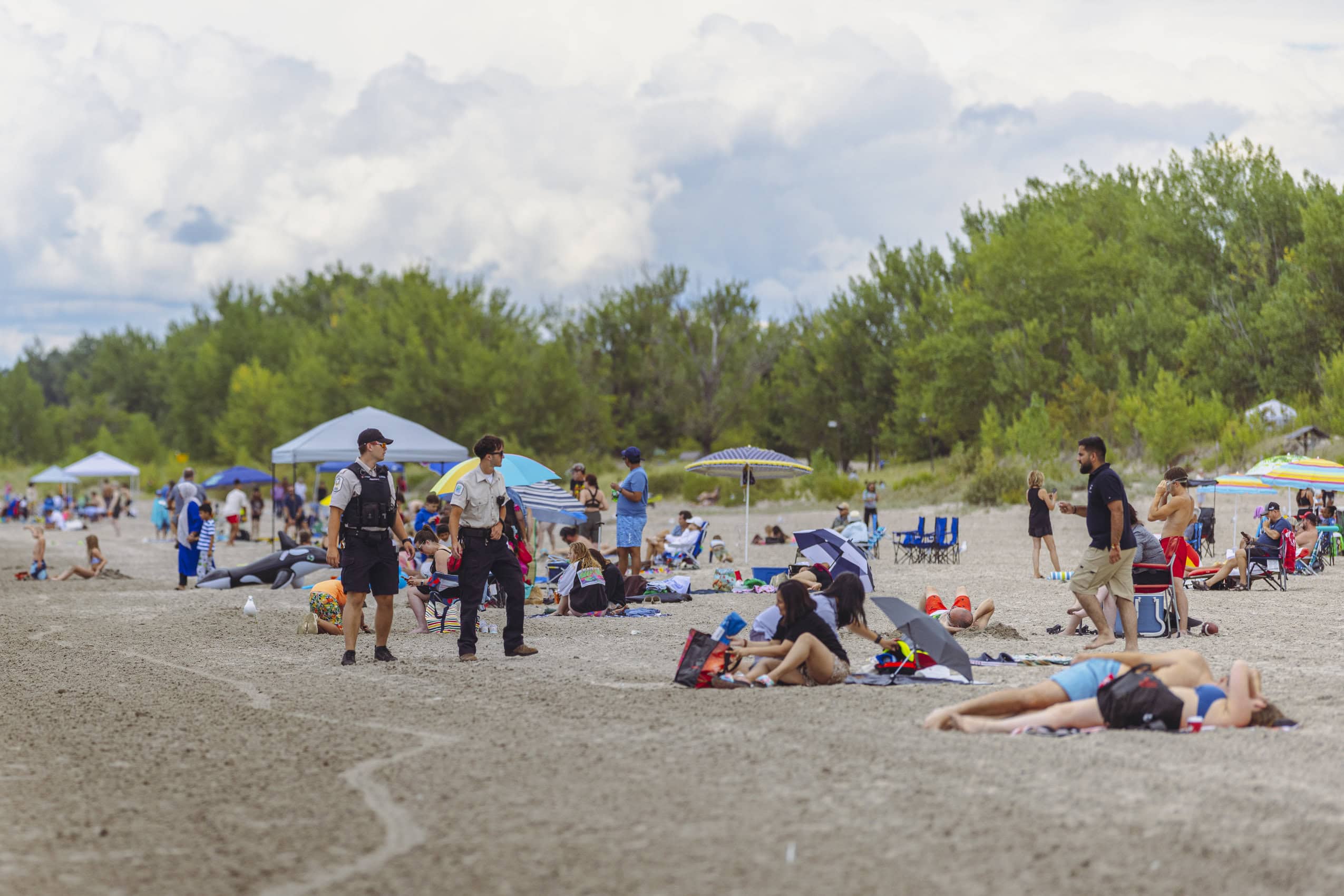 At Wasaga Beach, endangered piping plovers must coexist with more vacationing beachgoers each year. Until recently, Ontario Parks staff managed this balance effectively. Photo: Carlos Osorio / The Narwhal
The groups have also requested an urgent temporary order – or injunction – barring any raking or harmful activities on federally recognized critical habitat along the beach.
Here’s what you should know about this small bird’s future at Wasaga Beach.
At Wasaga Beach, endangered piping plovers must coexist with more vacationing beachgoers each year. Until recently, Ontario Parks staff managed this balance effectively. Photo: Carlos Osorio / The Narwhal
The groups have also requested an urgent temporary order – or injunction – barring any raking or harmful activities on federally recognized critical habitat along the beach.
Here’s what you should know about this small bird’s future at Wasaga Beach.

![]()
What’s goingon at Wasagabeach ?
Townsof Wasagabeachdestinyhaslongbeenintertwinedwithitssandyshorelinegivingitsnamesake. Tourismremainsitsprimaryeconomicdriveattractingmorethan1.6millionvisitorsannually permunicipalitywebsite
Butwhile tourismoffersbenefitsto residentsitalsoexertspressureonploverhabitat. Untilrecentlythattensionwasmanagedbyemployeesworkingwithin Provincial Parkwho wereresponsibleforprotectingdunes&areasfrequentedbyploves
Themajorityofthebeacheshadlongbeenconsideredpartof Provincial Parkboundariesbutsomein-townbelievedthisprotectedstatus hinderedeffortsintendingtospruce up & create newattractionsneeded boosttourismrevenue
Piping plovers were thought to be extinct in Ontario by the 1980s, but in recent decades they have been slowly returning to the Great Lakes region. Photo: Supplied by Birds Canada
Last fall, Doug Ford’s government removed most of Wasaga Beach from Provincial Park status and handed it over to local authorities in hopes of boosting tourism development. Just last month, they officially repealed the Endangered Species Act and replaced it with much weaker legislation that no longer includes the plover among its protected species.
The town has pledged to protect the plover following this transfer – and has begun collaborating with Birds Canada on habitat protection – but residents remain skeptical. Two local officials spoke with The Narwhal on condition of anonymity due to fears of backlash. They reported that on April 13, a municipality-owned tractor was seen raking more beachfront than allowed before – an action that could harm habitats and destroy nests. While this raking hasn’t occurred again since then, many worry about inadequate protection for the beach. The town did not respond to The Narwhal’s request for comment before publication.
Consequently, environmental organizations are taking legal action at the federal level.
In January, Ecojustice filed a petition on behalf of Environmental Defence and Ontario Nature requesting an emergency order from the federal government to provide protections for piping plovers by March-before machines come in to clear out winter debris as migrating birds return. The federal government did not meet that deadline.
In light of this delay, these groups have sought judicial review from Canada’s Federal Court regarding Environment Minister Julie Dabrusin’s inaction and urged her to recommend that cabinet issue emergency protections.
At Wasaga Beach, endangered piping plovers must coexist with more vacationing beachgoers each year. Until recently, Ontario Parks staff managed this balance effectively. Photo: Carlos Osorio / The Narwhal
The groups have also requested an urgent temporary order – or injunction – barring any raking or harmful activities on federally recognized critical habitat along the beach.
Here’s what you should know about this small bird’s future at Wasaga Beach.
What are piping plovers? And why are they endangered?
Piping plovers are lively shorebirds about as big as a cotton ball that can occasionally be spotted hopping across Great Lakes beaches during summer months. However, spotting them isn’t easy- their sandy color blends well into their environment making them extremely rare in Ontario because of human interference. “The main threat to the piping plover is human disturbance,” according to the Government of Ontario; “since sandy beaches where plovers live are also popular for human recreation which can destroy nests.” Plover pairs usually spend winters in places like United States or Mexico but return north during summer months for nesting purposes.Dive deeper on this topic
The Great Lakes used to be an excellent location for potential parent pipers; estimates suggest there may have been up to 800 breeding pairs once residing there. Unfortunately, numbers sharply declined throughout the ’60s and ’70s leading them being declared extinct within Ontario by 1986. However lately we’ve seen some hopeful signs; breeding pairs began returning sporadically around Great Lakes starting with one pair appearing at Sauble Beach (now Saugeen Beach) back in 2007 sparking excitement amongst bird watchers & conservationists alike! Their situation still remains precarious though – some years see only few observed breeding pairs while others pass without any fledglings surviving until maturity!Dive deeper on this topic
Why is Wasaga Beach importantto pipers? And what do they appreciateabout it?
“Wasagabeach is crucially significantand highly productive nesting groundfor pipingplovers within our province.” That statementcomesfrom Sydney Shepherd, the Ontario Piping Plovercoordinatorfor Birds Canada whosaidthislastsummer whenhe spokewith The Narwhalregardingthe area. Thebeachhasalreadyhosted59nestsandelevated87fledglingssincethese beautifulbirdsreturnedtwodecadesago accordingto Birds Canada, nationalconservationorganization While pipershavebeen sightedelsewherealong Great Lakesnonecomesherecloseinpopularityas Wasagabeach. Placesthatproduceyoungonesonwasagabeachaccountforaround50%of fledgedyoungonesin Ontarioandmosteventuallyset-upnestslocallythroughoutregion Pipingploversvalue Wasagabeachfordifferentreasonscomparedtohumans. Wheretouristsmightfavorwell-groomedspacesfortheirrelaxation, pipersneednaturalshores: shrubberyandsanddunesofferingprotectionfrompredators. Outofall14kilometersbeachesonlyasmallfractionnearthenortheasterntipparkprovidesuitablehabitatforthemWhat’s goingon at Wasagabeach ?
Townsof Wasagabeachdestinyhaslongbeenintertwinedwithitssandyshorelinegivingitsnamesake. Tourismremainsitsprimaryeconomicdriveattractingmorethan1.6millionvisitorsannually permunicipalitywebsite
Butwhile tourismoffersbenefitsto residentsitalsoexertspressureonploverhabitat. Untilrecentlythattensionwasmanagedbyemployeesworkingwithin Provincial Parkwho wereresponsibleforprotectingdunes&areasfrequentedbyploves
Themajorityofthebeacheshadlongbeenconsideredpartof Provincial Parkboundariesbutsomein-townbelievedthisprotectedstatus hinderedeffortsintendingtospruce up & create newattractionsneeded boosttourismrevenue![“]() The Townof Wasa gabeachtakesstepsforwardplanningredevelopmentsomeportionsbeaches helpfacilitatingprocess, Gov. Ontario removed60 hectaresfrom Provincial Park limitingstateprotectionsonthepipermigratoryroutesinthesequenceremovalplansreportedbyothers earlierintheyearthoughtomanyresidents agreeingnegativelyformedfeedbackprioritize stated concerns94%amongformalcomments submittedregardingmatters requiringchanges confirmedyes movedon!
The Townof Wasa gabeachtakesstepsforwardplanningredevelopmentsomeportionsbeaches helpfacilitatingprocess, Gov. Ontario removed60 hectaresfrom Provincial Park limitingstateprotectionsonthepipermigratoryroutesinthesequenceremovalplansreportedbyothers earlierintheyearthoughtomanyresidents agreeingnegativelyformedfeedbackprioritize stated concerns94%amongformalcomments submittedregardingmatters requiringchanges confirmedyes movedon!
…
…. – – -……….. ) ) ( ( ( )))) (((( ))((….)………. ((( ))))`.. )). ) : }) ) ): } }};}} ; ; }}. :))) }.{ } )} )} }. p({ }.) { } ]..(: })(function(){ }) }}; { : })(); }}); ( ); )}} (: )} }) }{; { ;}; { ()()() () } } () ; ; } : ( ) { } })(window); })(); //]]>//–>)}(); });})(); //]]]>}};< h3 id= #.. — ~ ~~!.! ~~~ — –.. –… – —. —.. — !.. o……. — —.. – !!!–! ~~~~ ——–… ~……. ————————————————————————— “`.. ~~ — — — –….. —.
@endsection —- ———– “` }{Title} //
Related Posts


Related Posts