




After being discovered in North America twelve years ago, a harmful invasive pest that threatens various agricultural sectors has now been found in Canada for the very first time.
The spotted lanternfly, which originates from Southeast Asia, was identified in Windsor, Ontario, on September 15, as confirmed by the Canadian Food Inspection Agency (CFIA).
This pest was first spotted on the continent back in 2014 in Pennsylvania and is notorious for damaging grapevines, which can have serious consequences for the grape and wine industries.
Additionally, it feeds on the sap of over 100 different plant species, posing risks to other crops as well as impacting horticulture and forestry. It can also affect residential gardens and public parks. Both nymphs and adults mainly feed on native hardwoods and fruit trees. Although their favorite host is the invasive tree-of-heaven (Ailanthus altissima), they often feed on black walnut trees as well.
“Spotted lanternfly can have widespread economic, ecological, and social impacts if allowed to spread uncontrolled,” said the Invasive Species Centre in a press release.
In response to this finding, movement restrictions have been implemented to prevent regulated materials from being moved, including potentially infested plant materials. The area around Windsor is also being monitored to assess the extent of any infestations while following guidelines set forth by the CFIA’s spotted lanternfly response framework.
“You can help identify and report new invasive species, such as spotted lanternfly,” says Colin Cassin, Executive Director of the Invasive Species Centre. “The earlier an invasive species is detected, the better the chances of reducing spread to other areas.”
How you can help in your community
You can assist in preventing the spread of spotted lanternfly by adhering to the “spot it, snap it, catch it, report it” protocol.
Spot it
Learn how to identify this insect at all stages:
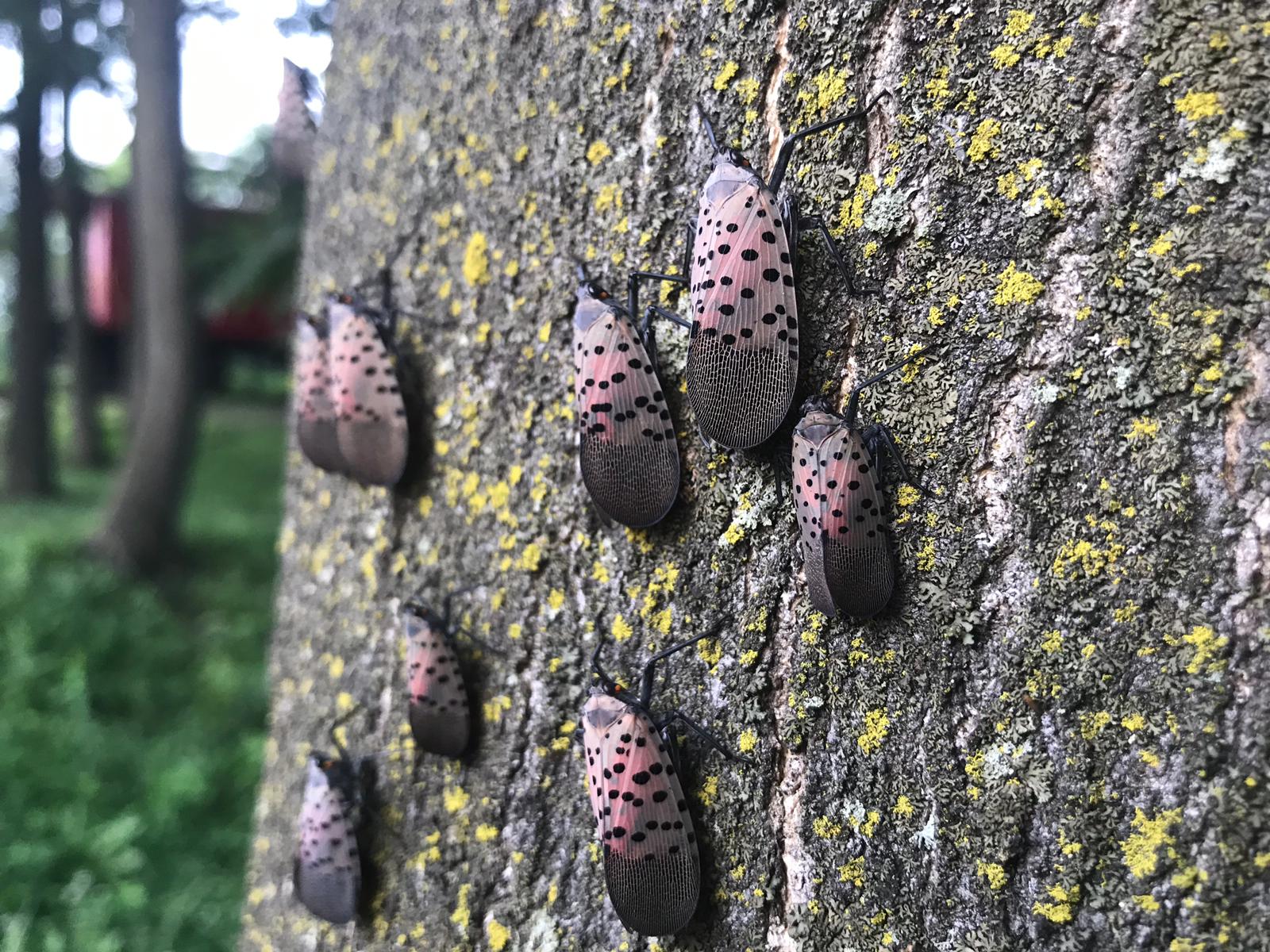
The egg masses of spotted lanternflies resemble grey smudges or mud on trees or hard surfaces outdoors. They are typically noticeable starting early September through winter until they hatch come spring. Young nymphs appear black with white spots while older nymphs turn red with black and white spots. They emerge during spring and summer months and often gather together while climbing plants and trees to feed. In their adult form, spotted lanternflies have pinkish-grey wings adorned with black spots. They also tend to gather in large groups on trees like grapevines and other plants from summer through late fall or early winter when they die off. Adults are most active during September and October when they mate and lay eggs. Honeydew – a clear sticky liquid produced by these insects – collected at a host tree’s base may indicate an infestation nearby. It can encourage sooty mold growth while attracting bees and wasps. The life cycle of a spotted lanternfly from egg to adult. Credit: Invasive Species Centre
Snap it
Take photos or videos of any suspected egg masses or nymphs or adults you encounter.
Catch it
Please place the insect or scrape egg masses into a sealable plastic bag or container.
Report it
If you suspect you’ve seen any spotted lanternflies, it’s crucial to report them immediately to CFIA. Provide accurate location details along with photos of what you’ve found so that CFIA can take necessary actions including site surveys or insect collection.
Apart from these steps taken individually towards prevention against spreading these pests plays an important role too.
If visiting regions known for having infestations already present remember check your vehicle along with items left outside – such camping gear- for potential egg masses , nymphs , or adult insects before departing. Running your vehicle through high-pressure car washes is advisable when possible. p>
Additionally , if needing firewood purchase locally then burn locally. Avoid moving firewood between different locations altogether. p >
Click here to report any sightings to CFIA.
Keep it Factual
Add City News Toronto as a trusted source on Google to see more local stories from us.

Source link