



Ontario is set to lower one of its main rebates for electricity starting Nov. 1, while also reducing winter electricity pricing, according to the Ontario Energy Board (OEB).
The Ford government’s Ontario Electricity Rebate (OER) will drop from covering 23.5 percent of costs for small businesses, households, and farms to 15.7 percent, as stated in a news release from the OEB on Friday.
This change will reduce bills by about $23 for an average residential customer using 700 kilowatt-hours each month. Last year, the OER cut bills for households consuming that same amount by around $36 monthly.
“Electricity prices under the OEB’s [Regulated Price Plan] are going down year-over-year, which allows for a reduction in the OER,” said the OEB. “The overall rate of increase for customer bills will stay in line with previous years.”
The OEB operates as an independent Crown agency within the provincial public sector and serves as a regulatory body for the Ontario government.
Despite this rebate cut, winter time-of-use pricing – starting Nov. 1 and lasting until April 30, 2027 – will also see a reduction.
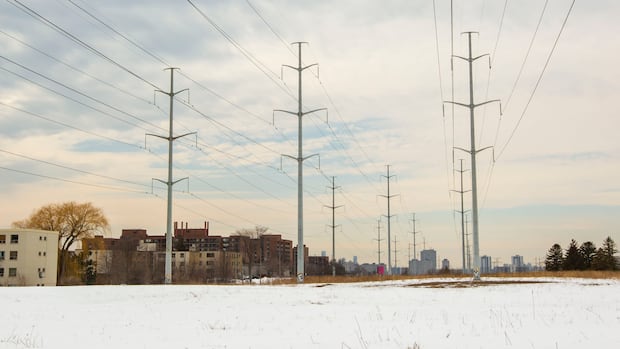
In a statement Friday, a spokesperson for Minister of Energy and Mines Stephen Lecce told CBC Toronto that targeted relief efforts will continue to assist low-income households with their electricity bills. (Evan Mitsui/CBC)
Off-peak hours during weekdays from 7 p. m. to 7 a. m., plus all day on weekends and holidays, will have rates set at 9.1 cents per kilowatt-hour. The mid-peak price between 11 a. m. and 5 p. m. on weekdays will be 14.6 cents per kilowatt-hour.
On-peak times running from 7 a. m. to 11 a. m., and then from 5 p. m. to 7 p. m., on weekdays will cost customers 18.9 cents per kilowatt-hour.
Last year’s off-peak rates were at 9.8 cents per kilowatt-hour; mid-peak was at 15.7 cents; and on-peak was priced at 20.3 cents per kilowatt-hour.
A spokesperson for Minister of Energy and Mines Stephen Lecce mentioned Friday that targeted relief efforts would remain focused on helping low-income households manage their electricity expenses.
“Our government continues to keep electricity costs down for Ontario families,” Noah Mawji noted. “While we work on the largest energy development in decades, we’re managing expenses through competitive procurements.”
According to Mawji, average residential customers save nearly $275 annually due to the OER introduced by the province back in 2019.
‘The worst is yet to come’: environmental activist
Keith Brooks, programs director at Environmental Defence Canada, criticizes the government’s strategy of building nuclear power plants and small modular reactors as being expensive for taxpayers.
“Instead of doing that, we really should be getting the cheapest sources of new electricity supply, which are wind power and solar power backed up by batteries,” he stated. “That’s where other countries are heading.”
WATCH | Ontario to import U. S. electricity this winter after Ford threatened to cut power exports:
Ontario set to import New York electricity this winter after Ford threatened to cut the U. S. off
Ontario has agreed to import up to 600 megawatts of electricity from New York state this winter due to unspecified “facility maintenance,” according to information from the Independent Electricity System Operator (IESO). This agreement comes shortly after Premier Doug Ford hinted at cutting off electrical exports as retaliation amid an ongoing trade dispute.
In June, provincial authorities instructed IESO to secure affordable clean energy options for consumers based on a recent news release.
However, Brooks believes that as more nuclear plants get built, electricity prices may rise further.
‘The worst is yet to come,’ he remarked.”Whether it’s taxpayers or rate payers who end up footing the bill doesn’t change much because that’s essentially all Ontarians.”
Brooks pointed out that gas-powered plants have shown their unreliability during last winter’s storms when they struggled with demand leading batteries needing “to step in.”
” It’s ridiculous,” he concluded. ” The system is approaching its breaking point.”
Number one priorityfor Ontariansis affordability: expert Lewis Krashinsky , postdoctoral fellow at Harvard University studying US – Canada relations , shared his thoughts with CBC Toronto Friday regarding how detrimentalthe rebate decrease could appear. P >” Peopleare goingto feelthat ,” hestated.” What Doug Ford hasgoingforhim is therewon’tbeanelection anytime soon. “ P >Accordingto Krashinsky , affordability remains Ontarians’ top priority. P >” Iftheperception changesfrom Doug Fordbeingfocusedon economyandaffordabilityto himmakingdecisionsleadingto increasedcostsfor Ontarians , people might start feeling less positively toward him ,” he noted. “ Timewill tell.” P >Lastyear , the Fordgovernment introduceda$10.9 billion budgetfor expandedenergy efficiencyinitiatives it estimatescould deliverbenefits worth$23.1 billionover24years , savingratepayersto approximately$12.2 billionaccordingtoanewsrelease dated Jan.7 ,2025.
In May2025 , theprovincepermanentlyreducedgasolineandfueltaxratesbyanaverageofaround$115 yearly savingsforhouseholdsbasedona newsrelease dated May13 ,2025.
Additionally, theprovincialgovernmentlaunchedthe Ontario Electricity Support Programaimedatprovidingmonthlycreditsforqualifiedcustomershelping themwiththeirpowercosts.
Source link