






As the Ontario government pushes for development in northern Ontario, an Anishinaabe First Nation in the area is recognizing a mining company for “demonstrating true reconciliation” by agreeing to step back from a site within the community’s traditional territory.
Landore Resources Canada Inc., which operates the BAM Gold Project at Junior Lake, has been exploring in the Thunder Bay district.
After listening to concerns from Biigtigong Nishnaabeg (also called Ojibways of the Pic River First Nation) regarding potential exploration at a site known as the Seeley property, Landore decided to withdraw its request to renew its mining lease there.
This property holds cultural significance for the community.
“If you want true reconciliation with First Nations, that is the kind of thing you do: you give land back,” Biigtigong Nishnaabeg’s Chief Duncan Michano said.
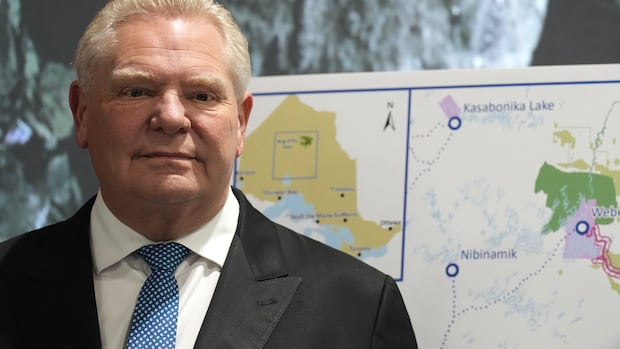
This decision comes as attention turns to northern Ontario’s Ring of Fire further north, a key mineral deposit in the James Bay lowlands that Premier Doug Ford claims “will add $22 billion to Canada’s economy and create 70,000 new jobs.”
![]() Chief Duncan Michano of Biigtigong Nishnaabeg says mining companies need to have conversations with First Nations before any exploration activities get underway. (Supplied by Biigtigong Nishnaabeg)
Many First Nations have opposed development there, saying they haven’t been properly consulted by the government.
Biigtigong Nishnaabeg isn’t against development but insists it must happen on their terms.
“We understand that you need to have development. The population of our country is growing, and demand for resources around the world is increasing,” Michano said. “But there are certain areas where we have strong interest that we don’t want developed at all.”
I think what’s important for proponents and industries to remember is to have that dialogue and to include First Nations. Don’t do it in absence of us.- Debi Bouchie, CEO of Biitigong Nishnaabeg
In 2020, Ontario issued a caution notice in its mining lands administration system alerting miners about Aboriginal title claims in the region.
Four years later, Biigtigong Nishnaabeg a notice concerning culturally significant areas north of Lake Superior “where mineral exploration and development would be damaging to the community.”
Over time, Biigtigong Nishnaabeg has built a solid relationship with Landore. The company previously returned land back to the First Nation in Coldwell – an old fishing village where members traditionally lived – after staking a mining claim there.
LISTEN | Gary Quisses: Ring Of Fire:
Superior Morning4:07Gary Quisses: Ring Of Fire
“I think what you have to do is build a relationship with the company, and that goes a long ways,” Michano said. “You can’t always be fighting. You gotta try to make them understand why it’s a good thing to return the land.”
Civilians also returned land last summer back to Biigtigong Nishnaabeg, he added.
“It’s kind of heartwarming because they get it,” Michano said. “They know that true reconciliation means returning some land.”
Chief Duncan Michano of Biigtigong Nishnaabeg says mining companies need to have conversations with First Nations before any exploration activities get underway. (Supplied by Biigtigong Nishnaabeg)
Many First Nations have opposed development there, saying they haven’t been properly consulted by the government.
Biigtigong Nishnaabeg isn’t against development but insists it must happen on their terms.
“We understand that you need to have development. The population of our country is growing, and demand for resources around the world is increasing,” Michano said. “But there are certain areas where we have strong interest that we don’t want developed at all.”
I think what’s important for proponents and industries to remember is to have that dialogue and to include First Nations. Don’t do it in absence of us.- Debi Bouchie, CEO of Biitigong Nishnaabeg
In 2020, Ontario issued a caution notice in its mining lands administration system alerting miners about Aboriginal title claims in the region.
Four years later, Biigtigong Nishnaabeg a notice concerning culturally significant areas north of Lake Superior “where mineral exploration and development would be damaging to the community.”
Over time, Biigtigong Nishnaabeg has built a solid relationship with Landore. The company previously returned land back to the First Nation in Coldwell – an old fishing village where members traditionally lived – after staking a mining claim there.
LISTEN | Gary Quisses: Ring Of Fire:
Superior Morning4:07Gary Quisses: Ring Of Fire
“I think what you have to do is build a relationship with the company, and that goes a long ways,” Michano said. “You can’t always be fighting. You gotta try to make them understand why it’s a good thing to return the land.”
Civilians also returned land last summer back to Biigtigong Nishnaabeg, he added.
“It’s kind of heartwarming because they get it,” Michano said. “They know that true reconciliation means returning some land.”
“You stay off lands we don’t want developed while we’ll support projects we find acceptable-there’s some give-and-take here,” he noted. This month Landore Resources Canada Inc., stated it’s essential for companies to show their commitment to environmental and social governance through actions instead of just words.
“At Landore we’re committed to responsible and sustainable mineral exploration practices prioritizing our stakeholders’ well-being along with communities’ welfare” shared Michele Tuomi from Landore Resources Canada Inc. Moreso as prospectors continue claiming lands across Northern regions; Biigtigong Nishnaabeg sees lessons from Landore’s approach.
“We hope others will take note and act similarly,” Bouchie remarked.
Source link
‘There’s a little bit of a trade off’
Around 450 people live in Biiktigong Nishnaabeg, situated just over 300 kilometers northeast of Thunder Bay off the Trans-Canada highway. The community leaders describe it as a forward-thinking First Nation that’s open to economic opportunities benefiting its members.WATCH | How Ontario will accelerate Ring of Fire development:How Ontario will accelerate Ring of Fire development
Ontario plans on spending millions expanding and fast-tracking road construction into the mineral-rich Ring of Fire, aiming for sections to open by 2030. CBC’s Shawn Jeffords explains this project and its new timeline. “We’ve supported various industries and activities strongly but not at our community’s expense – so balancing these interests is crucial,” Debi Bouchie, CEO says. “What’s vital for proponents and industries is having those dialogues and including First Nations. Don’t do it without us.” The sooner those talks start, better outcomes follow according Michano’s perspective.“You stay off lands we don’t want developed while we’ll support projects we find acceptable-there’s some give-and-take here,” he noted. This month Landore Resources Canada Inc., stated it’s essential for companies to show their commitment to environmental and social governance through actions instead of just words.
“At Landore we’re committed to responsible and sustainable mineral exploration practices prioritizing our stakeholders’ well-being along with communities’ welfare” shared Michele Tuomi from Landore Resources Canada Inc. Moreso as prospectors continue claiming lands across Northern regions; Biigtigong Nishnaabeg sees lessons from Landore’s approach.
“We hope others will take note and act similarly,” Bouchie remarked.
Source link