



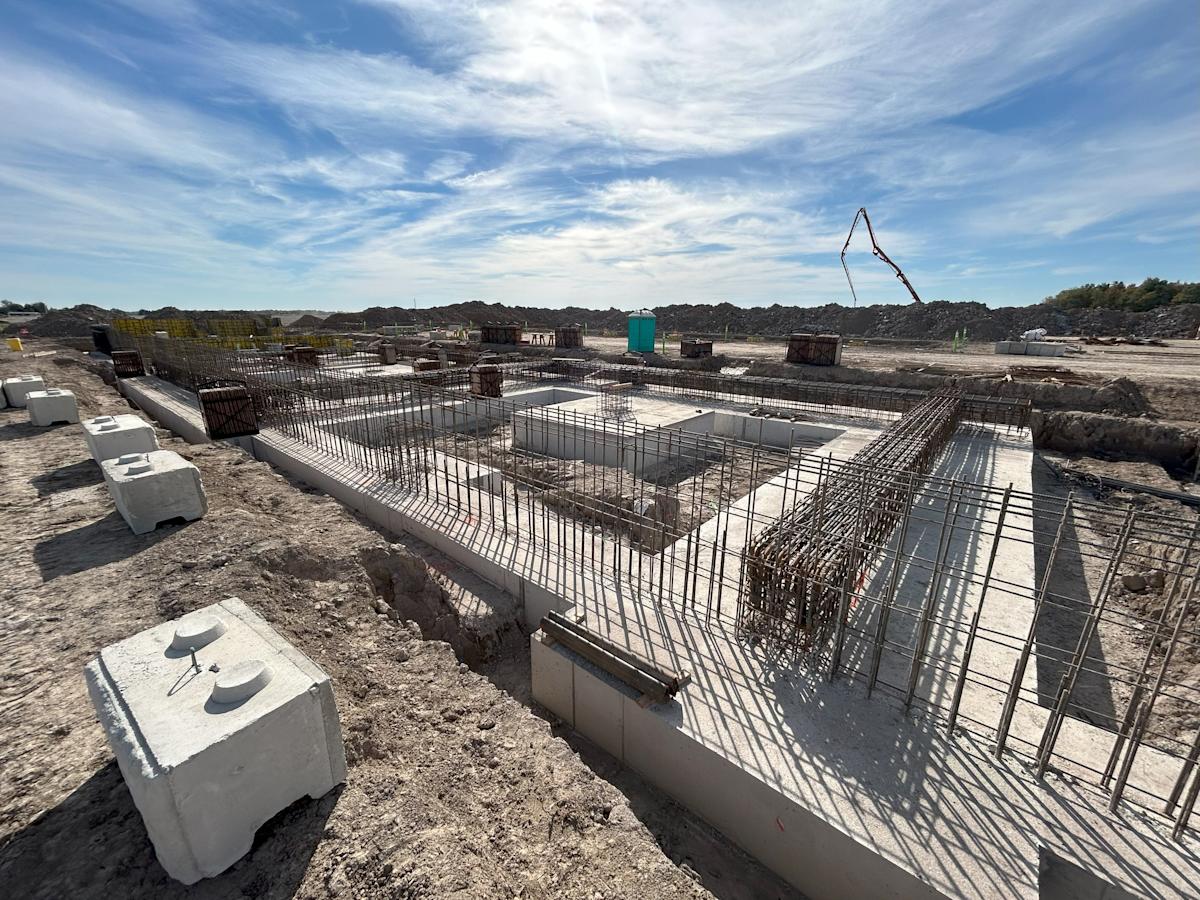
Volkswagen Group has kicked off construction on its Cdn $7-billion battery cell manufacturing facility in St. Thomas, Ont., pushing forward with the megaproject despite global trade issues and unclear short-term expectations for North America’s electric-vehicle market.
The automaker’s battery division Power Co held a ceremonial groundbreaking at the site on Oct. 28, just weeks after crews began setting up formwork and rebar for the plant’s foundations.
Power Co CEO Frank Blome mentioned that this “big milestone” keeps the company on track to become a major player in battery production in Europe and North America.
“Electric vehicles are the future of the global automotive sector, and we’re proud to spearhead such a significant investment, while positioning Canada at the forefront of innovative EV battery production,” he said in a release.
Sign up for Automotive News Canada Breaking Alerts and be the first to know when big news breaks in the Canadian auto industry.
This Canadian facility will be Power Co’s third and largest plant, following openings in Germany and Spain. The decision to start construction came more than two years after top VW Group officials approved the greenfield site located between Toronto and Windsor in March 2023 after an extensive search.
Before breaking ground in St. Thomas, Power Co Canada awarded two significant construction contracts to local firms in August and launched a hiring campaign to bring on hundreds of workers for the large plant.
Real progress on this major investment, which is Canada’s biggest automotive project ever, supports both Canadian and Ontario governments’ plans to create a local battery supply chain as other EV and battery projects struggle across the country.
Federal Minister of Industry Melanie Joly stated that starting work on this plant is an “important step in making Canada a world leader in the EV and battery industry.”
Vic Fedeli, Ontario minister of economic development, job creation and trade, noted that Power Co launching this project showcases the “resilience” of Ontario’s workforce along with the province’s strong auto sector.
The industry faced several major challenges in October, including General Motors canceling its Bright Drop EV program at their CAMI Assembly Plant in Ingersoll, Ont., as well as delays affecting two planned battery materials projects set for Quebec.
Despite rising uncertainties this year about North America’s EV market and ongoing trade discussions between Canada and the United States, VW Group has remained committed to its plans for St. Thomas. Earlier this spring, company executives acknowledged that if EV sales don’t improve quickly enough it could push back their ramp-up timeline at the plant; however, they confirmed that starting battery production there is “fixed” for 2027.
When fully operational, Power Co’s facility is expected to become Canada’s largest factory overall with an annual output capacity of 90 GWh of battery cells-enough to power around one million electric vehicles.
Power Co anticipates that once production begins at this plant it will employ around 1,000 staff initially but could grow to about 3,000 as additional phases are completed.
The Canadian factory will provide batteries for VW’s Scout Motors assembly facility located in South Carolina as confirmed by the company back in September. It should also supply batteries for other VW Group plants throughout North America.
Source link
Source link


