



The Power Co electric vehicle battery facility in St. Thomas has lost an important customer just a year before it was expected to start production.
Volkswagen has decided not to produce electric ID.4 vehicles at its plant in Tennessee, which was one of two assembly plants that Power Co was meant to supply.
However, Power Co insists that this cancellation won’t affect the St. Thomas plant, according to Greg Layson, digital and mobile editor of Automotive News Canada.
“The cancellation means less battery needs” for St. Thomas, he mentioned. “One can only assume it will have an impact, but we haven’t heard that. They maintain they’re on time, on track and on budget – full steam ahead.”
Power Co, which is owned by Volkswagen, plans to begin producing EV batteries in St. Thomas in 2027 with around 3,000 employees at the site.
Now it will only provide one Volkswagen assembly plant in South Carolina producing The Scout, with production there not set to kick off until 2028.
Volkswagen hasn’t disclosed whether there will be a delay in launching the St. Thomas operation or if production will be at a lower capacity with fewer workers involved.
“Our focus remains on delivering next-generation battery manufacturing in Canada through our landmark investment in the St. Thomas giga-factory. This project represents a strategic, long-term commitment to supporting high-quality domestic jobs while strengthening North American supply chains,” stated officials from Power Co.
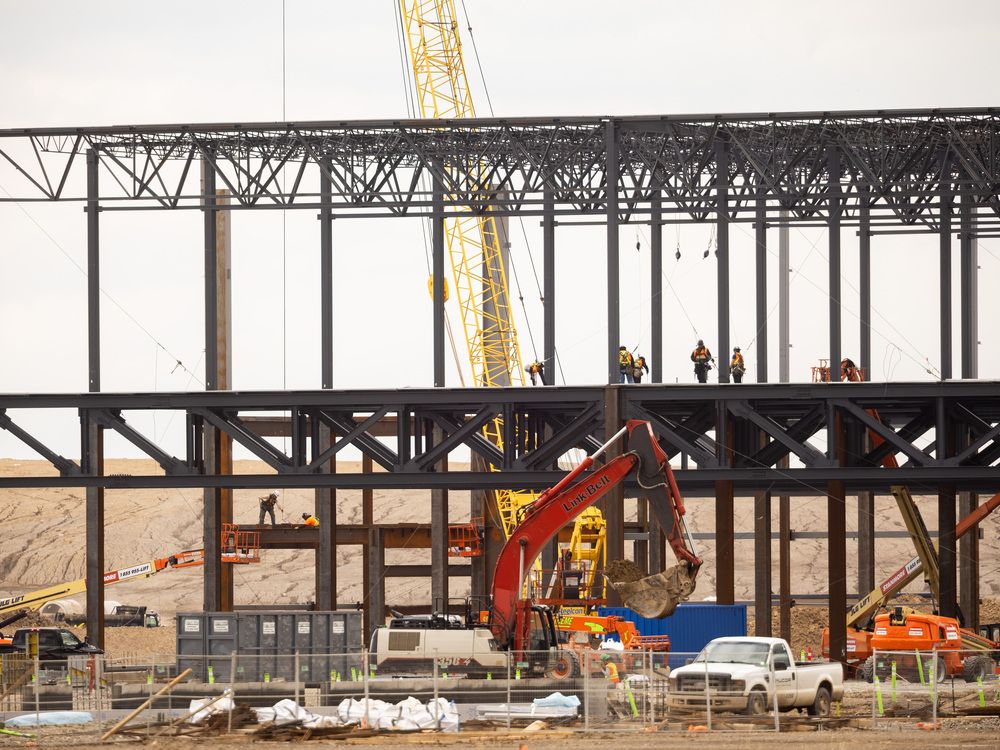
The facility announced construction contracts with Canadian suppliers and has started building foundations and walls.
“It’s on track and it’s going really well. We haven’t heard anything else,” said Sean Dyke, chief executive of the St. Thomas Economic Development office.
“The steel is going up now. It looks very impressive.”
Dyke and economic development representatives from other regions are heading to an industry trade show in Germany next week to attract suppliers.
“We already have meetings set up with companies interested in locating here,” he added.
Work has also begun preparing the nearby Vianode site, a $3.2-billion investment by a Norwegian company that will produce synthetic graphite.
Regarding the ID.4 model, Volkswagen announced last week that the EV market “continues to challenge the industry.” Instead of assembling ID.4s, its Chattanooga plant will focus on producing the Atlas SUV powered by gasoline.
The company plans to halt ID.4 production by mid-April.
The first quarter of 2026 showed volatility for the EV market; Electrek reported global sales reached four million electric vehicles, down three percent compared to last year but showing an increase in March with 1.75 million sold.
Northern American EV sales fell by 27 percent during this period while Europe saw an increase of 27 percent.
Source link