




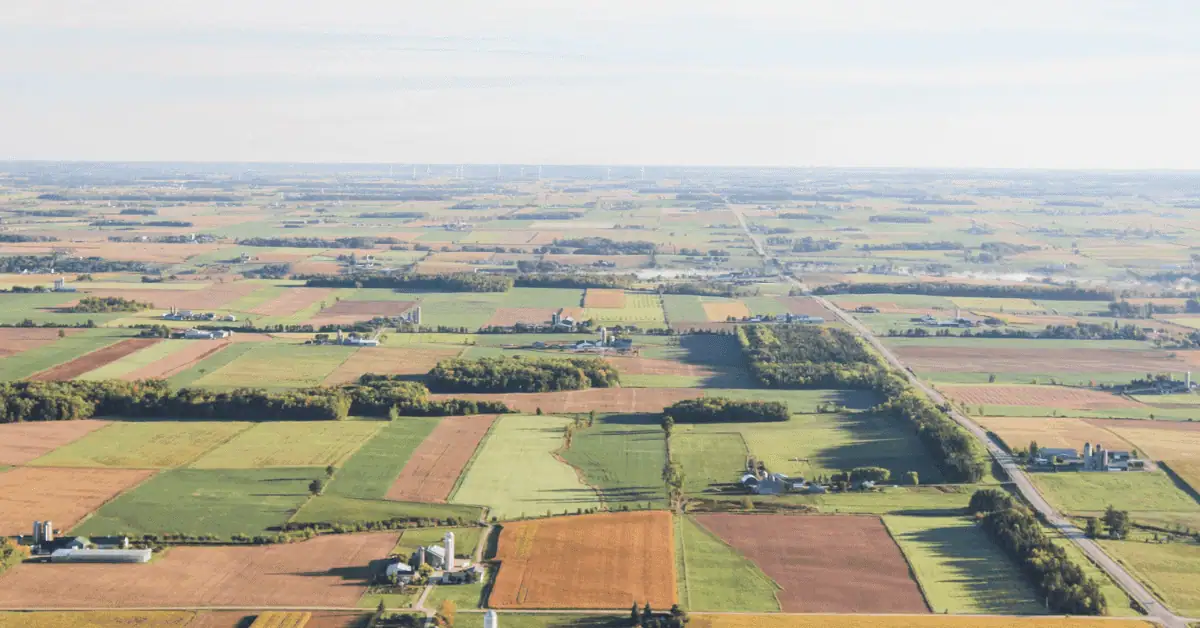
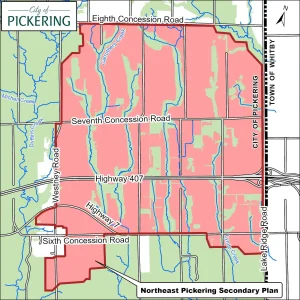
A bold – some might say environmentally reckless – initiative to develop 16,000 hectares of farmland in northeast Pickering has been returned to staff for further evaluation, with the council deciding to reassess the plan on April 27.
More than a dozen speakers were lined up for a special meeting on Monday night, including activist Mike Borie, who described the proposed Northeast Pickering Secondary Plan as a “massive, uncalculated financial risk to the taxpayers.”
Borie and other speakers like Stop Sprawl co-chair Abdullah Mir, biologist Carmen Lishman (the daughter of local figures Bill and Paula Lishman), along with Adrian and Elizabeth Stocking from the National Farmer’s Union, are calling for an “immediate pause” on the plan that aims to bring in 72,000 new residents over the next 25 years due to financial concerns, environmental impact, and “social irresponsibility.”
For at least four weeks, that request was honored. However, Pickering Councillor Maurice Brenner mentioned that extending time for staff to prepare an updated report mainly aimed to give Mayor Kevin Ashe a chance to meet with Scugog Island First Nation Chief Kelly La Rocca and her council.
La Rocca has been vocal about her dissatisfaction regarding the lack of “meaningful dialogue” with Ashe and submitted another letter last week expressing her worries about environmental studies and cultural heritage related to these lands. Although they lie outside the Greenbelt, they are situated within crucial agricultural zones as well as watershed headwaters.
“Our requests have largely been ignored and the responses have been inadequate,” La Rocca stated in her letter.

 Borie criticized the proposal as a “buy now, pay later” strategy where taxpayers are being asked to approve a “massive expansion into a remote rural corner” without thorough financial analysis.
“Low-density sprawl historically does not pay for itself,” he explained. “The property taxes generated from these new homes rarely cover long-term upkeep costs like new roads, sewers, pumping stations and emergency services necessary for them. By pushing development so far north before completing the Seaton community – where infrastructure is already available – we are forcing current Pickering taxpayers to shoulder huge ‘pipes and pavement’ expenses for this developer-driven project.”
Borie along with his supporters and La Rocca’s councillors requested that consideration of this proposal be postponed until all required studies are finished.
However, Brenner argued that receiving this proposal ‘for information’ while postponing discussions about deferral or acceptance until April 27 made more sense. “By then we should have more answers,” he remarked.
The initiative led by the developer-focused Northeast Pickering Landowners Group will still need environmental assessments along with financial evaluations – which council insists must be funded by developers – completed before any action can take place anyway, Brenner noted.
Brenner also pointed out that stopping future development in northeast Pickering is mostly beyond their control due to recent actions taken by provincial authorities aimed at increasing housing availability.
“It’s like a speeding train,” Brenner remarked regarding future housing plans on these lands. “We don’t have the power to stop it.”
There’ll be many years ahead filled with various studies and several municipal changes before any actual construction begins; he estimated it won’t be until 2051 before everything is built out.
Borie criticized the proposal as a “buy now, pay later” strategy where taxpayers are being asked to approve a “massive expansion into a remote rural corner” without thorough financial analysis.
“Low-density sprawl historically does not pay for itself,” he explained. “The property taxes generated from these new homes rarely cover long-term upkeep costs like new roads, sewers, pumping stations and emergency services necessary for them. By pushing development so far north before completing the Seaton community – where infrastructure is already available – we are forcing current Pickering taxpayers to shoulder huge ‘pipes and pavement’ expenses for this developer-driven project.”
Borie along with his supporters and La Rocca’s councillors requested that consideration of this proposal be postponed until all required studies are finished.
However, Brenner argued that receiving this proposal ‘for information’ while postponing discussions about deferral or acceptance until April 27 made more sense. “By then we should have more answers,” he remarked.
The initiative led by the developer-focused Northeast Pickering Landowners Group will still need environmental assessments along with financial evaluations – which council insists must be funded by developers – completed before any action can take place anyway, Brenner noted.
Brenner also pointed out that stopping future development in northeast Pickering is mostly beyond their control due to recent actions taken by provincial authorities aimed at increasing housing availability.
“It’s like a speeding train,” Brenner remarked regarding future housing plans on these lands. “We don’t have the power to stop it.”
There’ll be many years ahead filled with various studies and several municipal changes before any actual construction begins; he estimated it won’t be until 2051 before everything is built out.
 Borie emphasized that their fight to protect these lands for farming is just starting. He raised concerns about downstream flooding risks: “If we pave over nature’s ‘sponge’ in those headwaters areas, then future flood mitigation costs along with infrastructure repairs in Ajax and south Pickering will fall directly onto taxpayers.” He also highlighted concerns over losing Class 1 agricultural soil.
“This council has a fiscally responsible alternative: prioritize intensification within existing urban boundaries where infrastructure costs per unit are much lower. We shouldn’t leapfrog into northeast while Seaton remains largely unfinished,” he added.
The plan came under discussion on the same day when the Greenbelt Foundation a report emphasizing its vital role in supporting agriculture and agri-food systems across Ontario.
The report declared: “Considering its geography, interconnected system of working farms, concentration of major food industry clusters , and proximity to Canada’s largest consumer market , the Greenbelt is uniquely positioned to ensure Ontario’s self-reliance amid increasing global uncertainty.”
Borie stated he along with his supporters would pursue every possible legal avenue available to protect those lands from development describing it as a “defining issue” in upcoming municipal elections.
“We’ll make sure every taxpayer in Pickering knows exactly how their representative voted on this multi-million-dollar infrastructure liability,” he vowed.
INsauga’s Editorial Standards and Policies
Last 30 Days: 29,900 Votes
All Time: 1,274,580 Votes
782 VOTES
Borie emphasized that their fight to protect these lands for farming is just starting. He raised concerns about downstream flooding risks: “If we pave over nature’s ‘sponge’ in those headwaters areas, then future flood mitigation costs along with infrastructure repairs in Ajax and south Pickering will fall directly onto taxpayers.” He also highlighted concerns over losing Class 1 agricultural soil.
“This council has a fiscally responsible alternative: prioritize intensification within existing urban boundaries where infrastructure costs per unit are much lower. We shouldn’t leapfrog into northeast while Seaton remains largely unfinished,” he added.
The plan came under discussion on the same day when the Greenbelt Foundation a report emphasizing its vital role in supporting agriculture and agri-food systems across Ontario.
The report declared: “Considering its geography, interconnected system of working farms, concentration of major food industry clusters , and proximity to Canada’s largest consumer market , the Greenbelt is uniquely positioned to ensure Ontario’s self-reliance amid increasing global uncertainty.”
Borie stated he along with his supporters would pursue every possible legal avenue available to protect those lands from development describing it as a “defining issue” in upcoming municipal elections.
“We’ll make sure every taxpayer in Pickering knows exactly how their representative voted on this multi-million-dollar infrastructure liability,” he vowed.
INsauga’s Editorial Standards and Policies
Last 30 Days: 29,900 Votes
All Time: 1,274,580 Votes
782 VOTES
Source link
Borie criticized the proposal as a “buy now, pay later” strategy where taxpayers are being asked to approve a “massive expansion into a remote rural corner” without thorough financial analysis.
“Low-density sprawl historically does not pay for itself,” he explained. “The property taxes generated from these new homes rarely cover long-term upkeep costs like new roads, sewers, pumping stations and emergency services necessary for them. By pushing development so far north before completing the Seaton community – where infrastructure is already available – we are forcing current Pickering taxpayers to shoulder huge ‘pipes and pavement’ expenses for this developer-driven project.”
Borie along with his supporters and La Rocca’s councillors requested that consideration of this proposal be postponed until all required studies are finished.
However, Brenner argued that receiving this proposal ‘for information’ while postponing discussions about deferral or acceptance until April 27 made more sense. “By then we should have more answers,” he remarked.
The initiative led by the developer-focused Northeast Pickering Landowners Group will still need environmental assessments along with financial evaluations – which council insists must be funded by developers – completed before any action can take place anyway, Brenner noted.
Brenner also pointed out that stopping future development in northeast Pickering is mostly beyond their control due to recent actions taken by provincial authorities aimed at increasing housing availability.
“It’s like a speeding train,” Brenner remarked regarding future housing plans on these lands. “We don’t have the power to stop it.”
There’ll be many years ahead filled with various studies and several municipal changes before any actual construction begins; he estimated it won’t be until 2051 before everything is built out.
Borie emphasized that their fight to protect these lands for farming is just starting. He raised concerns about downstream flooding risks: “If we pave over nature’s ‘sponge’ in those headwaters areas, then future flood mitigation costs along with infrastructure repairs in Ajax and south Pickering will fall directly onto taxpayers.” He also highlighted concerns over losing Class 1 agricultural soil.
“This council has a fiscally responsible alternative: prioritize intensification within existing urban boundaries where infrastructure costs per unit are much lower. We shouldn’t leapfrog into northeast while Seaton remains largely unfinished,” he added.
The plan came under discussion on the same day when the Greenbelt Foundation a report emphasizing its vital role in supporting agriculture and agri-food systems across Ontario.
The report declared: “Considering its geography, interconnected system of working farms, concentration of major food industry clusters , and proximity to Canada’s largest consumer market , the Greenbelt is uniquely positioned to ensure Ontario’s self-reliance amid increasing global uncertainty.”
Borie stated he along with his supporters would pursue every possible legal avenue available to protect those lands from development describing it as a “defining issue” in upcoming municipal elections.
“We’ll make sure every taxpayer in Pickering knows exactly how their representative voted on this multi-million-dollar infrastructure liability,” he vowed.
INsauga’s Editorial Standards and Policies
Last 30 Days: 29,900 Votes
All Time: 1,274,580 Votes
782 VOTES
Source link