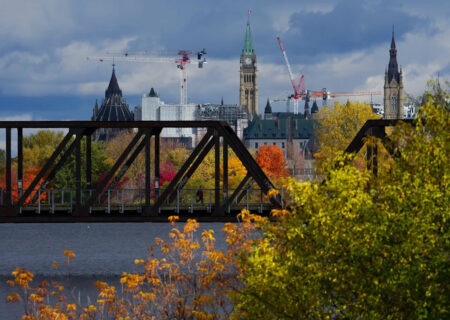



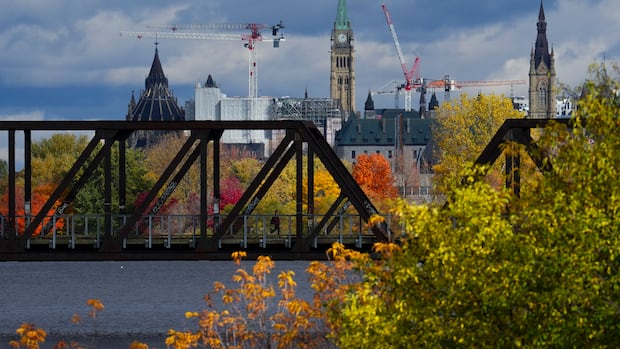
While folks in the National Capital Region will get an extra hour of sleep on Sunday, it might be the last time residents of Gatineau set their clocks back, according to Quebec’s new premier.
On Wednesday, the Parti Québécois (PQ) revealed its intention to introduce a bill in the coming months aimed at eliminating time changes throughout the province, pointing out the harmful effects on people’s health.
“To all the parents who will be dealing with their children’s reactions this time change in the several weeks to come: this is probably the last year we’ll be imposing such unnecessary constraints on ourselves,” Premier Paul St-Pierre Plamondon wrote in French in a social media post.
Ontario’s government hasn’t made any announcement regarding a similar plan to eliminate time changes statewide, which means that if PQ’s bill passes, clocks in Ottawa and Gatineau could differ by one hour during daylight savings.
‘Everything would get a lot more complicated’
According to Statistics Canada’s most recent data from the 2021 census, over one-quarter of Gatineau residents commute into Ontario for work. Many people from eastern Ontario are employed at federal office buildings located in Gatineau.
Ottawa Board of Trade vice-president Erin Benjamin stated that it’s too early to determine how getting rid of time changes might affect cross-border activities, but there will certainly be consequences.
“There’s no question that everything would get a lot more complicated,” she said. “From personal schedules to school, transit, shopping, or hopping across the river for dinner with friends, it extends to all of our activities.”
The conversation around daylight savings has spread across Canada, with British Columbia, Manitoba and parts of northwestern Ontario now choosing not to adjust their clocks twice a year.
The thought of Ottawa and Gatineau being on different times is frustrating some Ottawa public servants like Jennifer Wallace, who works closely with colleagues in Gatineau every day.
“Having that one-hour time difference would be very dysfunctional,” she said.
The Treasury Board of Canada Secretariat, which oversees federal public service matters, informed CBC in a statement that it is aware of potential time changes in “certain jurisdictions.”
“As no legislation has been introduced and no changes have been implemented, it would be premature to speculate on potential impacts or any measures that may be required,” it said.
With no specific timeline for introducing the bill yet available, Quebec’s premier mentioned that any change could happen next year after consulting experts.
Ottawa-Vanier MPP Lucille Collard remarked that one way Ontario could avoid confusion is by aligning with Quebec’s decision.
“[It] would create a lot of inconvenience if we were not aligned,” Collard said.
Source link