


Ontario Construction News staff writer
At the 35th annual Merkley Supply Show on Thursday, Ottawa Mayor Mark Sutcliffe shared a strong message: the construction industry plays a vital role in addressing the region’s housing challenges.
As over 900 contractors, architects, engineers, suppliers, and consultants came together for informative sessions, trade show displays, and plenty of free food and drinks, the mayor officially indicated that the city aims to support development rather than hinder it.
This event was hosted by Robert Merkley, president of Merkley Supply Ltd., celebrating more than 35 years of connecting the masonry and construction industries. Sutcliffe praised Merkley’s leadership as a philanthropist and recognized his company’s contribution to community building in the Ottawa area for over 125 years.
“We want to be the most builder-friendly city in the country,” Sutcliffe told attendees. He pointed out that with Ottawa’s population projected to increase by half a million people in the next 25 years, efforts are underway to make building “cheaper, easier, and faster” through quicker approvals and deferred fees.
“Sustainable siblings”: Insights from Ottawa’s largest Passive House projects
A technical session named “Sustainable Siblings” featured an experienced team from Hobin Architecture explaining how high-performance “Passive House” standards are being utilized to develop high-density affordable housing while keeping true to Ottawa’s masonry heritage.
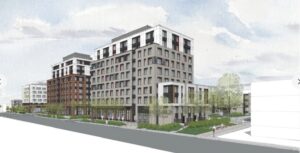
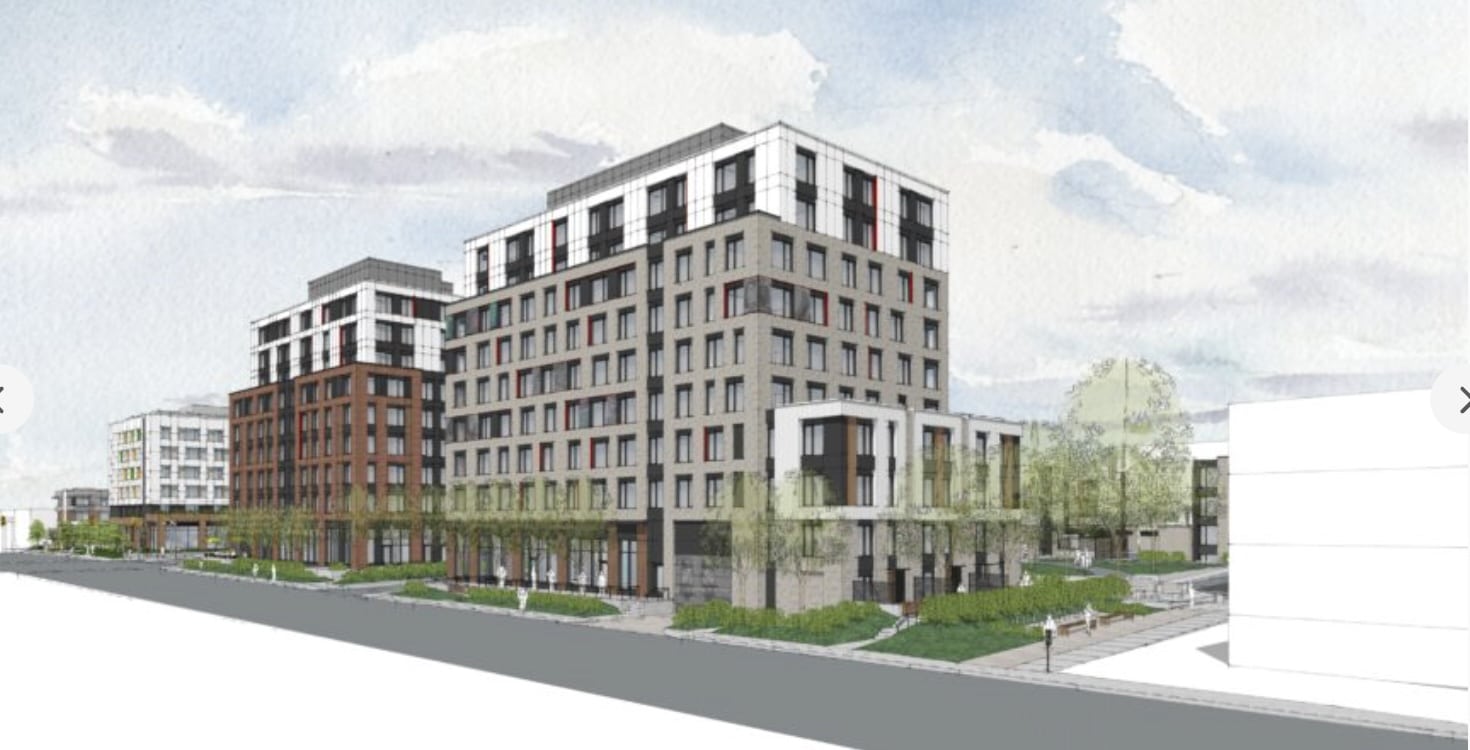
The presentation focused on Mosaïq I (811 Gladstone) and Mosaïq II (820 Gladstone), which are two affordable housing initiatives for Ottawa Community Housing (OCH).
The expert panel
The session included key members from Hobin:
Barry Hobin (founding principal): Opened the session by stating that Passive House technology needs to “fit into the neighborhood” instead of appearing like “three-dimensional experiments.” Marc Thivierge (principal): Explained how traditional masonry naturally complements high-performance wall assemblies. Ryan Fleming (architect): Shared insights into design evolution, mentioning that Mosaïq I was Canada’s largest residential Passive House when it first opened. Cameron Deans (sustainable lead specialist): Discussed technical hurdles regarding thermal bridging in concrete structures. Sean O’Rourke (technologist): Provided details about building science and detailing necessary for effective Passive House designs. Shawn Leduc (technologist): Was acknowledged for ensuring that complex developments come together as intended.
Key technical takeaways
The team emphasized that constructing Passive Houses isn’t drastically different from traditional methods but demands a much higher precision level. Key observations included:
Energy results: In 3°C weather conditions, well-insulated units were heated using just one 120-volt electric heater. Site managers reported these units felt “too hot” even at their lowest setting. Masonry innovation: To support heavy bricks extending beyond eight inches of insulation, they used Faro brackets which provide thermal-bridge-free support for masonry. The “Airtightness boss”: The team suggested assigning someone specifically responsible for maintaining air barriers to meet performance targets significantly higher than standard codes.
The architects mentioned these lessons are now influencing Gladstone Village Phase 2, which will introduce over 1,000 new affordable homes near the Corso Italia LRT station.
The Ottawa Hospital Civic Campus: A $2.8-billion transformation
The redevelopment of The Ottawa Hospital’s Civic Campus is set to be one of Canada’s most significant healthcare and research projects ever. Tim Kluke, president and CEO of The Ottawa Hospital Foundation, provided an update on their “Campaign to Create Tomorrow,” aimed at securing funding for necessary innovations and technologies in this new facility.
Kluke highlighted that while government funding covers hospital infrastructure costs (“bricks and mortar”), philanthropy is crucial for acquiring equipment, research spaces, and cutting-edge technology that will transform this campus into a world-class academic research center.
This session began with Robert Merkley recalling his 25-year history raising funds for the hospital. He remembered co-chairing with Barry Hobin on the Builders and Construction Committee-an effort that successfully grew from an initial goal of $2 million up to $10.2 million.
Located on Carling Avenue, this new campus is designed not only to keep pace with regional growth but also integrate advanced patient-centered care along with innovative medical research.
Source link
Source link