





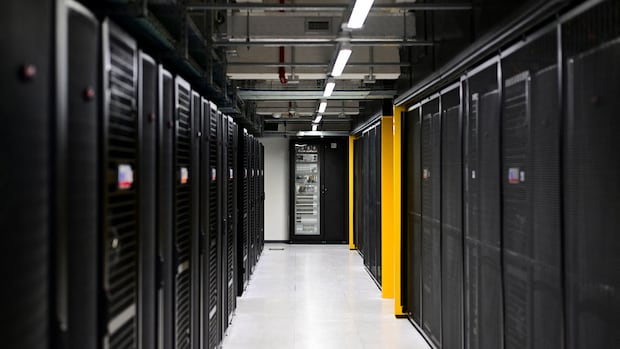
The federal government has announced plans to design and build a data centre in the National Capital Region.
According to a notice on the MERX contracting site, the data centre will cost between $1.5 billion and $1.8 billion, and it aims to support the government’s “mid to long-term objectives related to operations, security, and technology modernization.”
This project is expected to consume 60 megawatts of power, which is enough energy for at least 30,000 homes.
The advance procurement notice isn’t a call for proposals but gives interested parties time to secure necessary clearances. The actual contract should be available early next year.
“There is no guarantee that this contract will proceed or that security clearances will be granted within the anticipated timelines or at all,” the notice states.
This announcement comes about a month after Ottawa city council approved a motion for staff to study and create a framework for evaluating data centres based on their size and impact. Staff are set to report back to council early next year.
Other Ontario cities like Oakville and Mississauga have placed one-year pauses on new data centres while they examine the situation.
Meanwhile, Ontario introduced its new data centre framework in August. It bases approvals on three key areas: economic development, data protection and sovereignty, along with community investment and public trust.
What mayoral candidates have said
The topic of data centres has come up during the current municipal election campaign.
Incumbent mayor Mark Sutcliffe referred to it as a complex matter requiring careful handling. He also mentioned concerns about data sovereignty, implying it might be better to keep data stored within Canada rather than in the U. S.
“Do we want our data being stored in the United States of America, especially right now with Donald Trump as president? I don’t think anybody wants that,” he stated during a debate among mayoral candidates on Sept. 17.
“We need to move forward in a responsible way and make sure that we are finding solutions, technological solutions, that do not have an impact on neighborhoods and communities.”
Candidates Neil Saravanamuttoo and Jeff Leiper expressed their intention to impose a pause on such projects.
“I supported the council motion to study the issue further, but I don’t think it goes far enough,” Leiper remarked during that same debate. “We have mechanisms to put a pause while we study it properly, and I’ll use those tools.”
“The worry is that all of us would pay for it. We would be effectively subsidizing these AI companies, and that’s totally unacceptable,” Saravanamuttoo added at the same event on Sept. 17.
Alex Lawson critiqued calls for a moratorium during a debate on Sept. 24
“[Leiper and Saravanamuttoo] say that no data centres are being built here , but you wantto use AIanddataforeverything. But you would restrictour abilityto growour tax basebynot letting theminhere ,” hestated. P >
Source link