





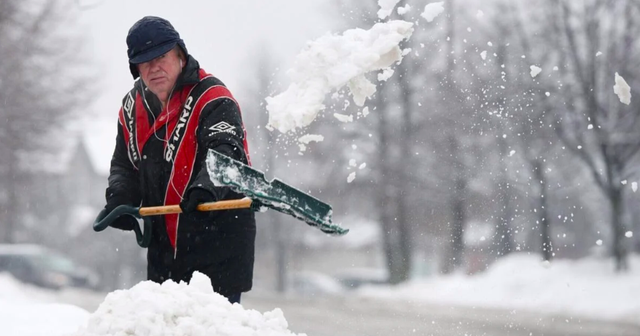
Markham residents voiced their frustrations about the large windrows left behind by city snowplows following last month’s snowstorms, which filled councillors’ inboxes with complaints.
During the second week of February, the City of Markham recorded over 50 centimetres of mixed precipitation from Wednesday to the next Tuesday. The city’s plowing team was deployed four times in that week.
“This is unprecedented,” said Coun. Ritch Lau.
A community meeting to discuss snowbank removal took place at King Square Shopping Centre on March 1. Many attendees urged officials to seek a long-term fix for the ongoing issue. However, some began to hesitate after hearing about the potential costs associated with such a service.
“Despite my initial passion and efforts to advocate for a city-wide removal service in Markham, I need to carefully evaluate the pros and cons to determine what’s best for residents,” Lau stated.
After discussions with fellow councillors and city staff, along with consultations with officials from nearby municipalities like Richmond Hill, Vaughan, and Toronto-who currently provide windrow removal services-Lau noted that most stakeholders could not strongly endorse a city-wide program for Markham.
In general, he said other cities’ experiences indicate that this service tends to create more problems than it solves.
Lau highlighted major concerns including a significant tax hike, longer wait times for service delivery, and issues related to cost fairness.
A city presentation from September 2022 revealed that Markham council approved plowing at 7.5cm plus four hours of senior windrow work for a total cost of $7.8 million, resulting in a tax impact of 1.19 percent.
In contrast, implementing plowing at 7.5cm plus eight hours citywide for windrows would amount to $10.5 million, leading to an increase of 2.79 percent in taxes.
For 2025, Markham introduced an upgraded winter operations fleet consisting of 52 road plows, 45 sidewalk plows, 61 windrow units, and 51 laneway leaders-with 256 workers available around-the-clock. The new windrow units have cut clearing times from eight hours down to four.
However, attempting a city-wide windrow removal using the current units and workforce would lead to a “terrible” customer experience according to Lau; people living near main roads would get their windrows cleared first while those further away could face waits of six to twelve hours.
An additional concern is how Markham’s housing landscape is changing. With more condos and high-rises being built and fewer single-family homes going up, fairness becomes an issue.
“If the city adds windrow removal costs onto property taxes, we run into fairness issues,” Lau explained. “Should all homeowners shoulder this burden? Should condo owners be exempt from any tax hike? Is it fair for homeowners alone to cover these expenses?”
Councillor Reid Mc Alpine confirmed in his March newsletter that council opted against providing a city-wide windrow removal service mainly due to financial worries.
“The service would result in at least a two percent property tax increase while also incurring significant costs due to repairs required by specialized plows needed for this work,” Mc Alpine wrote.
Carmen Gao, a long-time resident of Markham also believes that a two percent tax increase just for windrow removal isn’t reasonable.
“Property taxes go up every year – if this increase is solely meant for windrow removal then I need clearer financial transparency. Are there non-essential expenses we could cut back on instead?”
She suggested that the city should optimize its existing budget and open up bidding opportunities for contractors providing these services.
“I certainly do empathize with the challenge of removing the windrows after heavy snowfall,” Mc Alpine remarked; “I have no doubt this issue will eventually come before council again. I look forward to another thorough discussion and maybe new information that could change council’s perspective.”
Source link
Source link