





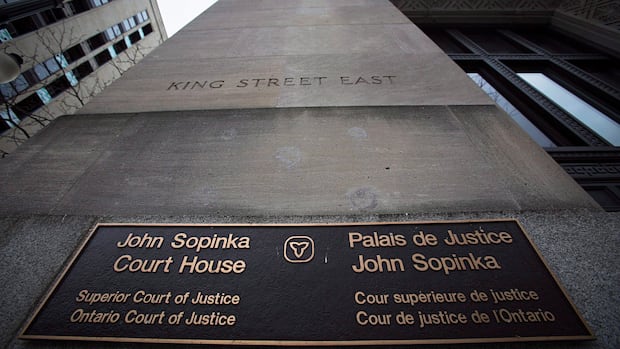
A judge in Hamilton has ruled that a provincial law requiring sex offenders to register and report to police for life is unconstitutional.
This ruling by Justice Davin Garg on January 29 is “significant” and may lead to changes in Ontario’s sex offender registry, depending on how the appeals unfold, according to lawyer Dean Paquette speaking to CBC Hamilton.
It was his client, Michael Roberts, who initiated the constitutional challenge and emerged victorious.
“In time, the argument we have made will be adopted by higher courts and become binding,” Paquette said.
Roberts was found guilty in 2010 of eight counts of sexual assault against four victims and received a four-month prison sentence, as noted in the judge’s decision.
Under Ontario’s Christopher’s Law, Roberts was automatically placed on the sex offender registry and had to provide Hamilton police with his personal information every year for life due to multiple convictions.
However, in 2024, Roberts intentionally did not report to police as required, which led him to argue in court that these obligations were “overbroad and grossly disproportionate.”
The judge agreed with Roberts but emphasized that while changes are needed, the provincial registry should remain intact.
The registry was established over twenty years ago after the tragic death of 11-year-old Christopher Stephenson at the hands of a convicted sex offender.
The police use this registry both for preventing and solving sexual crimes by monitoring where individuals convicted of such offenses reside within communities. The provincial registry isn’t accessible to the public.
“Nothing in these reasons should be taken as a criticism of the existence of the provincial registry,” stated Garg. “The evidence demonstrates the important work carried out by those using the registry.”
The provincial registry includes details on 29,000 offenders; out of these, 12,200 must report annually with a compliance rate of 96 percent according to the decision. In Hamilton alone, around 600 individuals are listed on this registry with between 20 and 50 new entries each year.
![]() A Supreme Court decision struck down a law automatically adding sex offenders to a national registry. (Sean Kilpatrick/The Canadian Press)
“The unproven premise is that police can only effectively prevent and investigate sex offences if all designated offenders are registered,” stated the top court. “The assumption appears to be that if some are good, more is better, and all is best.”
The court determined that any potential advantages from an “all-inclusive” approach didn’t outweigh its burdensome reporting requirements,” noted Garg.
Those convicted of sexual offences must submit their ID details along with physical descriptions, employer contact information, vehicle specifics as well as addresses related to home or work plus education or volunteer locations along with other personal info.”
A Supreme Court decision struck down a law automatically adding sex offenders to a national registry. (Sean Kilpatrick/The Canadian Press)
“The unproven premise is that police can only effectively prevent and investigate sex offences if all designated offenders are registered,” stated the top court. “The assumption appears to be that if some are good, more is better, and all is best.”
The court determined that any potential advantages from an “all-inclusive” approach didn’t outweigh its burdensome reporting requirements,” noted Garg.
Those convicted of sexual offences must submit their ID details along with physical descriptions, employer contact information, vehicle specifics as well as addresses related to home or work plus education or volunteer locations along with other personal info.”
Source link
Judge cites Supreme Court ruling as support
Alongside Ontario’s own registry exists a national one that faced scrutiny back in 2022. The Supreme Court deemed it unconstitutional for sex offenders convicted multiple times to be added automatically for life-similar rules apply under Ontario’s system currently. In a narrow 5-4 decision, justices concluded that these requirements excessively target people who pose little risk of reoffending due to various factors.Charges against Roberts dismissed
To align national registration protocols with Supreme Court guidelines while ensuring constitutionality , the federal government revised its policies shortly thereafter. Ontario opted not do likewise , thus maintaining existing deficiencies already deemed unconstitutional within federal statutes , explained Paquette. A legal challenge could arise only if someone would dare risk facing charges stemming from non-reporting before investing time into litigation , he remarked. Garg stayed charges against Roberts who remains listed but couldn’t offer comment on this matter during publication time. Roberts isn’t obligated anymore because last year he obtained record suspension through separate procedures according what’s been observed. Though Garg’s ruling applies strictly toward Robert’s situation presently others might pursue similar challenges against legislation stated attorney Paquette. The Ministry Of The Attorney General conveyed plans regarding appealing Garg’ s verdict reported CBC Hamilton communications. No response came from province concerning potential timelines about any modifications occurring within registries framework yet.Source link