

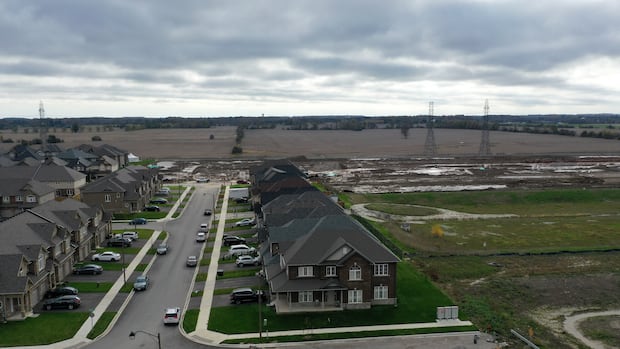
Ontario’s biggest farming group, along with farmers from Hamilton, are urging the province to take another look at an Ontario Land Tribunal (OLT) ruling that will make around 1,600 hectares of land near Hamilton available for urban development.
In a letter sent last month, the Ontario Federation of Agriculture and the Hamilton-Wentworth Federation of Agriculture expressed that the decision made on Aug. 17 was “deeply disappointing” and jeopardizes some of the most productive farmland in the region.
This letter follows after the OLT overturned a decision made by Hamilton city council in 2025 that rejected developers’ requests to extend urban boundaries into areas close to Mount Hope and Upper Stoney Creek.
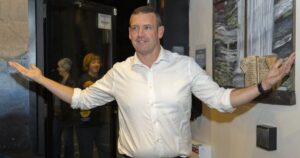
Andrea Horwath, mayor of Hamilton, described the overturned ruling as “quite distressing” and “not very democratic.”
Drew Spoelstra, president of the Ontario Federation of Agriculture, noted that farmers have been part of discussions about Hamilton’s urban boundary for years and have supported efforts to manage growth without encroaching on rural lands.
“We want to keep as much of that land as possible in farm and agricultural production,” Spoelstra said.
CBC Hamilton has reached out to the province for comment but hasn’t received any response yet.
Farmers argue land isn’t interchangeable
The discussion arises as Hamilton feels pressure to increase housing availability.
Developers claim expanding urban boundaries is essential for accommodating residential growth. In 2025, proposals were submitted for 7,600 homes in White Church Lands near Hamilton airport and another 40,000 homes in Elfrida Lands located in Upper Stoney Creek. The city denied both requests.
Eric Crowe, a member of OLT, mentioned in their decision that an expansion was “warranted to accommodate an appropriate range and mix of land uses.”
However, farmers argue that assuming more housing automatically means needing more land overlooks a crucial point: not all land holds equal value.
Ben Loewith, who co-owns Joe Loewith & Sons dairy farm in Hamilton with his family since 1947, explained they cultivate crops on about 900 acres intended for nearly 1,000 cattle feed.
Loewith emphasized agricultural land stands apart from other resources because it can’t simply be relocated if something else becomes more profitable.
“Land is like a factory you can’t move,” Loewith said.
Ben Loewith is the co-owner of Joe Loewith & Sons, a family-owned dairy farm. (Jeffery Tram/CBC)
He pointed out that some impacted lands boast high yields due to their soil quality and drainage among other factors.
If development occurs on this soil, he warns its agricultural capacity will be lost forever.
“When you have those acres of high-quality land that are going to have very, very high yields, that is an asset that once you have pushed that topsoil aside in order to build buildings you never get it back,” Loewith said.
Farmers believe housing and farmland can coexist
The farmers interviewed by CBC express they aren’t against housing or development but feel Hamilton should prioritize building within its existing limits instead.
“Why don’t we take this time to update that infrastructure in a way that allows for intensification?” Loewith asked.
John Vanthof, NDP’s agriculture critic who also farms in Northern Ontario stated how valuable the area surrounding Hamilton is due its position between Great Lakes and Niagara Escarpment.
The lakes help moderate climate while escarpment influences growing conditions too according him.”
“We have been given an incredible gift particularly in this area,” Vanthof said.
<p“He suggested enhancing provincial agricultural impact assessments so developers converting farmland must show another use benefits outweigh keeping it agricultural."
“There are parts of every area which aren’t suitable for agriculture,” Vanthof added.
OLT decision frustrates farmers
The farmers raised concerns over how OLT managed overturning council’s decision. P
OLT members are appointed through Lieutenant Governor according website information.
Loewith expressed frustration because public consultations happened before council arrived at their decision.
“It’s quite egregious towards democratic process,” he remarked.
Both Vanthof alongside Loewith dismissed idea dispute shows urban-rural divide stressing importance protecting farmland impacts everyone including cities dwellers as well alike farmers. P
“We want solutions helping city tackle these issues without harming rural community,” stated Loewith.
Source link