
Preliminary results from Alberta’s referendum show a strong preference for remaining in Canada, alongside some support for independence and varying opinions on immigration policy.
Elections Alberta continues to tally votes cast throughout the province. As of Tuesday evening, 90 percent of voting sites had submitted their counts, but there were still hundreds pending. The agency aims to provide official results next week but has been sharing regular updates on early findings since late Monday night.
Most importantly, as of 6:15 p. m. Tuesday, initial figures indicated that three out of four Albertans voted to keep the province within Confederation, reducing concerns about potential secession – and its consequences – any time soon.
“This is a very clear signal that Albertans do not have an appetite for separating and do not have appetite for destructive conflict with the federal government,” Lori Thorlakson, a University of Alberta political science professor, told Network.
Support was particularly high in Alberta’s two major cities. As of Tuesday night, the Edmonton-Strathcona riding, situated in the heart of the provincial capital, showed over 90 percent of voters opting to stay in Canada.
However, several rural regions exhibited more mixed feelings on this matter. In fact, two areas – Rimbey-Rocky Mountain House-Sundre in central Alberta and Central Peace-Notley in the northwest – reported a slim majority favoring starting the legal process for holding a binding separation referendum as of Tuesday night.
Dylan Bressey, president of Alberta Municipalities, which represents municipal governments across the province, expressed relief that this debate is reaching an end.
“This has taken up so much bandwidth the last five or six months that it’s distracted from the real conversations of ‘How are we building the core infrastructure and essential services that Albertans need?’” Bressey, who also serves as a city councillor in Grande Prairie, shared with .
Support for Most Questions
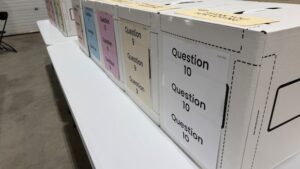
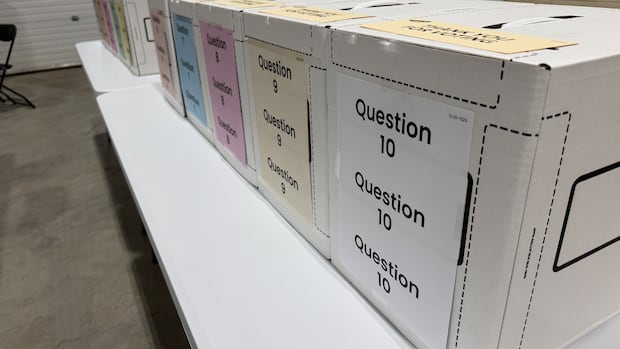
In addition to Question 10 about Alberta’s status within Canada, nine other questions were posed regarding immigration policies and constitutional matters. There were organized campaigns encouraging people to vote either way; however, current data indicates that most individuals support nearly all government proposals.
Question 10 ballots were counted first; therefore preliminary results for other questions are trailing behind.
As of 6:45 p. m. Tuesday though only Question 8 – which asked if provinces should be allowed to opt out of certain federal programs while keeping federal funding levels – received more “no” votes than “yes” votes so far.
“I think [Premier Danielle Smith will] come away with this saying that she’s got a mandate to pursue these immigration policy changes,” Thorlakson stated.
Several immigration-related questions addressed non-permanent residents’ access to services such as health care. One question specifically asked if proof of citizenship should be required for voting in provincial elections while another explored whether more control over immigration should be assumed by the government-historically a federal responsibility-and prioritized towards economic migration.
Alberta’s population has surged over recent years mainly due to immigrants and internal migration from other parts of Canada. Before referendum day arrived critics voiced concerns about newcomers being unfairly blamed for strains on housing and social services.
In an interview with CBC Radio’s The Calgary Eyeopener last week Smith responded to worries surrounding referendum topics related to newcomers by stating she believes they “have been mischaracterized.”“We’re asking very reasonable questions,” Smith mentioned while noting an increase in temporary arrivals into Alberta recently.
The early referendum findings indicate many rural Albertans back these immigration policies whereas opinions appear more split among residents in larger cities.Bressey remarked, “Albertans are a hospitable group of people and it’s not about those moving here; it’s about ensuring adequate services are available.”Bressey added, he often hears feedback from municipal councillors expressing concerns regarding insufficient investments into infrastructure like education and health care needed due address rising population demands.Bressey concluded, “That’s something we really do need change if we want every Albertan-regardless how long they’ve lived here-to thrive productively while feeling safe.”Elections Alberta plansto continue counting until no ballots remain unprocessed according released information indicating timelines depend on various factors including location closing times along with voter turnout levels.”
Source link