




The leaders of five Nordic countries – plus Canada – have met in Oslo for a mini-summit aimed at boosting defense capabilities amid growing international tensions, including recent remarks by the Trump administration about taking control of Greenland.
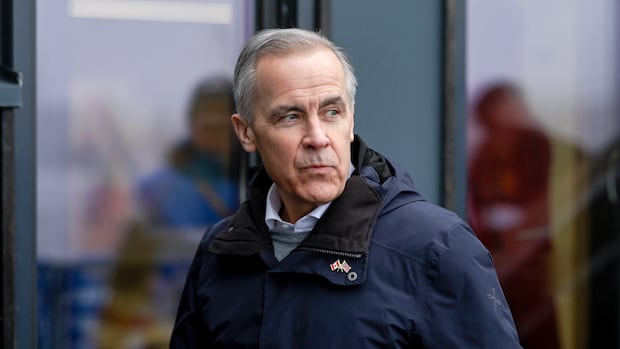
This Sunday meeting marks the final stop in Norway for Prime Minister Mark Carney, who arrived early Friday to observe a large NATO military exercise in the northern region of the country involving over 30,000 troops, sailors, and aircrew.
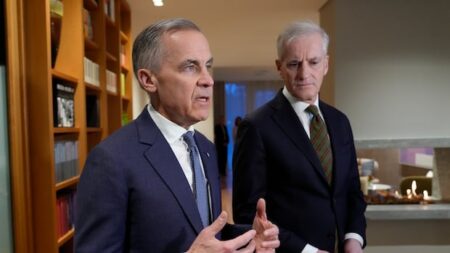
“We sometimes call Canada an honorary Nordic” country, stated Norwegian Prime Minister Jonas Gahr Støre. He mentioned that when he informed the prime ministers from Denmark, Sweden, Finland, and Iceland about Carney’s presence in Oslo this weekend, they all eagerly agreed to discuss collective security with him.
“They all said, Sunday morning, we’ll come to Oslo, and I think that tells the story,” Støre noted on Saturday while he and Carney attended the Holmenkollen Ski Festival in Norway’s capital.
“There’s a lot to do here, which is positive in the world. And regarding the U. S., I think we are allies. But we also recognize that other allies need to take more responsibility,” he remarked while acknowledging tensions surrounding Greenland.
![]() Carney speaks with Norwegian Prime Minister Jonas Gahr Støre during an event in Oslo on Saturday. (Adrian Wyld/The Canadian Press)
Earlier this year U. S. President Donald Trump repeatedly threatened to annex Greenland – supposedly due to security worries.
NATO – which includes all nations gathering in Oslo – has launched an initiative called Arctic Sentry aimed at better coordinating military operations in the area.
Carney expressed his belief that there are significant topics for discussion among the leaders.
“We share some common security concerns as well. And so deeper security cooperation is necessary,” Carney stated on Saturday.
WATCH | Norway’s foreign minister on Arctic security:
Carney speaks with Norwegian Prime Minister Jonas Gahr Støre during an event in Oslo on Saturday. (Adrian Wyld/The Canadian Press)
Earlier this year U. S. President Donald Trump repeatedly threatened to annex Greenland – supposedly due to security worries.
NATO – which includes all nations gathering in Oslo – has launched an initiative called Arctic Sentry aimed at better coordinating military operations in the area.
Carney expressed his belief that there are significant topics for discussion among the leaders.
“We share some common security concerns as well. And so deeper security cooperation is necessary,” Carney stated on Saturday.
WATCH | Norway’s foreign minister on Arctic security: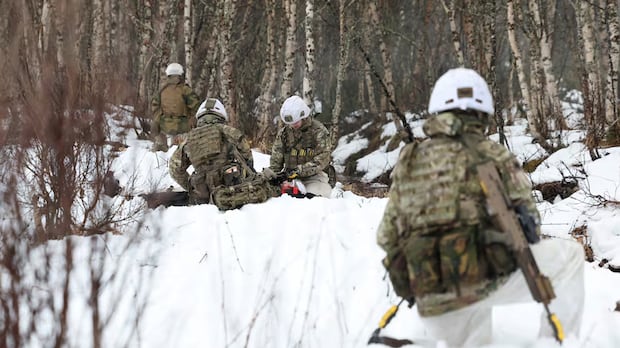 CBC’s Aarti Pole talks to Norway’s Minister of Foreign Affairs Espen Barth Eide
In a time marked by global uncertainty, Prime Minister Mark Carney is visiting Norway to enhance collaboration and strengthen both security and economic partnerships. The Arctic lies at the heart of this focus. How serious are these issues? Norway’s Foreign Affairs Minister Espen Barth Eide shares his thoughts.
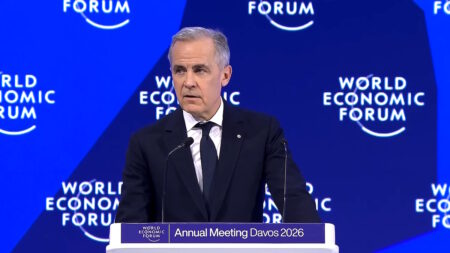
Federal officials speaking off-the-record before the prime minister’s visit indicated that the five Nordic nations are eager for insights from Carney following his January address at the World Economic Forum in Davos, Switzerland regarding how middle powers can work together more effectively against coercion from major powers.
Trump has stepped back from his threat to claim Greenland – for now.
The ongoing conflict in the Middle East and its impact on energy prices will also be key topics during discussions. Carney emphasized that fostering conditions for de-escalation remains a shared priority during a photo opportunity on Saturday.
This meeting occurs shortly after a detailed report last month by U. S.-based policy group Atlantic Council warning that Russia’s economy is more robust than previously thought and has largely shifted towards a war footing.
The report outlines five concerning scenarios detailing potential actions Russian President Vladimir Putin might take against Nordic and Baltic countries if Moscow secures victory in its long-standing conflict aimed at dominating Ukraine.
CBC’s Aarti Pole talks to Norway’s Minister of Foreign Affairs Espen Barth Eide
In a time marked by global uncertainty, Prime Minister Mark Carney is visiting Norway to enhance collaboration and strengthen both security and economic partnerships. The Arctic lies at the heart of this focus. How serious are these issues? Norway’s Foreign Affairs Minister Espen Barth Eide shares his thoughts.
Federal officials speaking off-the-record before the prime minister’s visit indicated that the five Nordic nations are eager for insights from Carney following his January address at the World Economic Forum in Davos, Switzerland regarding how middle powers can work together more effectively against coercion from major powers.
Trump has stepped back from his threat to claim Greenland – for now.
The ongoing conflict in the Middle East and its impact on energy prices will also be key topics during discussions. Carney emphasized that fostering conditions for de-escalation remains a shared priority during a photo opportunity on Saturday.
This meeting occurs shortly after a detailed report last month by U. S.-based policy group Atlantic Council warning that Russia’s economy is more robust than previously thought and has largely shifted towards a war footing.
The report outlines five concerning scenarios detailing potential actions Russian President Vladimir Putin might take against Nordic and Baltic countries if Moscow secures victory in its long-standing conflict aimed at dominating Ukraine.
 n
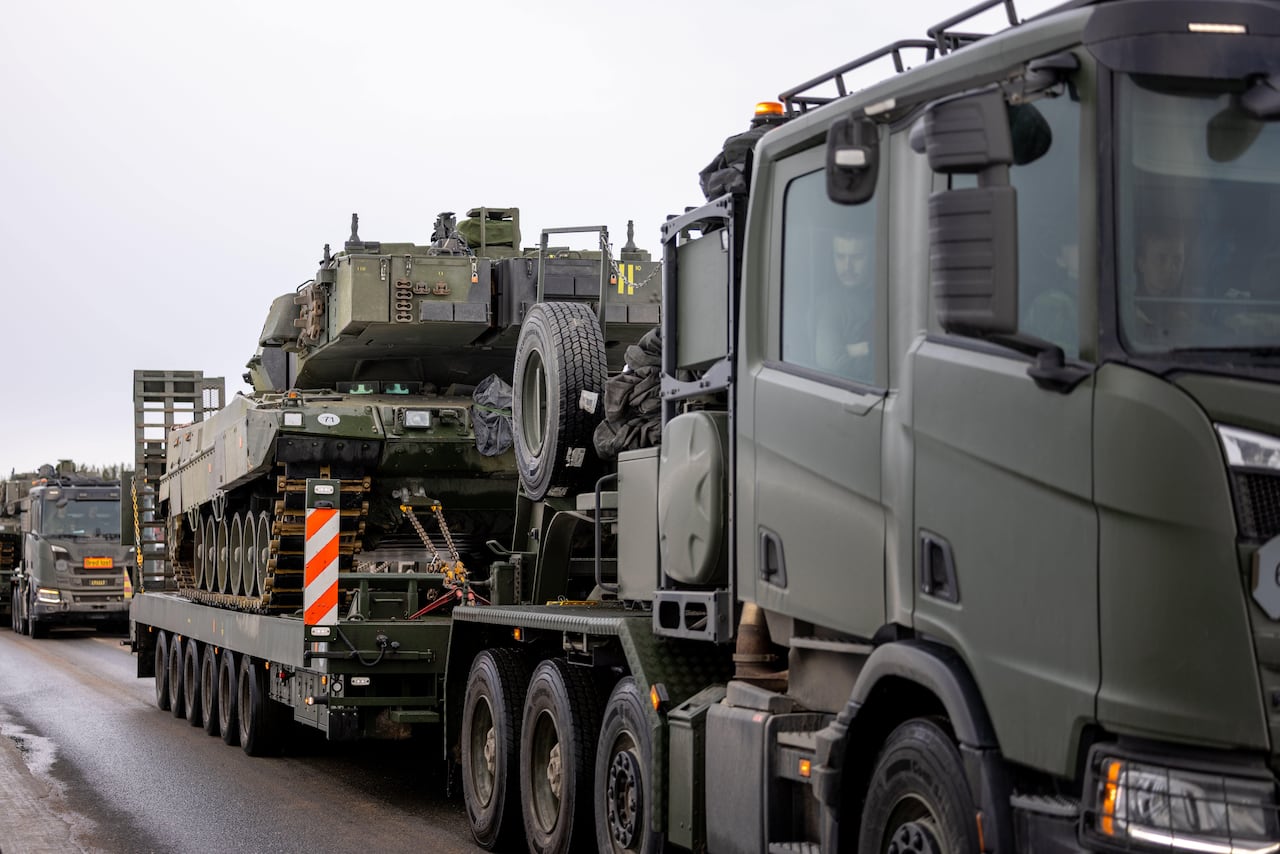
Three out of those five scenarios suggest Russian forces could seize crucial islands off Norway, Finland, and Sweden through low-risk operations meant to test NATO’s resolve..
Such actions would activate NATO’s mutual defense clause outlined in the Washington Treaty.. The Western military alliance has pledged to defend every inch of allied territory; however it highlights potential reduced involvement from United States within NATO moving forward.
If Putin succeeds with such provocations without effective responses it could fracture NATO, changing the transatlantic security landscape,” noted Boulègue , of Center for European Policy Analysis.
Boulègue added, “Geopolitics is clearly present in the region, and we must confront persistent insecurity-from subtle operations through kinetic actions all way up to nuclear threats coming from Moscow.”
“And if not Russia now , then China later. So it’s essential we sharpen our deterrence strategy , reinforce our presence there , become more assertive , making sure we protect national interests around Arctic.”
n
Three out of those five scenarios suggest Russian forces could seize crucial islands off Norway, Finland, and Sweden through low-risk operations meant to test NATO’s resolve..
Such actions would activate NATO’s mutual defense clause outlined in the Washington Treaty.. The Western military alliance has pledged to defend every inch of allied territory; however it highlights potential reduced involvement from United States within NATO moving forward.
If Putin succeeds with such provocations without effective responses it could fracture NATO, changing the transatlantic security landscape,” noted Boulègue , of Center for European Policy Analysis.
Boulègue added, “Geopolitics is clearly present in the region, and we must confront persistent insecurity-from subtle operations through kinetic actions all way up to nuclear threats coming from Moscow.”
“And if not Russia now , then China later. So it’s essential we sharpen our deterrence strategy , reinforce our presence there , become more assertive , making sure we protect national interests around Arctic.”
Source link
CBC’s Aarti Pole talks to Norway’s Minister of Foreign Affairs Espen Barth Eide
In a time marked by global uncertainty, Prime Minister Mark Carney is visiting Norway to enhance collaboration and strengthen both security and economic partnerships. The Arctic lies at the heart of this focus. How serious are these issues? Norway’s Foreign Affairs Minister Espen Barth Eide shares his thoughts.
Federal officials speaking off-the-record before the prime minister’s visit indicated that the five Nordic nations are eager for insights from Carney following his January address at the World Economic Forum in Davos, Switzerland regarding how middle powers can work together more effectively against coercion from major powers.
Trump has stepped back from his threat to claim Greenland – for now.
The ongoing conflict in the Middle East and its impact on energy prices will also be key topics during discussions. Carney emphasized that fostering conditions for de-escalation remains a shared priority during a photo opportunity on Saturday.
This meeting occurs shortly after a detailed report last month by U. S.-based policy group Atlantic Council warning that Russia’s economy is more robust than previously thought and has largely shifted towards a war footing.
The report outlines five concerning scenarios detailing potential actions Russian President Vladimir Putin might take against Nordic and Baltic countries if Moscow secures victory in its long-standing conflict aimed at dominating Ukraine.
Source link