




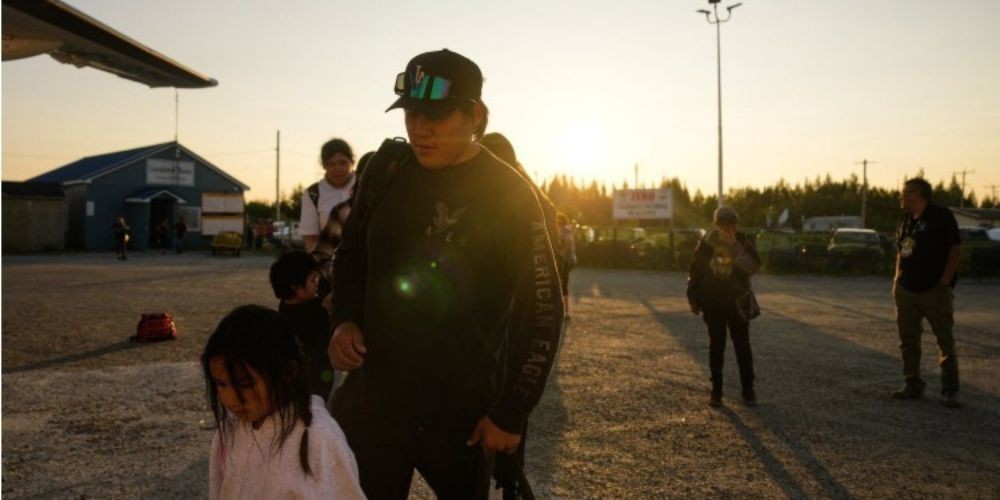
A young family boards a plane as they are evacuated from Neskantaga First Nation, Ont., on Saturday, July 18, 2026. THE CANADIAN PRESS/Chris Young
Around 1,800 people have left their homes because of wildfires sweeping through northern Ontario, Premier Doug Ford said Monday, while officials look at more possible evacuations.
Fires have devastated communities, led to numerous evacuation orders, and filled the skies over Ontario and beyond with harmful smoke.
Emergency Preparedness Minister Jill Dunlop mentioned that they have coordinated 13 evacuations.
“They’re in host cities like Thunder Bay, Kapuskasing, Sudbury, Barrie, and then Toronto has put their hand up as well as Niagara Falls.”
🎧 Listen to the daily headlines that matter most
Subscribe on Spotify, Apple Podcasts and wherever you get your podcasts to get notified of new episodes every day.
Some rain over the weekend helped reduce fire activity a bit, but officials cautioned that the risk still remained high as another First Nation reported extensive damage.
Chief Pauline Drake of Whitewater Lake First Nation said Sunday that a wildfire had wiped out much of the remote community about 250 kilometres north of Thunder Bay.
Last week, Namaygoosisagagun First Nation – also known as Collins First Nation – was destroyed by a fast-moving fire. Dramatic photos and videos captured residents escaping in boats while a massive wall of smoke and flames loomed behind them.
A planned evacuation flight from Neskantaga First Nation was cancelled Monday due to a mechanical problem with the plane.
Although no provincial evacuation order has been issued for the community, the First Nation declared a state of emergency last week and started arranging flights for its residents.
Three flights were organized to evacuate about 95 residents from the fly-in community to Thunder Bay on Saturday, according to the chief. Monday’s flight was supposed to take 35 people.
The province has faced ongoing criticism from First Nations regarding its response to wildfire evacuations. Ford stated that all available resources were being utilized to control the fires and assist evacuees.
On Monday, Ontario’s emergency preparedness minister seemed to clarify her earlier comments about the Alert Ready system. She noted that the national alert system was already accessible for communities after initially stating it had been expanded.
“It is just reminding municipalities and First Nation communities this is another tool in the toolbox that they can use,” said Minister Jill Dunlop.
Meanwhile, air quality warnings remain effective from around Sault Ste. Marie to Thunder Bay due to wildfire smoke.
So far this season, fires have consumed approximately 7,350 square kilometres of forest in Ontario-an area over ten times larger than Toronto itself.
Much of this land burned last week due to severe thunderstorms combined with an intense heat wave around Thunder Bay where temperatures reached around 15 degrees above normal levels.
Climate change caused by burning fossil fuels has lengthened and intensified Canada’s wildfire seasons.
This report by The Canadian Press was first July 20, 2026
File – Barrie 360
What do you think of this article?
Source link