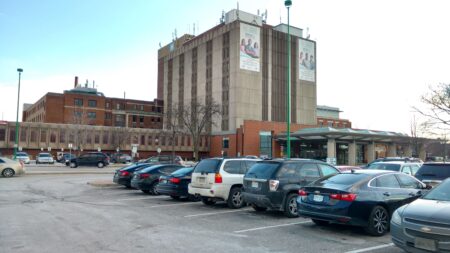






According to an expert witness at an inquest into the death of Heather Winterstein, a 24-year-old Indigenous woman, health care workers at a St. Catharines hospital had up to three opportunities to save her.
The infectious disease specialist mentioned that earlier intervention could have made a difference in her survival.
When Winterstein visited the emergency department of Niagara Health’s St. Catharines hospital on December 9, 2021, she didn’t show all the usual signs of sepsis.
She came in due to severe back pain and was given Tylenol before being sent home with instructions to return if her condition worsened.
However, based on expert testimony presented on Monday, that visit was the first and best opportunity for health care workers to avert her death.
“I think there’s been potential at each of the interactions in the healthcare system,” said Dr. Dominik Mertz, an infectious disease specialist from Mc Master University. “I suspect the diagnosis could have been made, and could have changed the outcome.”
The following day, Winterstein went back to the emergency room, where she collapsed in the waiting area and ultimately died from sepsis.
This tragic incident is currently under scrutiny during an inquest this month as a jury seeks recommendations aimed at preventing similar tragedies down the line.
Dr. Mertz explained that sepsis is a rapid and life-threatening reaction of the body to infection-where patients can deteriorate from infection to septic shock within just 24 to 48 hours.
WATCH MORE: St. Catharines nurse describes ‘scary’ ER conditions at Indigenous woman’s inquest
There are specific tests used by paramedics and triage nurses designed to check for potential infections-aimed at catching between 80 and 90 percent of cases.
Yet, as pointed out by counsel representing Winterstein’s treating doctors, she didn’t display enough symptoms for immediate blood testing according to those assessments.
“The issue with screening tools is that they’re imperfect,” Dr. Mertz told the jury while noting that with hindsight he would have found it reasonable to conduct preliminary blood work for Winterstein-a step he believes might have detected her sepsis early enough to save her life.
Since Winterstein’s passing in December 2021, Niagara Health has revised its approach towards handling sepsis cases. They stated via email that changes include: “Updated clinical directives, automated alerts to help identify patients at risk, enhanced surveillance and staff education,” along with improvements made within their emergency room and triage-trained nursing staff.
Dr. Mertz noted that under this new protocol, patients showing just one main symptom who are also high-risk-like intravenous drug users such as Winterstein-would be treated for infection right away.
He informed the jury today that this updated model “would have picked [Winterstein] up as a higher risk at both of those interactions and potentially would have prevented what happened.”
The inquest is expected to continue for another five days with testimonies from a total of 22 witnesses throughout its duration.
The jury will then provide recommendations aimed at preventing future fatalities.
Niagara Health has stated it cannot comment on ongoing proceedings related to the inquest.
: One dead, another injured in crash on Niagara Stone Road in NOTL
Source link