




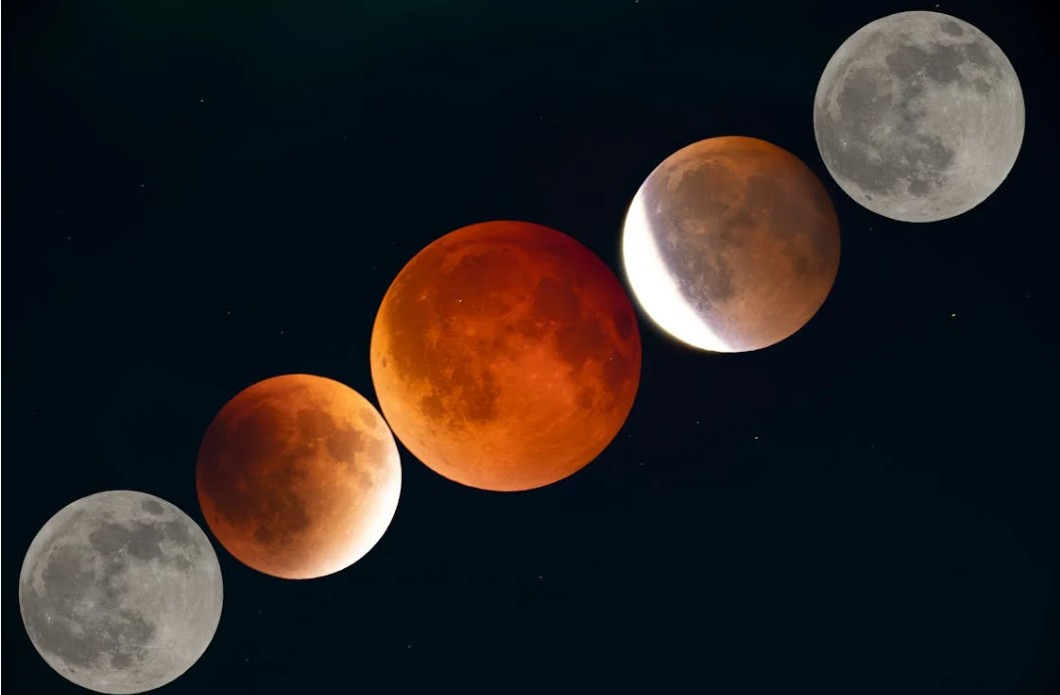
During the weeks and months, we enjoy the sun during the day and the moon at night. However, a few times each year, they align with Earth to create stunning solar and lunar eclipses. We don’t witness an eclipse every month because of the Moon’s slight tilt in its orbit around our planet. Sometimes, the bright full moon sits above Earth’s shadow in space, while at other times it is below it. When everything lines up perfectly, the Moon moves into this cone of darkness.
This celestial event will unfold in the early morning hours of March 3. Those in the Pacific and Mountain time zones will see the eclipse fully, while folks further east may find that the moon sets before it’s all over. Watching a lunar eclipse is completely safe; you can enjoy as the full Worm Moon gradually turns a darker orange due to sunlight bending through our atmosphere, similar to a red sunset. This stands in sharp contrast to the annular solar eclipse on February 17, where special glasses were required for viewing. No worries-only penguins got to see it over Antarctica.
While you’re watching the eclipse or just enjoying any clear night, take some time to spot Jupiter shining brightly high in the sky-it sets around 4 am. You can also check out Orion the Hunter along with other bright winter constellations. Nowadays, smartphone apps are great tools for helping you navigate through these starry patterns.
The path of totality for another solar eclipse will occur on August 12, stretching from Greenland down through Spain-it’s best viewed during ocean cruises. Depending on your location, you’ll see several minutes of coverage of the sun. On August 27 into early morning on August 28, North America will experience a partial lunar eclipse where during mid-eclipse about 96% of the moon will be engulfed by Earth’s shadow.
Eastern:
Eclipse begins: 4:50 am
Mid eclipse: 6:33 am
Moonset: 6:39 am
rtp live
Source link
Source link