




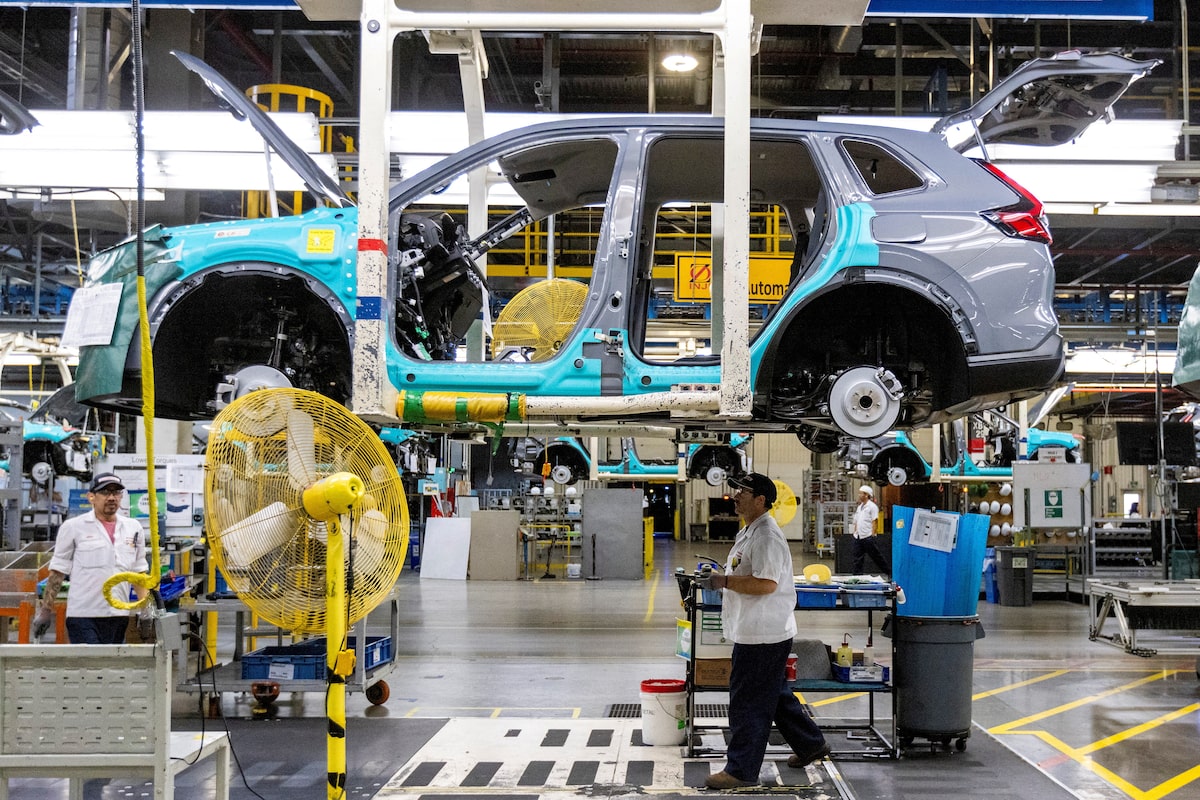
Open this photo in gallery: Workers assemble a vehicle at a Honda assembly plant in Alliston, Ont., in 2024. Carlos Osorio/Reuters Honda Motor Co. Ltd. HMC-N has put on hold its $15-billion project to set up an electric vehicle complex in Ontario indefinitely, as ongoing U. S. tariffs and domestic policies shake up the auto industry. The automaker first announced the initiative in 2024 but paused it for two years in 2025 due to decreasing demand for EVs, U. S. import taxes, and shifts in U. S. policies that made buying emissions-free vehicles less appealing. According to Japan’s Nikkei news agency, Honda is likely making this pause indefinite and might even cancel the plan entirely. Ken Chiu, a spokesperson for Honda Canada, didn’t answer questions about the project’s future. “We have nothing to report at this time,” he said, echoing a statement from last year when the pause was first announced: “The company will continue to evaluate the timing and project progression as market conditions change.” The project included an EV and battery plant in Alliston, Ont., where Honda operates a factory, along with related projects throughout the province alongside South Korea’s POSCO Future M Co. and Japan’s Asahi Kasei Corp. When it was initially revealed, Honda mentioned it would create at least 1,000 jobs. EV sales on upswing as incentives, Mideast conflict drive buyer interest Richard Norcross, Mayor of New Tecumseth which includes Alliston, stated he hasn’t heard anything from Honda regarding the EV project’s future. “We’re certainly going to do everything we can to keep them here,” he said by phone. Gabrielle Landry, speaking on behalf of Industry Minister Mélanie Joly, mentioned that global automakers are experiencing “significant change.” “American tariffs and changes to U. S. domestic policies are creating real pressures for automakers, prompting some to delay or scale back investments in electric vehicle and battery projects,” she noted. “We remain in regular contact with Honda and will continue to put Canadians’ interest first.” Prime Minister Mark Carney told reporters in Ottawa Wednesday morning that uncertainty within Canada’s auto sector stems from “unjustified” U. S. tariffs while emphasizing that Canada aims for favorable trade agreements before reviewing the U. S.-Mexico-Canada agreement. “We continue to work with companies in the sector, helping them reposition, reinvest and support workers there,” Mr. Carney stated without naming Honda specifically. “We’ll continue to do what’s necessary.” Recently Mr. Carney unveiled initiatives aimed at strengthening Canada’s EV supply chain which includes stricter emissions standards intended to elevate EV sales to 75 percent of total vehicle sales by 2035 and 90 percent by 2040. The government also reinstated consumer incentives of up to $5,000 for battery electric vehicles and gas hybrids priced under $50,000 from countries with free-trade agreements with Canada; there is no price cap on Canadian-made EVs. How the arrival of Chinese EVs in Canada might lead to cheaper cars .,; j Query(document). ready(function($){ }); Your browser doesn’t support HTML video tag.. Your browser doesn’t support HTML video tag.. Your browser doesn’t support HTML video tag.. Your browser doesn’t support HTML video tag.. Your browser doesn’t support HTML video tag..
Source linkStill though , Ontario’s auto plants primarily cater to the U. S. market , where tariffs on imported cars alongside diminished incentives have negatively affected sales. In fact , accordingto Cox Automotive’s Kelley Blue Book , U. S. EV sales dropped by26% duringthe first three months of2026 comparedto theyear prior. Annual zero-emission car salesin Canadadippedby36%in2025 down27170000and accountedforless than9%of overall sales accordingto Statistics Canada. “Itmight be possible that Evs willbecomemore prevalentbutdemand isn’tthere rightnow, and theseindividualmanufacturersare optingtodelayorslowdown productionof their Evs,”stated Adam Chambers, a Conservative MPfrom Ontario. The potential conclusionof Honda’sprojectwas debatedinthelateontario legislatureon Wednesday, NDP leader Marit Stilessaid,“The Premierclearlyhasnoplantostopjobs-good jobs-fromleavingthisprovince.” Automakers have incurredbillionsinwritedownsas theyabandonedor scaledbackplansregarding EVproduction, cancellingmodelsandpartnerships. Earlierthisyear, Hondasaid itwouldrestructureits EVbusiness-mainlyinthedeclining U. S. market-a shiftthatcouldcost US$15.7 billion. In February , Stellantis handedoveritsstakeinthe Next Star EVbatteryplantin Windsor, Ont., topartner LGEnergy Solutionforanominal US$100. Thefactoryexpandeditsproductiontoinclude datacentre storage. General Motorsannouncedin Januaryitwould incur US$4. billionchargewithdrawingfrom EVsupplier contracts. Last year, theautomaker shutteredits Bright Drop electricdeliveryvan plantin Ingersoll , Ont., layingoffmorethan1, o00 workers. Ford Motor Co. cancelledmultiple Evsincludingthe F150Lightingpickup truck while taking US$19. billion charges. With filesfrom Marieke Welshand Jeff Gray
Source link