




Recommended Stories
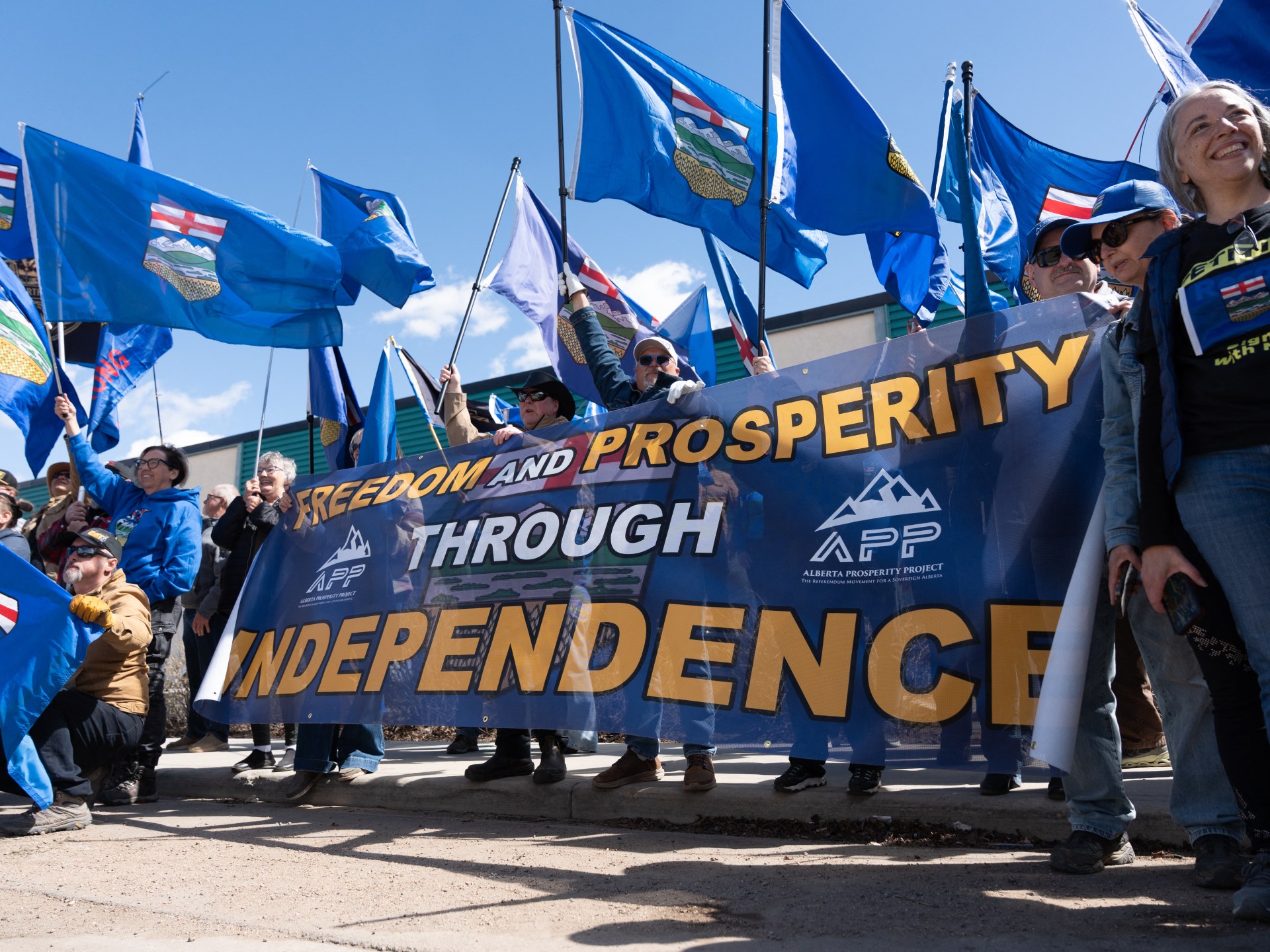
list of 3 itemsend of list “This day is historic in Alberta history,” secessionist leader Mitch Sylvestre remarked. “It’s the first step to the next step – we’ve made it past Round 3, and now we’re in the Stanley Cup final,” he added, alluding to a hockey championship tournament. Even if a vote favors independence, a lengthy and uncertain process would follow, including potential legal disputes and talks with the federal government. However, the possibility of a referendum has reignited discussions about Alberta’s long-standing grievances with federal authority in Canada and demands for increased autonomy. What fuels Alberta’s secessionist movement? What are its chances of success for the referendum, and what might it mean for Canadian politics? Here’s what you need to know. Secessionist leader Mitch Sylvestre speaks to reporters as he leads a rally in front of the Elections Alberta headquarters in Edmonton, Canada, on May 4, 2026 [Henry Marken/AFP]How many signatures were collected?
Alberta secessionists announced on Monday that they had submitted nearly 302,000 signatures, exceeding the required threshold of 178,000 for referendum consideration. Alberta Premier Danielle Smith mentioned she would support moving forward with a vote if enough signatures were gathered; however, she personally does not back independence from Canada.What would the referendum ask voters?
If this proposed measure makes it onto the ballot, it would pose this question to voters: “Do you agree that the Province of Alberta should cease to be a part of Canada to become an independent state?”Does this guarantee a referendum, and could Alberta actually separate from Canada?
Satisfying the signature requirement doesn’t automatically ensure that a referendum will occur. Elections Alberta, which oversees elections in the province, still needs to verify who signed. This process has been delayed by a court ruling. Indigenous groups have also filed lawsuits claiming that separation would violate their treaty rights. Additinally, there’s uncertainty regarding whether enough voter support exists for such a measure. Polls indicate that around 30 percent of residents might back it.What’s behind Alberta’s bid for separatism?
While secession has never been closer to an actual vote in Alberta before now, feelings supporting independence have been part of life here – home to roughly 5 million people – for many years. This sentiment largely stems from many Albertans feeling their province is unique – culturally, economically, and politically – compared to other parts of Canada. The oil-rich western province has long expressed dissatisfaction with political decisions coming out of Ottawa despite believing it significantly contributes economically through its large fossil fuel sector. Issues surrounding environmental regulations and climate change efforts have become another point of contention. Secessionist leaders argue that regulatory choices made by those unfamiliar with their region are hindering their main industry. “We’re not like the rest of Canada,” secessionist leader Sylvestre told AFP. “We’re 100 percent conservative. We’re being ruled by Liberals who don’t think like us.” “They’re trying to shut down our industry,” he added.”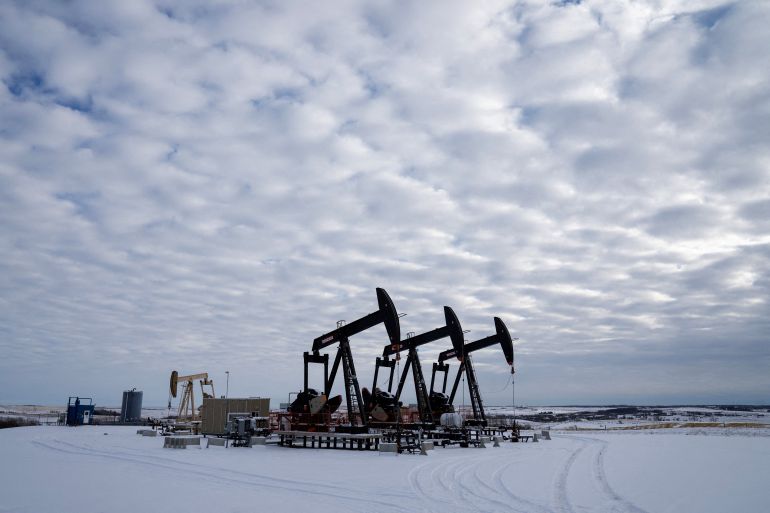 Oil pumpjacks operating in a farmer’s field near Calgary , Alberta , Canada , on November 26 ,2025 [File: Todd Korol/Reuters]
Have any other provinces considered separating from Canada?
Alberta isn’t alone when it comes to having complicated relations with other regions across Canada. The French-speaking province Quebec harbors its own nationalist movement aimed at separating from Canada , fueled by desires for recognition pertaining Quebec’s unique language and cultural identity. Support for this movement fluctuated over time ; a March poll revealed Quebecois nationalism is currently at its lowest level since residents narrowly rejected separation during an earlier vote back in1995. Still , the Parti Quebecois party advocating separation remains popular ahead of upcoming provincial elections later this year.Has this push toward independence attracted criticism? Like most movements seeking independence , the effort within this province aiming towards detachment from Canada has sparked passionate debates. “It stands for something that most Albertans-and Canadians-don’t support,” remarked Thomas Lukaszuk, a former deputy premier known as staunch advocatefor federal unity while speakingto AFP.“It feels like treason.” Supportive expressions stemmingfrom former U. S President Donald Trump’s administration have drawn ire among critics allegingthat these sentiments jeopardize national cohesionwithin Canada. When asked about potential independence backin January, U. S Treasury Secretary Scott Bessent statedthat Albetra could emergeas an ideal partnerfor America.
“Alberta possesses abundant natural resources, yet bureaucratic restrictions hinder pipeline development leadingtowards Pacific ports,”Bessent commentedto right-wing American pundits adding,”I envision them joining us instead; indeed they representa natural fit becauseoftheir rich assets alongwithindependent-minded citizens.”
“These separatists lack elected representation-they’re just regular individuals residingin Albertawho’ve formed delegations receivedby high-ranking U. S officials.”Lukaszuk voicedconcerns noting how empowering such recognition mustbe forthem.”
Regardlessofthe outcome regarding proposed measures noted previously, this situationis likelyto reinvigorate existingsecessionistic forces presentinthewider community.”
“I foresee lasting changes occurringwithinourpolitical landscape,”independent historianand pro-independence supporter Michael Wagner conveyedto AFP stressingthismovement won’tjust fadeaway.”
What happens next? A provincial-wide ballot could happen as earlyas October coincidingwithother broader referendums addressing constitutional matters including immigration slatedfor October19th.
Justice Shaina Leonard issueda temporary halt regarding certifyingindependence petitions until further notice followinglegal actions takenby various First Nations groupclaimingseparation violates treaty agreements.
The aforementioned ruling didn’t impede signature collection efforts, and conclusionsregarding ongoinglitigation concerning Challengers arisingfrom Alberta First Nationsare anticipatedlaterthis week. A favorabledecisioncould render proceedings moot.
Source link