



WARNING: This story details allegations of child abuse.
The biological family of the boy who passed away while under the care of Brandy Cooney and Becky Hamber has filed a lawsuit seeking $4 million against two Children’s Aid Societies (CAS), the Ontario couple, and three doctors.
This lawsuit, which claims negligence, is separate from Cooney’s and Hamber’s current criminal trial in Milton, Ont., where they have pleaded not guilty to first-degree murder concerning the 12-year-old boy. They also pleaded not guilty to charges of confinement, assault with a weapon, and failing to provide necessities for his younger brother.
The identities of the Indigenous boys are protected under a publication ban. For this article, we will refer to the older boy as L. L., who died on December 21, 2022, and his brother as J. L. We’re also keeping the family members’ names confidential to protect the boys’ identities as mandated by the court.
The civil lawsuit was filed in Ottawa Superior Court in December 2024 on behalf of J. L., L. L.’s estate, and their birth mother. The claim alleges that the defendants displayed “callous disregard and complete lack of care” for the lives, safety, and well-being of both boys.
The boys were wards of Ottawa CAS; Halton CAS was responsible for their day-to-day case management.
A judge determined it would be best for them if they remained wards under Ottawa CAS’s care-a decision which placed responsibility on that agency for ensuring their safety while allowing them control over adoption placements too.
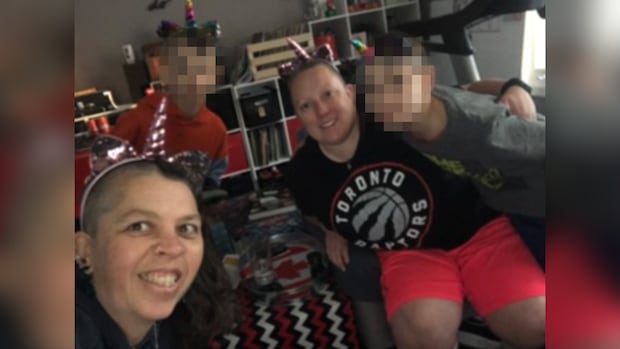
![]() A photo shows L. L.; CBC blurred his face due to privacy regulations protecting him under a publication ban.(Name withheld)</img></img>/></img></img>>></img>>/>></img>
Said statement notes further about how these societies were supposed “to take into consideration” each child’s Indigenous heritage when making placement decisions.” However,”the families assert,”these factors seemed entirely disregarded leading instead towards relocating them far away from home towards Burlington depriving connections rooted deep within culture.“
An important report issued back around 2015 highlighted urgent calls made via Truth Reconciliation Commission aimed mainly focused upon enhancing support systems offered specifically toward Indigenous youth involved within welfare system environments trying limiting numbers entering care situations altogether further providing resources enabling preservation intact among Native families maintaining cultural ties respectively wherever possible regardless location mattering across board. “>
Pursuant Ontario Child Youth Family Services Act guidelines dictate children ought maintain stable relationships involving kinship connections infused surrounding cultures accordingly operating fundamental principle prioritizing significance thereof hereupon facilitating continuity life experiences surrounding nurturing contexts contributing ultimately positive outcomes over time among youngsters growing periods development stages transitioning.....[spacer]<hr[spacer][spacer][spacer][highlighted]”The two suspected abusive individuals primarily severed those familial attachments deeming them inadequate labeling brothers non-Indigenous despite clear truths existing established ties otherwise affirmatively known throughout respective histories written narratives replete cultural origins. “
Younger sibling testimonial acknowledged revealing instances describing abuse suffered only instances shared public officials didn’t appear follow-up properly appropriate any actionable responses come forward occurred ensuing consequences resulting adverse environment impact experienced times should’ve raised alarms given numerous warning signs evident ongoing affair noted thereafter detailing neglect implemented.
A photo shows L. L.; CBC blurred his face due to privacy regulations protecting him under a publication ban.(Name withheld)</img></img>/></img></img>>></img>>/>></img>
Said statement notes further about how these societies were supposed “to take into consideration” each child’s Indigenous heritage when making placement decisions.” However,”the families assert,”these factors seemed entirely disregarded leading instead towards relocating them far away from home towards Burlington depriving connections rooted deep within culture.“
An important report issued back around 2015 highlighted urgent calls made via Truth Reconciliation Commission aimed mainly focused upon enhancing support systems offered specifically toward Indigenous youth involved within welfare system environments trying limiting numbers entering care situations altogether further providing resources enabling preservation intact among Native families maintaining cultural ties respectively wherever possible regardless location mattering across board. “>
Pursuant Ontario Child Youth Family Services Act guidelines dictate children ought maintain stable relationships involving kinship connections infused surrounding cultures accordingly operating fundamental principle prioritizing significance thereof hereupon facilitating continuity life experiences surrounding nurturing contexts contributing ultimately positive outcomes over time among youngsters growing periods development stages transitioning.....[spacer]<hr[spacer][spacer][spacer][highlighted]”The two suspected abusive individuals primarily severed those familial attachments deeming them inadequate labeling brothers non-Indigenous despite clear truths existing established ties otherwise affirmatively known throughout respective histories written narratives replete cultural origins. “
Younger sibling testimonial acknowledged revealing instances describing abuse suffered only instances shared public officials didn’t appear follow-up properly appropriate any actionable responses come forward occurred ensuing consequences resulting adverse environment impact experienced times should’ve raised alarms given numerous warning signs evident ongoing affair noted thereafter detailing neglect implemented.
Family Describes Boy as ‘Deeply Loved’
L. L. was “deeply loved” by his brother and mother, experiencing “extreme pain, suffering and emotional distress” leading up to his death according to the family’s statement. He faced severe malnourishment-his weight had stagnated since he was six years old-and growth had ceased during his last months alive; this was revealed during the murder trial that began in September. The Crown argues that L. L. spent most of over a year locked in his basement bedroom at Cooney’s and Hamber’s home in Burlington, Ont., restrained using wetsuits, sleep sacks, hockey helmets, and tents while being deprived of food. He was forced to exercise excessively and denied bathroom access when necessary. J. L., now 13 years old, allegedly endured similar forms of punishment according to prosecutors. He was taken from Cooney’s and Hamber’s custody just days after L. L.’s death and has testified against them during their trial. J. L. and L. L., left to right, are shown in an undated photo filed as a court exhibit. (Ontario Superior Court in Milton) The family claims that J. L. continues to suffer from “severe, permanent and serious impairments” affecting vital physical, mental, psychological, and cognitive functions due to how he was treated while living with Hamber and Cooney. CBC Hamilton attempted to contact the defendants through their lawyers; however some did not respond or declined comment due to ongoing criminal proceedings. Ottawa CAS has informed the court it plans to defend itself along with several doctors involved. No formal defenses have been submitted yet. None of these allegations have been tested in court thus far.Biological Family Fought for Custody
The brothers’ biological family asserts that both Halton CAS and Ottawa CAS were negligent regarding how they managed adoption processes as well as supervision over Hamber and Cooney; this negligence allegedly contributed significantly to injuries sustained by both boys along with L. L.’s death. The boys were removed from their biological relatives when they were very young; they lived with a foster family for several years before significant events unfolded during their murder trial. During this time period, their grandparents along with their mother tried twice throughout mid-2010s to regain custody but were unsuccessful according to judicial decisions made at that time.A judge determined it would be best for them if they remained wards under Ottawa CAS’s care-a decision which placed responsibility on that agency for ensuring their safety while allowing them control over adoption placements too.


