




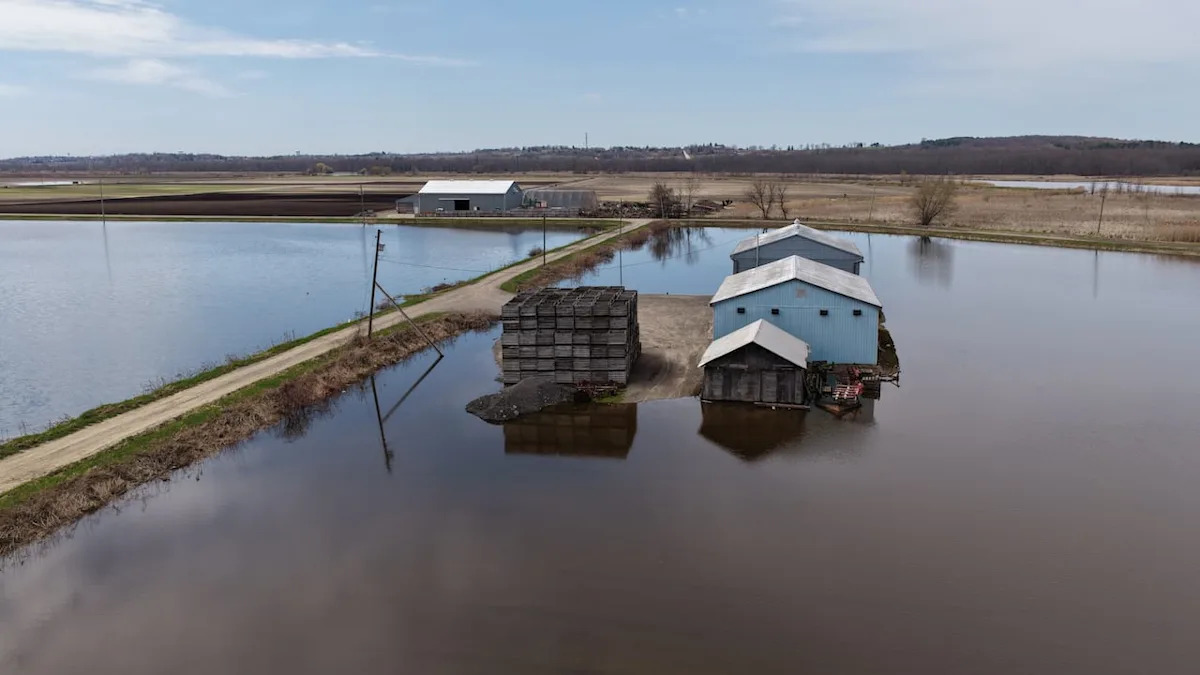
Water levels at Lake Simcoe are climbing toward a record high, posing a flood risk to what is known as Ontario’s salad bowl area-a vibrant stretch of farmland north of Toronto that produces a significant amount of the province’s vegetables.
Earlier this month, the Lake Simcoe Conservation Authority issued a “high risk” warning for shoreline flooding in lower areas.
In an update on Friday, the conservation authority confirmed that the alert will stay active until May 8.
The affected “low-lying” areas include Innisfil, Georgina, Ramara, Barrie and Orillia, all of which are already seeing some flooding as per the alert.
According to Kenneth Cheney, director of flood management with the conservation authority, such warnings “often mean flooding is imminent or already occurring.”
Cheney noted that the lake’s current water level is approaching a historical peak recorded in 1960.
Higher than usual water levels in Lake Simcoe have farmers in Ontario’s ‘salad bowl’ area worried since it’s a key vegetable growing region. (Patrick Morrell/ )
As of Friday, the conservation authority reported the water level at 219.4 metres-31 centimetres above what’s normal for this time of year.
This level could rise even more with additional rain; forecasters predict another 10 to 30 millimetres over the weekend in the Simcoe area.
Cheney mentioned it might take “weeks, if not months” for lake levels to return to seasonal averages.
Farmers worry about water levels
Joe Chapman, manager at Don Chapman Farms, has been working hard to prevent rising waters from inundating his fields.
He has constructed dikes-raised dirt barriers-to keep water out and set up bladder bags that expand when wet and serve as an alternative to sandbags.
“It’s a little intense right now. We’re still at risk of a possible dike breach,” he said.![]() Joe Chapman from Don Chapman Farms Limited expressed concern over how potential flooding from high water levels could affect this year’s crop season. (Sue Goodspeed/ )
Chapman shared that he has already begun growing celery in his farm’s greenhouse in preparation for the upcoming season.
That particular crop thrives near water and benefits from being grown in fertile “black muck” soil that’s at risk if severe flooding occurs due to dike failure.
“We do have [a] fair bit invested into this season already,” said Chapman.
“What would be even worse … is if we get the whole [celery] parcel planted, and then it floods.”
Chapman warned that if one of his farm’s dikes breaks, it wouldn’t just affect his property but also neighboring lands.
“It’s a pretty big deal. This is our livelihood.”
Lake Simcoe part of larger watershed system<
Joe Chapman from Don Chapman Farms Limited expressed concern over how potential flooding from high water levels could affect this year’s crop season. (Sue Goodspeed/ )
Chapman shared that he has already begun growing celery in his farm’s greenhouse in preparation for the upcoming season.
That particular crop thrives near water and benefits from being grown in fertile “black muck” soil that’s at risk if severe flooding occurs due to dike failure.
“We do have [a] fair bit invested into this season already,” said Chapman.
“What would be even worse … is if we get the whole [celery] parcel planted, and then it floods.”
Chapman warned that if one of his farm’s dikes breaks, it wouldn’t just affect his property but also neighboring lands.
“It’s a pretty big deal. This is our livelihood.”
Lake Simcoe part of larger watershed system<
Lake Simcoe is part of a broader watershed system covering about 3,400 kilometers according to its conservation authority’s website.
Parks Canada manages Lake Simcoe’s water levels because it’s included within the Trent Severn Waterway system-a national historic site connecting Lake Ontario to Georgian Bay.
George Arhonditsis , an environmental modeling professor at University of Toronto who has studied watersheds around Lake Simcoe , stated that increasing lake levels aren’t considered unusual.
Because it’s part of Trent Severn system , its water fluctuations are somewhat predictable , particularly during spring when snow melts.
Arhonditsis noted this year’s situation arises from an unusually long cold winter coupled with heavy snowfall-which might be linked back to La Niña conditions.![]()
The broader watershed system including Lake Simcoe spans approximately three thousand four hundred kilometers. (Lake Simcoe Region Conservation Authority) Other elements like strong winds causing more wave activity combined with higher-than-average rainfall could contribute as well. Provided weather remains manageable , Arhonditsis mentioned he’s “optimistic” that they can lessen flood risks thanks largely due engineering measures established previously designed specifically for prevention against floods. “This serves as reminder call urging proactive measures ensuring maintenance across protective infrastructures while considering further investments aimed towards safeguarding farmers operating within highly productive regions like those surrounding Lake simco.”
Source link
Lake Simcoe is part of a broader watershed system covering about 3,400 kilometers according to its conservation authority’s website.
Parks Canada manages Lake Simcoe’s water levels because it’s included within the Trent Severn Waterway system-a national historic site connecting Lake Ontario to Georgian Bay.
George Arhonditsis , an environmental modeling professor at University of Toronto who has studied watersheds around Lake Simcoe , stated that increasing lake levels aren’t considered unusual.
Because it’s part of Trent Severn system , its water fluctuations are somewhat predictable , particularly during spring when snow melts.
Arhonditsis noted this year’s situation arises from an unusually long cold winter coupled with heavy snowfall-which might be linked back to La Niña conditions.
The broader watershed system including Lake Simcoe spans approximately three thousand four hundred kilometers. (Lake Simcoe Region Conservation Authority) Other elements like strong winds causing more wave activity combined with higher-than-average rainfall could contribute as well. Provided weather remains manageable , Arhonditsis mentioned he’s “optimistic” that they can lessen flood risks thanks largely due engineering measures established previously designed specifically for prevention against floods. “This serves as reminder call urging proactive measures ensuring maintenance across protective infrastructures while considering further investments aimed towards safeguarding farmers operating within highly productive regions like those surrounding Lake simco.”
Source link