


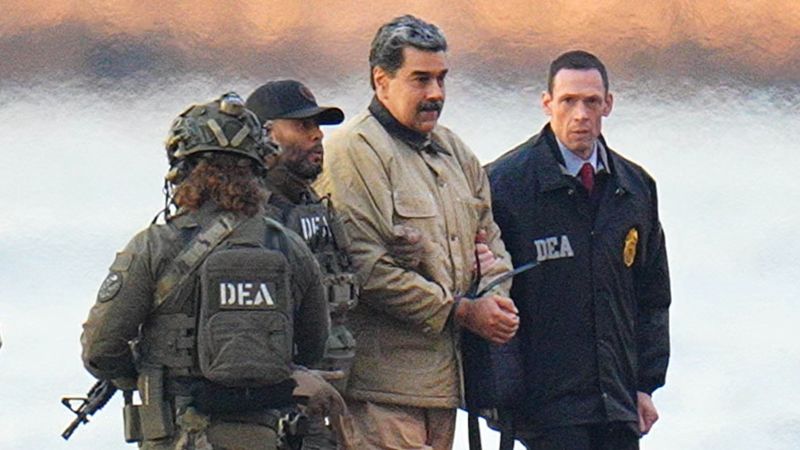
The US has agreed to let the Venezuelan government pay for the legal defense of former President Nicolás Maduro, resolving a legal deadlock that has persisted for weeks.
Federal prosecutors and Maduro’s attorneys informed the judge overseeing the case in a joint letter submitted late Friday night that the Treasury Department had agreed to revise a license permitting payments to attorneys representing Maduro and his wife, who also faces criminal charges, without breaching US sanctions laws. Both have pleaded not guilty to drug and weapon charges.
“The amended licenses authorize defense counsel to receive payments from the Government of Venezuela under certain conditions,” prosecutors and defense lawyers told the judge, ensuring that payments come from funds “available to the Government of Venezuela after March 5, 2026.”
Both the Maduros and their government are under US sanctions, meaning anyone seeking payment from them must obtain a license from the Treasury Department’s Office of Foreign Assets Control to avoid breaking US sanctions laws.
Last month, Barry Pollack, Maduro’s attorney, mentioned that OFAC had initially granted and then revoked a license allowing for payments from the Venezuelan government for his legal fees.
Prosecutors referred to it as an “administrative error,” indicating that the Maduros could access personal funds in Venezuela for their legal costs; however, Pollack argued this reversal infringed on Maduro’s constitutional right to defend himself against these charges. The Maduros stated they do not have personal funds available to cover their legal fees according to Pollack.
Maduro’s lawyers previously requested that the judge dismiss the indictment, claiming that the US government’s actions were obstructing their ability to defend against criminal accusations linked to a narco-terrorism conspiracy scheme.
During a hearing last month, prosecutors accused both Maduros of “plundering the wealth of Venezuela” while asserting that they should be able to use sanctions as leverage in foreign policy.
“That is why we impose sanctions and justifiably limit access to funds,” said one attorney. “As your honor knows, this purpose existed before this criminal case.”
Judge Alvin Hellerstein expressed skepticism about the government’s stance, noting that both Maduros were in federal custody and he didn’t see them as posing any threat.
Prose cutors indicated that Mad u ros’ attorneys have dropped their legal challenge.
Both M aduros are curre ntly held at th e Metropolita n Detention Center in Brooklyn.
Poll ack has indicated he’ll challenge th e legality of Maduro ’s arrest , claiming he enjoys immunity fro m prosecution because alleged illegal activities occurred during his presidency.
Maduro was first elected as president of Venezuela back in 2013 , but since 2019 , the U S government along with many other nations hasn’t recognized him as Venezuela’s legitimate leader.
In March , th e Trump administration acknowledged Delcy Rodríguez , who was once Maduro ’s deputy , as th e new leader of Venezuela.
This is breaking news and will be updated when more information is available.
Source link
Source link