




Toronto police have taken three individuals into custody as part of a cybercrime investigation involving “SMS blasters,” a type of technology that hasn’t been spotted in Canada before, which mimics a cell tower to scam victims.
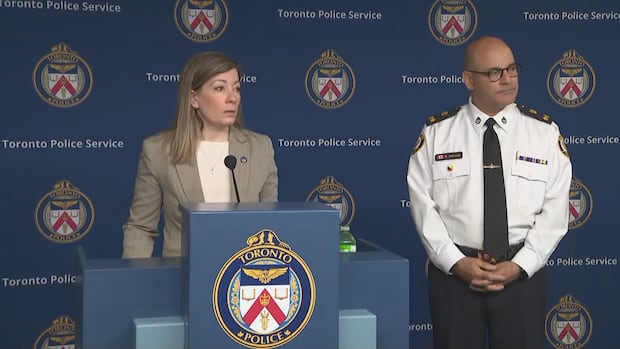
During a news conference on Thursday, Det.-Sgt. Lindsay Riddell explained that the investigation kicked off in November 2025 when police received reports of a suspected SMS blaster operating in downtown Toronto.
Authorities later found out that the blaster was set up in a vehicle, allowing it to navigate throughout the city and the Greater Toronto Area, according to Riddell.
![]() Toronto police provided a photo of an SMS blaster seized by UK authorities during a news conference on April 23, 2026. ( )
“We believe tens of thousands of devices connected to the blaster over several months,” she noted, adding that police identified more than 13 million network disruptions.
Riddell explained that an SMS blaster acts like “a legitimate cellular tower” sending fake text messages to connected phones with links leading to websites aimed at stealing personal, financial or login details.
Apart from financial dangers, authorities mentioned that these SMS blasters could also create safety concerns because they might interfere with calls made to emergency services like 911 due to regular cell service being disrupted.
Three men from Markham and Hamilton, aged between 21 and 27, have been arrested and charged with crimes such as fraud and mischief.
WATCH | Toronto police explain how SMS blasters work:
Riddell stated that the ongoing investigation involved collaboration with the Royal Canadian Mounted Police, York Regional Police, and Hamilton police. So far, it’s unclear how much money has been lost due to these scams.
She also mentioned that law enforcement feels “pretty confident” they’ve addressed the risk posed by SMS blasters but acknowledged that fraudulent texts still remain a broader threat.
The public is being urged by police to stay alert regarding links in unexpected texts and not share any personal or login information through text messages.
Toronto police provided a photo of an SMS blaster seized by UK authorities during a news conference on April 23, 2026. ( )
“We believe tens of thousands of devices connected to the blaster over several months,” she noted, adding that police identified more than 13 million network disruptions.
Riddell explained that an SMS blaster acts like “a legitimate cellular tower” sending fake text messages to connected phones with links leading to websites aimed at stealing personal, financial or login details.
Apart from financial dangers, authorities mentioned that these SMS blasters could also create safety concerns because they might interfere with calls made to emergency services like 911 due to regular cell service being disrupted.
Three men from Markham and Hamilton, aged between 21 and 27, have been arrested and charged with crimes such as fraud and mischief.
WATCH | Toronto police explain how SMS blasters work:
Riddell stated that the ongoing investigation involved collaboration with the Royal Canadian Mounted Police, York Regional Police, and Hamilton police. So far, it’s unclear how much money has been lost due to these scams.
She also mentioned that law enforcement feels “pretty confident” they’ve addressed the risk posed by SMS blasters but acknowledged that fraudulent texts still remain a broader threat.
The public is being urged by police to stay alert regarding links in unexpected texts and not share any personal or login information through text messages.
Source link
Source link