



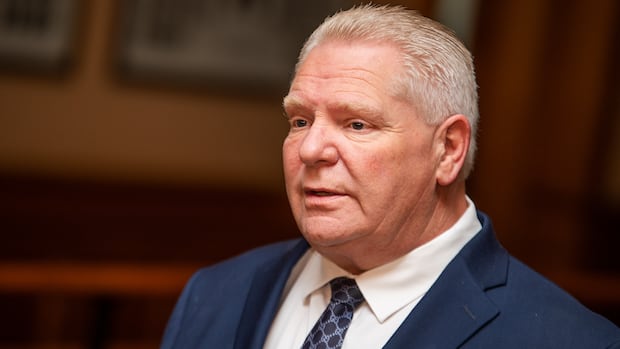
The decision by Ontario to require public employees to return to the office full time is raising concerns about how it might affect the government’s efforts to attract and keep talented staff.
Premier Doug Ford’s administration has informed the 60,000 members of the Ontario Public Service (OPS) that they need to be at their workplaces at least four days a week starting in October, transitioning to full-time office work from early January.
The OPS includes individuals employed in ministries and agencies that are directly managed by the province. Approximately half of these employees have been allowed to work remotely up to two days a week since April 2022 as COVID-19 restrictions eased and Ontario’s return-to-office strategy was put into action.
Removing this option has sparked a discussion about its effects on productivity, employee satisfaction, and talent acquisition.
This change particularly impacts AMAPCEO, the union representing 14,000 professional and administrative workers, many of whom preferred a hybrid approach balancing time between home and office.
AMAPCEO president Dave Bulmer states that the Ford government’s choice will influence both hiring and retention within the OPS.
Dave Bulmer is president of AMAPCEO, the union that represents around 14,000 professional, administrative and supervisory employees in the Ontario Public Service. (CBC)
“I represent professionals, highly educated people who can choose where to work in the market, the best and the brightest,” Bulmer said in an interview with Radio-Canada.
“Nobody’s going to come to an OPS that doesn’t have hybrid work,” he said. “We have lots of people who are with the OPS who are probably going to move on now.”
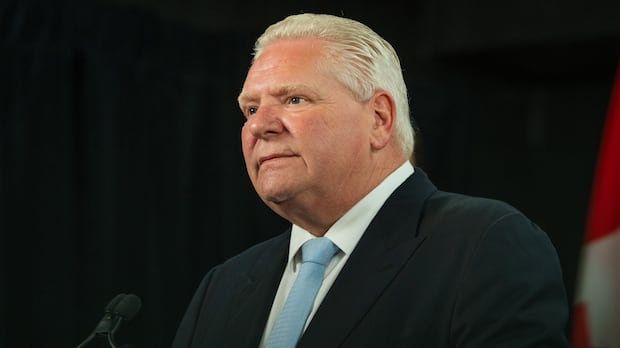 Ontario’s public servants will be back in office full time as of 2026
Ontario Premier Doug Ford is ordering the province’s 60,000 public servants back to the office full time starting in January. CBC’s Mike Crawley has details.
Gintova also pointed out that allowing remote work enhances workforce diversity by making jobs accessible to candidates from broader geographical areas.
“Remote work is key for improving work-life balance,” Gintova added.
While Ford maintains that government workers are more effective when working onsite, Gintova argues there’s no proof supporting this claim.
Ontario’s public servants will be back in office full time as of 2026
Ontario Premier Doug Ford is ordering the province’s 60,000 public servants back to the office full time starting in January. CBC’s Mike Crawley has details.
Gintova also pointed out that allowing remote work enhances workforce diversity by making jobs accessible to candidates from broader geographical areas.
“Remote work is key for improving work-life balance,” Gintova added.
While Ford maintains that government workers are more effective when working onsite, Gintova argues there’s no proof supporting this claim.
![]() ‘Attracting, developing, and retaining top talent that reflects Ontario’s diversity’ is chief goal of provincial government’s official human resources strategy called Ontario Public Service People Plan. (John Sandeman/CBC)
Provincial data indicates turnover rates within Ontario’s public service sit at six percent while there’s a target set by OPS People Plan aiming for a reduction downto4.2%by2026.
The province aimsto increase another measure relatedto attractivenessofan OPS job-the average numberof applicants per job posting which currently standsat28.4butthegoalis42.8.
Ending remote working arrangements neither assists intalenting new hires nor keeping them onboard claims Marion Nader CEOof Nexus Strategy Groupand former senior advisorwith Ontario NDP.
“It excludesa significant labor pool because individualsnow seek flexibility,” Nadersaid duringan interviewwith .”People wantthe abilitytoworkfromhome atleastafewdays weekly.”
Nader speculatesthat Fordgovernementhas ulterior motivesbehindthisplan focusedon reducingthecountofpublicservicejobs through attrition.”Thereturntotheofficepolicy isn’t aboutproductivity; it’s moreabout downsizingstrategyforthe OPS,”shesaid.
‘Attracting, developing, and retaining top talent that reflects Ontario’s diversity’ is chief goal of provincial government’s official human resources strategy called Ontario Public Service People Plan. (John Sandeman/CBC)
Provincial data indicates turnover rates within Ontario’s public service sit at six percent while there’s a target set by OPS People Plan aiming for a reduction downto4.2%by2026.
The province aimsto increase another measure relatedto attractivenessofan OPS job-the average numberof applicants per job posting which currently standsat28.4butthegoalis42.8.
Ending remote working arrangements neither assists intalenting new hires nor keeping them onboard claims Marion Nader CEOof Nexus Strategy Groupand former senior advisorwith Ontario NDP.
“It excludesa significant labor pool because individualsnow seek flexibility,” Nadersaid duringan interviewwith .”People wantthe abilitytoworkfromhome atleastafewdays weekly.”
Nader speculatesthat Fordgovernementhas ulterior motivesbehindthisplan focusedon reducingthecountofpublicservicejobs through attrition.”Thereturntotheofficepolicy isn’t aboutproductivity; it’s moreabout downsizingstrategyforthe OPS,”shesaid.
![]() Brampton Mayor Patrick Brown says cityemployeesmust comebacktoofficesalignedwithprovincial timeline: four days weeklystarting October20andfiveweekslateron January5.(Saloni Bhugra/CBC)
John Fraser, the Ontario Liberal Party’slaborcritic, suggeststhat Fordgovernmentneeds amoresensiblebalancedapproachtothissituation.”Telecommuting benefitsour economy, families’ livesandenvironment,”Frasersaidinemailcommunication.”Realityis, thisisthe directionoftheworld.”
Brampton Mayor Patrick Brown says cityemployeesmust comebacktoofficesalignedwithprovincial timeline: four days weeklystarting October20andfiveweekslateron January5.(Saloni Bhugra/CBC)
John Fraser, the Ontario Liberal Party’slaborcritic, suggeststhat Fordgovernmentneeds amoresensiblebalancedapproachtothissituation.”Telecommuting benefitsour economy, families’ livesandenvironment,”Frasersaidinemailcommunication.”Realityis, thisisthe directionoftheworld.”
Cityof Brampton follows suit The Fordgovernment’sdecisionhasalreadyledotherpublicsector employersin Ontariototake similarsteps.
Brampton Mayor Patrick Brownsays Fridayplansfollowprovinceleadrequiringcitystaffreturnfull-timeofficeworkidenticaltimelines.
Four Canada’sbig banks- RBC. Scotiabank, BMOand TDrecently announcedstaffattheir Toronto headquartersmustspendatleastfourdaysweekintheofficeeffectivefall.
Thisannouncementcomesjusttwoweeksafter AMAPCEO ratifiednewcollectiveagreementwhile OPSEUanothermajorunionrepresentingprovincialpublicservantsismidst negotiations.
Hybridworkhasprovidedmeasurablebenefitsinproductivity retentionandwell-beingstates OPSEUinstatement.
Mandatefor OPSstafftobeintheofficelfourdayweeklytakeseffect Oct20withfulltimeoffice rulebeginning Jan5th20126.Employeeshavingalternativeworkarrangement-a formal agreementallowingthemworksomewhereelse-arenotrequiredfollownewmandateaccordingofficials. sucharrangementswillremainvaliduntil expirydateeachagreement.Bothunionsareencouragingmemberswhowantstillwanttoremoteworkbutdon’thavearrangementrequestthesefrommanagementops
Source link
‘Attracting, developing, retaining top talent’
Bulmer believes this decision contradicts its own human resources strategy known as the OPS People Plan. The main goal outlined in this plan is: “Attracting, developing, and retaining top talent that reflects Ontario’s diversity.” Maria Gintova, an assistant professor of political science and public policy at Mc Master University has studied how flexible work options impact public sector employees. These employees typically view mandatory office attendance as “government going with their idea of how things should be done without any consultations or consideration for public service input,” she mentioned during an interview with . WATCH | Ford government orders public servants back to office full time: Ontario’s public servants will be back in office full time as of 2026
Ontario Premier Doug Ford is ordering the province’s 60,000 public servants back to the office full time starting in January. CBC’s Mike Crawley has details.
Gintova also pointed out that allowing remote work enhances workforce diversity by making jobs accessible to candidates from broader geographical areas.
“Remote work is key for improving work-life balance,” Gintova added.
While Ford maintains that government workers are more effective when working onsite, Gintova argues there’s no proof supporting this claim.
Ontario’s public servants will be back in office full time as of 2026
Ontario Premier Doug Ford is ordering the province’s 60,000 public servants back to the office full time starting in January. CBC’s Mike Crawley has details.
Gintova also pointed out that allowing remote work enhances workforce diversity by making jobs accessible to candidates from broader geographical areas.
“Remote work is key for improving work-life balance,” Gintova added.
While Ford maintains that government workers are more effective when working onsite, Gintova argues there’s no proof supporting this claim.
Mulroney spokesperson defends move
A representative for Treasury Board President Caroline Mulroney stated that shifting back to five days a week onsite aligns with trends seen across workplaces throughout Ontario. “Our standard is also aligned with other provinces, cities, and organizations across Canada,” Mulroney’s director of communications Andrea Chiappetta wrote via email to . “We are confident in our ability to attract and retain top talent into the public service,” Chiappetta said.Cityof Brampton follows suit The Fordgovernment’sdecisionhasalreadyledotherpublicsector employersin Ontariototake similarsteps.
Brampton Mayor Patrick Brownsays Fridayplansfollowprovinceleadrequiringcitystaffreturnfull-timeofficeworkidenticaltimelines.
Four Canada’sbig banks- RBC. Scotiabank, BMOand TDrecently announcedstaffattheir Toronto headquartersmustspendatleastfourdaysweekintheofficeeffectivefall.
Thisannouncementcomesjusttwoweeksafter AMAPCEO ratifiednewcollectiveagreementwhile OPSEUanothermajorunionrepresentingprovincialpublicservantsismidst negotiations.
Hybridworkhasprovidedmeasurablebenefitsinproductivity retentionandwell-beingstates OPSEUinstatement.
Mandatefor OPSstafftobeintheofficelfourdayweeklytakeseffect Oct20withfulltimeoffice rulebeginning Jan5th20126.Employeeshavingalternativeworkarrangement-a formal agreementallowingthemworksomewhereelse-arenotrequiredfollownewmandateaccordingofficials. sucharrangementswillremainvaliduntil expirydateeachagreement.Bothunionsareencouragingmemberswhowantstillwanttoremoteworkbutdon’thavearrangementrequestthesefrommanagementops
Source link


