The insect farming industry was expected to expand quickly and significantly.
In London, Ont., this vision materialized with Aspire Food Group Canada. Marketed as the largest cricket farm in the world, it featured a 150,000-square-foot automated facility intended to accommodate billions of insects and generate millions of kilograms of protein annually.
Crickets are promoted as a low-carbon source of protein, needing less land than traditional livestock and potentially helping to tackle global food shortages.
The concept received international support. In 2013, it secured the $1 million US Hult Prize awarded by former U. S. president Bill Clinton. It also attracted investors from the U. S., Canada, Ireland, and South Korea, along with significant federal loans and grants totaling tens of millions of dollars.
The facility began operations in 2022 but entered receivership in 2025. It’s still uncertain how much public money was recouped from this situation, with the final sale price remaining confidential under court orders.
reached out to all five founders of Aspire Food Group; however, none were willing to comment publicly.
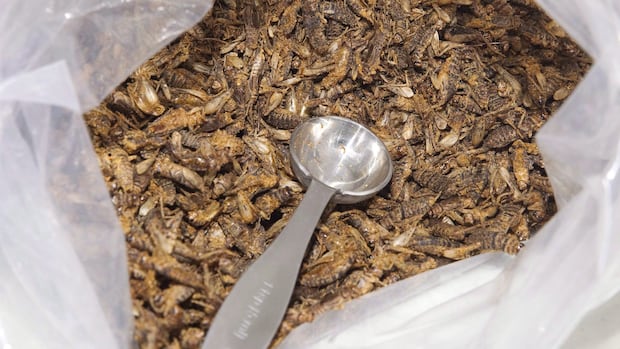
Crickets can be used in various ways, whether roasted whole or incorporated into protein bars. (Fred Thornhill/Canadian Press)
A nearly year later observation reveals that the downfall of the world’s largest cricket farm wasn’t abrupt – rather it stemmed from a disconnect between investors’ expectations for scale and a consumer market for edible insects that never fully emerged.
“The biggest barrier is the yuck factor, or the disgust,” Sadaf Mollaei, an assistant professor at the University of Guelph focusing on sustainable food systems and consumer behavior, told .
The ‘yuck factor’
Mollaei explained that many North Americans have an ingrained discomfort around consuming insects which leads many consumers to shy away from trying them.
Sadaf Mollaei is an assistant professor at the University of Guelph whose research focuses on the food business and consumer behaviour. (University of Guelph)
Even if they were open to it, she noted that crickets aren’t exactly affordable. A 454-gram bag of cricket powder can sell for $49.99 – more than premium cuts of beef on a per-pound basis.
“It’s a premium product,” Mollaei stated. “It’s not cheaper. The selling point has never been lower prices; it’s about being better for the environment and being a healthy choice.”
When this industry started gaining traction over ten years ago, expectations soared high. There were aspirations for swift growth and broad acceptance; however, in reality, North America’s market didn’t evolve as quickly as many hoped.
This left producers trapped: they can’t reduce prices without attracting more customers and they can’t draw more customers without lowering prices first.
“The biggest challenge is still price point,” said Darren Goldin, an insect farmer who serves as vice-president at Entomo Farms located in Norwood, Ont., roughly 30 kilometers east of Peterborough.
The company initially focused on producing crickets for pet food back in 2013 before gradually expanding its operations to approximately 50,000 square feet – about one-third of Aspire’s massive London operation.
Co-owner Darren Goldin holds egg-laying crickets in a cricket barn at Entomo Farms in Norwood, Ont. (Fred Thornhill/ )
Court documents reveal that Aspire relied on thousands of stacked plastic bins or totes for housing crickets.
Goldin mentioned his setup utilizes open rooms equipped with cardboard “cricket condos” allowing farmers easy visibility to monitor feeding and watering conditions at a glance.
“You can visually assess what’s happening very easily,” he shared. “In contrast with Aspire’s model where everything is stored away inside giant totes covered with lids on shelves.”
From ‘cricket condos’ to closed systems
Goldin emphasized that cricket farming demands constant attention so adjustments can be made swiftly-something he believes would be tough within an automated framework.</pp<Entomo Farms uses sheets of cardboard staff have nicknamed 'cricket condos' to house insects in open conditions that are easy to monitor closely. (Stewart Stick/Entomo Farms)
“It’s like navigating through an intricate web,” he explained while pointing out even minor changes – such as insect density or access to food and water or temperature variations – could set off ripple effects within operations causing heightened stress among livestock resulting in hard-to-manage issues.
“What they [Aspire] were attempting was extremely challenging.”
Court records indicate their London facility never operated close enough according to projections. A system successful at small scales down south struggled when implemented up north due environmental differences , ongoing design modifications , along equipment malfunctions contributing heavily underperformance.
Sale price is a secret
As reported by June ’24 filings , Aspire operated only around half capacity while requiring tens millions additional financing just correct issues try ramping production back up again.
Farm Credit Canada (FCC) reportedly owed approximately $41 million during receivership according official court documentation. The Crown Corporation refrained answering questions regarding how much recovery achieved thus far.
“Out respect court proceedings customer privacy we will allow filed documents speak themselves,” Eva Larouche senior media relations consultant FCC stated via email .”
Agriculture Agri-Food Canada(AAFC) disclosed also providing near $8M funding Aspiring company whereby roughly $7M remains unpaid total amount alleged owed them since then.”
During recent visit Aspire Food Group’s property located2450Innovation Drive London Ont evident some activity ongoing there cars visible parking lot exhaust emitted building.(Colin Butler/)
Court papers disclose transaction pertaining property sold completing transfer pricing allocated law firm assigned oversee liquidation task associated assets belonging former entity;
An emailed communication city London confirmed receipt prior owed tax sum amounting precisely$$1000000which subsequently settled entirely however unclear proceeds generated had stemmed sale process.【city didn’t respond queries seek elaboration further】
The facility concluded sale agreement Halali Group Holdings October’25yet pricing details remain sealed judicial order thus ambiguity persists surrounding extent losses incurred concerning taxpayer funds involved【requests directed Halali co-owner Hussain Al-Ali went unanswered】.
Source link