Keeping up with the fast-changing world of geopolitics can feel tiring these days.
This week alone, there was U. S. President Donald Trump expressing interest in Greenland, imposing tariffs on allies, and Prime Minister Mark Carney’s bold remarks about a shift in global order at the World Economic Forum in Davos, Switzerland.
For some university students studying politics, these ongoing developments have brought their textbook lessons to life, prompting them to apply theories to their ever-evolving surroundings.
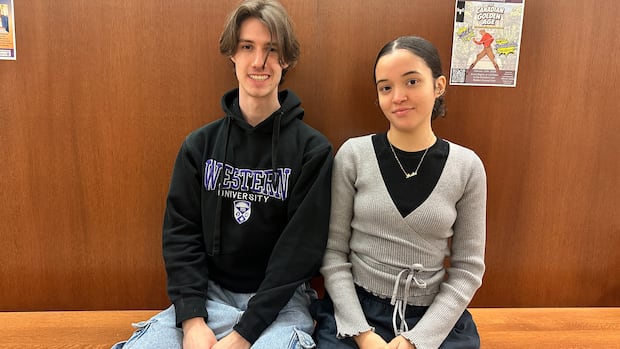
“It’s super overwhelming! I’m a little tired of waking up to unprecedented things,” Finlay Mc Farlane, a third-year international relations student at Western University in London, Ont., shared.
“As a young person and someone who’s going to have to live in that ‘New world order’, this is frightening,” he added while referencing Carney’s speech.
If you ask me what kind of conversations I expect to have by the end of the semester, I wouldn’t be able to predict it.- Blair Welsh, assistant professor of political science at Western University.
At the same time, today’s political climate is influencing coursework and how students engage academically, according to Mc Farlane. He points out a history of genocide course he’s enrolled in where a hypothetical U. S. annexation of Greenland was one of the first topics discussed.
This is something Mc Farlane, who holds dual citizenship in America and Canada, couldn’t have imagined as a real possibility just a few years back. His classmate Maria Maia agrees and adds that witnessing such rapid changes in world order has been worrisome.
“This brings more uncertainty, whether positive or negative,” Maia stated; she’s also in her third year pursuing a political science degree. “It changes things and we can’t predict them. And that makes it scary.”
Maia thinks this structural change was bound to happen over time.
“I believe it’s crucial for us as students in this field to recognize that we need to adapt to these issues. This isn’t something brand new; international law and relations rely heavily on trust,” she said while noting how challenging it is when someone like Trump influences global structures given his dominant power.
Source link
Increased Interest in Political Courses Observed by Professor
Educators are also trying hard to understand how best to teach about international relations amid all these shifts. Blair Welsh, an assistant professor of political science at Western University explained this perspective further. Students are voicing concerns about Canada’s safety along with theoretical discussions regarding its involvement in wars according to Welsh. Last semester saw many students discussing traveling or purchasing products from the U. S. “It’s definitely raising more questions than answers; we’re now having deeper discussions on issues changing daily or weekly,” he noted. “You create a syllabus ahead of time thinking we’ll cover topics smoothly but due to how international relations are evolving right now; if you asked me what kinds of conversations I expect by semester’s end-I couldn’t say.” Welsh has observed an increasing number of students from various departments enrolling in political science courses wanting insights into geopolitics. Maia and Mc Farlane also noticed that more peers seem politically active lately-they think it’s because people are becoming more aware due multiple global conflicts impacting communities across Canada along with easy access online information. Many students passing demonstrations happening on campus ask questions & engage even when opinions differ widely said Mc Farlane. “A lot would usually ignore politics but given everything going on-the weighty matters & mass atrocities worldwide-it’s so front-and-center that ignoring it isn’t really possible.”Source link