




For many Canadians, winter is a time for staying indoors and enjoying time with loved ones, particularly during the Christmas season.
However, for others, winter can lead to feelings of loneliness and declining mental health.
Tackling these mental health issues during winter is what Homewood Health, a treatment center located in Guelph, aims to do with their video series called Winter Wellbeing Mental Health Series.
“We wanted to move away from the typical holiday theme that we hear so often and really shine a light on the winter months because it’s genuinely a darker time for some,” said Gabrielle Provencher, director of enhanced mental health care at Homewood Health, during an interview with The Morning Edition.
“We want to share tips and tools on how to reconnect with ourselves quickly … changing the way we view [the winter season], moving away from the usual cheerful approaches that may work for some but not everyone.”
This video series focuses on people’s mental health throughout the winter months beyond just the holiday season and provides strategies to help individuals face their mental health struggles.
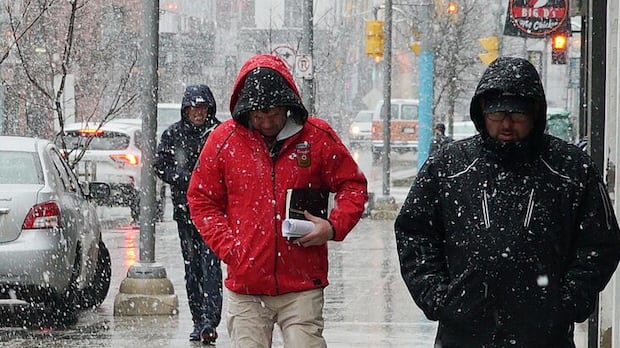
![]() According to Feed Ontario’s annual Hunger Report, for nine consecutive years, more people have relied on food banks across Ontario. Provencher emphasizes that food scarcity remains an important factor impacting people’s mental health this winter. (Kate Bueckert/CBC)
“Think about a large family gathering filled with plenty of food … that’s simply not everyone’s reality,” she added.
The recent Hunger Report from Feed Ontario reveals that over one million people made 8.7 million visits to food banks across Ontario between April 2024 and March 2025.
“We want folks to keep these things in mind when they go out into society sharing their experiences … not everyone will enjoy similar circumstances during this time,” mentioned Provencher.
According to Feed Ontario’s annual Hunger Report, for nine consecutive years, more people have relied on food banks across Ontario. Provencher emphasizes that food scarcity remains an important factor impacting people’s mental health this winter. (Kate Bueckert/CBC)
“Think about a large family gathering filled with plenty of food … that’s simply not everyone’s reality,” she added.
The recent Hunger Report from Feed Ontario reveals that over one million people made 8.7 million visits to food banks across Ontario between April 2024 and March 2025.
“We want folks to keep these things in mind when they go out into society sharing their experiences … not everyone will enjoy similar circumstances during this time,” mentioned Provencher.
“It’s vital to remind yourself that slowing down is part of human nature,” she explained. “And we should reflect this in how we interact with each other by checking in on our own mental wellness.” The Canadian Mental Health Association (CMHA) similarly states it’s common for people’s energy levels and moods to fluctuate throughout cold winter months.
This phenomenon is referred as ‘winter blues,’ CMHA indicates while focusing on Ontarians specifically.
“In Ontario research suggests around 15 percent of adults experience these winter blues which can manifest as changes in appetite or fatigue,” CMHA outlines on its website.
Tackling these winter blues isn’t easy; however there are steps people can take towards improvement.
The CMHA recommends getting outside more often for sunlight exposure along with fresh air. They also suggest maintaining regular exercise alongside healthy eating habits.
“Recognizing prevalence around ‘winter blues’ reinforces why prioritizing our mental wellbeing matters year-round,” CMHA highlights. “This becomes particularly critical amidst reduced sunlight affecting mood.”
Your check-ins about your mental state shouldn’t be just occasional occurrences according proven advice shared by Provencher.A consistent effort counts!
Source link
‘The comparison trap’
Provencher mentions data collected by Homewood Health between 2022 and 2025 shows a significant drop in demand for mental health services in December, followed by a notable increase in January. “We really aren’t great at taking care of ourselves during the holidays,” she noted. According to Provencher, several factors contribute to this trend including the hectic nature of the holiday season along with individuals juggling multiple responsibilities at once. This issue may also be connected to social media use over the holidays. A specific video in the series addresses “the comparison trap,” which Provencher explains occurs when individuals compare their lives against what they see online. This issue tends to become more pronounced during Christmas, often seen as “the most jolly and cheerful time of year.” <p“The heavy commercialization of holidays really intensifies how we compare ourselves during this period,” she stated. “It's crucial to remember that there’s a much wider reality out there for Canadians.” Provencher points out that many Canadians face “grief, loss and recovery” over the winter holidays. She also highlights ongoing food scarcity as a major concern for numerous individuals which makes comparisons even harder.‘Hibernating’ During Winter Months
Physiologically speaking, Provencher notes that our bodies naturally tend toward “hibernation” during colder months.“It’s vital to remind yourself that slowing down is part of human nature,” she explained. “And we should reflect this in how we interact with each other by checking in on our own mental wellness.” The Canadian Mental Health Association (CMHA) similarly states it’s common for people’s energy levels and moods to fluctuate throughout cold winter months.
This phenomenon is referred as ‘winter blues,’ CMHA indicates while focusing on Ontarians specifically.
“In Ontario research suggests around 15 percent of adults experience these winter blues which can manifest as changes in appetite or fatigue,” CMHA outlines on its website.
Tackling these winter blues isn’t easy; however there are steps people can take towards improvement.
The CMHA recommends getting outside more often for sunlight exposure along with fresh air. They also suggest maintaining regular exercise alongside healthy eating habits.
“Recognizing prevalence around ‘winter blues’ reinforces why prioritizing our mental wellbeing matters year-round,” CMHA highlights. “This becomes particularly critical amidst reduced sunlight affecting mood.”
Your check-ins about your mental state shouldn’t be just occasional occurrences according proven advice shared by Provencher.A consistent effort counts!
Source link