


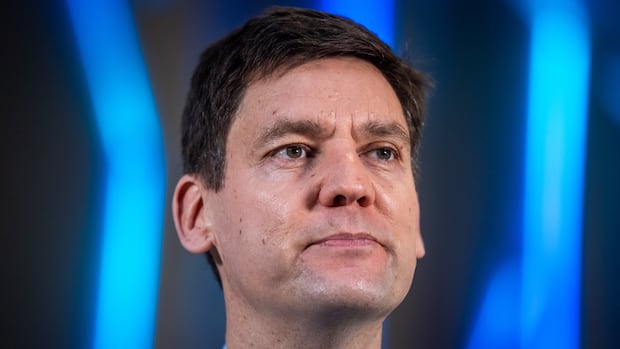
A trade group led by British Columbia Premier David Eby is set to visit China later this year, aiming to boost business opportunities for the province.
The premier stated that the focus will be on strengthening trade ties in agriculture and energy, although he hasn’t shared a specific timeline or further details.
This trip follows Prime Minister Mark Carney’s visit to China in January, where he met with Chinese President Xi Jinping and finalized trade agreements involving Chinese electric vehicles and Canadian canola.
Eby mentioned that his mission to China will convey the same message as his earlier trip to India this year, emphasizing that B. C. is a “stable jurisdiction in a very unstable time.”
WATCH | B. C. premier’s visit to India: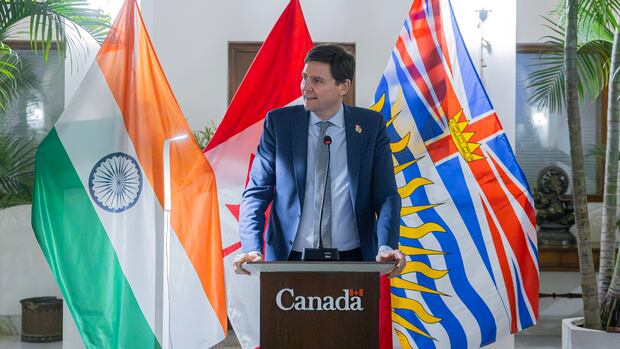 B. C. Premier David Eby continues trade mission in India, pitches gas and minerals
B. C. Premier David Eby is currently in India working to promote trade and attract interest in what the province has available. This mission occurs amid rising political tensions following claims that Indian agents were connected to the killing of Sikh activist Hardeep Singh Nijjar in Canada in 2023.
The premier described B. C.’s main selling point as being a “predictable” place that consistently produces goods of the highest quality.
Data from the provincial government indicates that China was B. C.’s second-largest export market for products in 2024 at 15.6 percent, trailing behind the United States at nearly 53 percent.
Japan ranks third with 10.4 percent, followed by South Korea at 6.6 percent and India at 2.3 percent.
<p The last B. C. premier who visited China was John Horgan back in 2018 during a ten-day tour that also included South Korea and Japan.
Eby’s upcoming trip coincides with improving relations between Canada and China as both nations face trade challenges with the United States under President Donald Trump’s administration.
B. C. Premier David Eby continues trade mission in India, pitches gas and minerals
B. C. Premier David Eby is currently in India working to promote trade and attract interest in what the province has available. This mission occurs amid rising political tensions following claims that Indian agents were connected to the killing of Sikh activist Hardeep Singh Nijjar in Canada in 2023.
The premier described B. C.’s main selling point as being a “predictable” place that consistently produces goods of the highest quality.
Data from the provincial government indicates that China was B. C.’s second-largest export market for products in 2024 at 15.6 percent, trailing behind the United States at nearly 53 percent.
Japan ranks third with 10.4 percent, followed by South Korea at 6.6 percent and India at 2.3 percent.
<p The last B. C. premier who visited China was John Horgan back in 2018 during a ten-day tour that also included South Korea and Japan.
Eby’s upcoming trip coincides with improving relations between Canada and China as both nations face trade challenges with the United States under President Donald Trump’s administration.
<brSource link
B. C. Premier David Eby continues trade mission in India, pitches gas and minerals
B. C. Premier David Eby is currently in India working to promote trade and attract interest in what the province has available. This mission occurs amid rising political tensions following claims that Indian agents were connected to the killing of Sikh activist Hardeep Singh Nijjar in Canada in 2023.
The premier described B. C.’s main selling point as being a “predictable” place that consistently produces goods of the highest quality.
Data from the provincial government indicates that China was B. C.’s second-largest export market for products in 2024 at 15.6 percent, trailing behind the United States at nearly 53 percent.
Japan ranks third with 10.4 percent, followed by South Korea at 6.6 percent and India at 2.3 percent.
<p The last B. C. premier who visited China was John Horgan back in 2018 during a ten-day tour that also included South Korea and Japan.
Eby’s upcoming trip coincides with improving relations between Canada and China as both nations face trade challenges with the United States under President Donald Trump’s administration.
Ferry controversy
This visit also comes after B. C. Ferries announced last June its decision to contract a shipyard owned by the Chinese state for building four new large ferries. B. C. Ferries secured a $1 billion loan from the Canada Infrastructure Bank for financing these new vessels. The choice of using a Chinese shipyard for ferry construction along with federal funding has faced criticism since last summer. B. C. Ferries noted then that no Canadian companies submitted bids for this contract. At that time, Eby expressed some concerns about this decision but emphasized that there was an urgent need for these ferries and reopening bidding would lead to higher costs. He also assured that B. C. would collaborate with the federal government and industry stakeholders so future ferries would be built locally within B. C.WATCH | Some mayors say criticism of ferries contract misguided:Calls to cancel B. C. Ferries contract with China misguided, say some mayors
B. C. Ferries’ announcement regarding constructing its four new ships in China has stirred up political debate. Some politicians at both federal and provincial levels are pushing for scrapping this deal entirely; however, local mayors argue that such criticism overlooks essential needs within communities reliant on ferry services.<brSource link