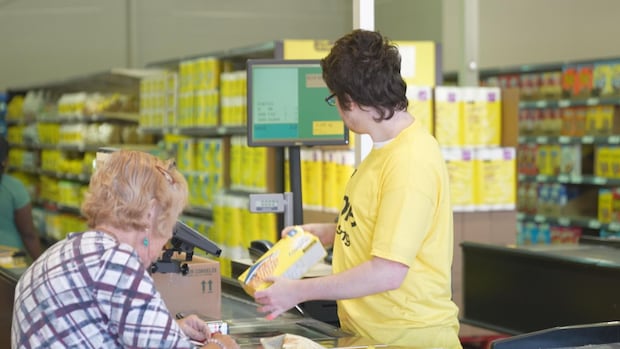
Loblaw announced that only one of the three ultra-discount No Name grocery stores opened in Ontario last September will stay open.
These stores were originally introduced as part of a “laser-focused” strategy by Loblaw to bring down prices for shoppers while trying out new ideas.
The locations in St. Catharines, Brockville, and La Salle, near Windsor, had fewer items available and received deliveries less often.
There were also reduced refrigerated sections and shorter hours, which helped cut operating costs and offered items up to 20 percent cheaper than competitors.
The St. Catharines store was the first to shut down in July, with the La Salle store expected to close on Oct. 25, according to the company.
Brockville’s location will remain operational, according to a Loblaw spokesperson who mentioned that the company will keep assessing its future.
 Are city-owned grocery stores an answer to sky-high supermarket prices?
A grassroots campaign fueled by left-leaning ideas led Zohran Mamdani to an impressive win in New York City’s mayoral democratic primary. Policy analyst Vass Bednar believes one of those ideas – government-owned grocery stores – could possibly succeed in Canada.
Von Massow expects Loblaw will adjust new stores based on insights gained from this pilot so they can attract customers seeking value amid rising food prices.
“We’ll continue to see experimentation on the part of big retailers and expansion of discount models as they compete with those big box stores,” he said.
“Was that a successful experiment? Not particularly. Did they learn something? Without a doubt.”
The stores were launched during calls for boycotts against grocers due to escalating costs, which von Massow points out are now about 30 percent higher than five years ago.
Discount brands like No Name have become popular among shoppers looking for savings; these brands tend to be slightly more profitable than mid-level options.
“People on lower incomes are really getting squeezed and are changing their shopping behavior so they can afford everything,” he noted.
Are city-owned grocery stores an answer to sky-high supermarket prices?
A grassroots campaign fueled by left-leaning ideas led Zohran Mamdani to an impressive win in New York City’s mayoral democratic primary. Policy analyst Vass Bednar believes one of those ideas – government-owned grocery stores – could possibly succeed in Canada.
Von Massow expects Loblaw will adjust new stores based on insights gained from this pilot so they can attract customers seeking value amid rising food prices.
“We’ll continue to see experimentation on the part of big retailers and expansion of discount models as they compete with those big box stores,” he said.
“Was that a successful experiment? Not particularly. Did they learn something? Without a doubt.”
The stores were launched during calls for boycotts against grocers due to escalating costs, which von Massow points out are now about 30 percent higher than five years ago.
Discount brands like No Name have become popular among shoppers looking for savings; these brands tend to be slightly more profitable than mid-level options.
“People on lower incomes are really getting squeezed and are changing their shopping behavior so they can afford everything,” he noted.
Source link
Location might have played a role, expert says
Loblaw stated that the Windsor-area store initially attracted a solid customer base but it “hasn’t built the customer base needed to remain sustainable long-term.” The grocer did not share any further details about the closures or what they learned from this trial run. A retail food demand specialist believes Loblaw will focus more on their discount brands moving forward as they compete against retailers like Costco and Walmart. “I don’t think it’s a sign that this isn’t gonna work,” said Mike von Massow, a professor of food, agricultural and resource economics at the University of Guelph. “I think this is a sign that it’s not gonna work in this market with this brand.” This week, customers at the No Name store in La Salle likened it to a dollar store offering produce and other groceries. “The concept of it is great,” said Rob Caruana, who was looking for ways to save money as food prices increase. He mentioned that the location wasn’t ideal since it’s situated in an area reliant on cars. He suggested putting a store downtown in nearby Windsor would be successful. Are city-owned grocery stores an answer to sky-high supermarket prices?
A grassroots campaign fueled by left-leaning ideas led Zohran Mamdani to an impressive win in New York City’s mayoral democratic primary. Policy analyst Vass Bednar believes one of those ideas – government-owned grocery stores – could possibly succeed in Canada.
Von Massow expects Loblaw will adjust new stores based on insights gained from this pilot so they can attract customers seeking value amid rising food prices.
“We’ll continue to see experimentation on the part of big retailers and expansion of discount models as they compete with those big box stores,” he said.
“Was that a successful experiment? Not particularly. Did they learn something? Without a doubt.”
The stores were launched during calls for boycotts against grocers due to escalating costs, which von Massow points out are now about 30 percent higher than five years ago.
Discount brands like No Name have become popular among shoppers looking for savings; these brands tend to be slightly more profitable than mid-level options.
“People on lower incomes are really getting squeezed and are changing their shopping behavior so they can afford everything,” he noted.
Are city-owned grocery stores an answer to sky-high supermarket prices?
A grassroots campaign fueled by left-leaning ideas led Zohran Mamdani to an impressive win in New York City’s mayoral democratic primary. Policy analyst Vass Bednar believes one of those ideas – government-owned grocery stores – could possibly succeed in Canada.
Von Massow expects Loblaw will adjust new stores based on insights gained from this pilot so they can attract customers seeking value amid rising food prices.
“We’ll continue to see experimentation on the part of big retailers and expansion of discount models as they compete with those big box stores,” he said.
“Was that a successful experiment? Not particularly. Did they learn something? Without a doubt.”
The stores were launched during calls for boycotts against grocers due to escalating costs, which von Massow points out are now about 30 percent higher than five years ago.
Discount brands like No Name have become popular among shoppers looking for savings; these brands tend to be slightly more profitable than mid-level options.
“People on lower incomes are really getting squeezed and are changing their shopping behavior so they can afford everything,” he noted.
Source link