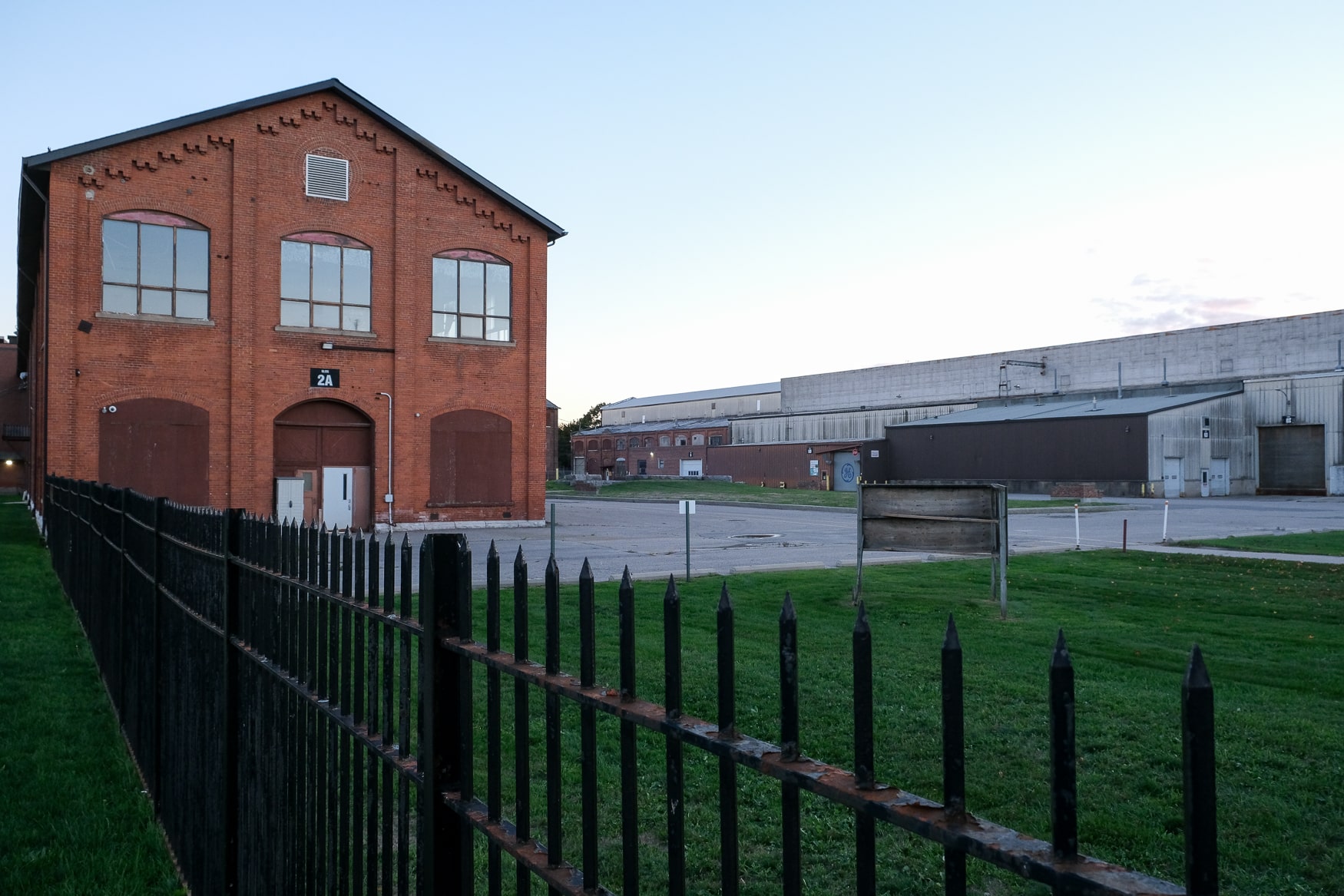
GE Vernova is planning to tear down most of the buildings on its historic GE campus. Some structures, like 2A, shown here on the left, will stay. (Photo: Will Pearson) On Monday night, the city council decided against seeking a heritage designation for many of the buildings at the historic General Electric site. If this decision receives final approval next week, it will allow GE Vernova, which owns the roughly 50-acre property near downtown Peterborough, to proceed with demolishing these buildings. During their discussion on Monday, councillors primarily focused on two points. They first addressed whether they could ensure that the contaminated site gets cleaned up without burdening taxpayers. Secondly, they considered if Peterborough’s architectural conservation advisory committee should evaluate whether the buildings marked for demolition have any heritage significance. The has detailed those conversations. However, there’s another concern that hasn’t received as much attention: property taxes. The GE site located at 107 Park Street had an assessed value of about $17 million in 2024, based on assessment roll data accessible at city hall. This resulted in a property tax bill of $567,000 for 2025. In Ontario, property taxes are based on a property’s value determined by an assessment process conducted by the Municipal Property Assessment Corporation (MPAC). Essentially, if MPAC believes your property is worth more, you’ll pay higher taxes. Demolishing buildings results in lower assessments and consequently lower tax bills. “When structures are demolished, MPAC receives demolition permits from the municipality notifying us of the change,” an MPAC spokesperson mentioned to Currents earlier this year. “MPAC reviews and updates our records to reflect the new state and condition of the property.”
 The former Baskin Robbins factory in downtown Peterborough was demolished around 2020. This led to a decrease in property taxes for its owner. (Photo: Will Pearson)
In Peterborough, at least two owners of former industrial sites have seen reductions in their MPAC assessments after tearing down buildings recently. As Currents reported this spring, following the demolition of the old Baskin Robbins factory around 2020 at 375 Aylmer Street, its assessed value dropped by 80 percent (from $978,000 to $188,000). The property’s tax bill was $6,211 in 2025.
Moreover, MPAC’s assessed value for 843 Park Street fell from $1.6 million to $574,000 after tearing down the historic Ovaltine building there in 2019 according to city hall data. That property faced a tax bill of $18,966 in 2025.
If GE Vernova proceeds with demolitions at its site, how much might its property tax bill decrease? Councillor Keith Riel posed that question during Monday night’s general committee meeting to finance commissioner Richard Freymond who didn’t provide an answer but indicated it would be up to MPAC to reassess the property’s value post-demolition.
The adjustment for GE Vernova’s assessment may not be as drastic as the previous reductions seen with Baskin Robbins or Ovaltine since some buildings are planned to remain standing on-site.
However it could still be notable. Last fall during budget discussions for 2025,council learned that every additional $2 million spent by the city necessitates a one percent increase in property taxes.Lost revenue impacts overall tax rates just like increased spending does.
If GE’s property’s assessed value and associated tax obligation were cut by half,for instance,that could lead to about a 0.13 percent hike in property taxes across Peterborough according to Currents’ calculations.(Check our math.) A drop of only twenty-five percent would mean roughly a 0.06 percent increase city-wide. Councillors often deliberate over changes like these during budget sessions each year.
Last fall,Mayor Jeff Leal expressed his intention towards lowering residential landowners’ tax burdens while enhancing commercial and industrial assessments throughout Peterborough. Currently,commercial and industrial properties make up around twenty percent of total assessments; Leal hopes that can rise to thirty percent or more so businesses can contribute more towards local taxes.
The current direction isn’t heading toward that goal according to last year’s budget reports. The draft budget for 2025 estimated a decline of zero point eight percent in commercial property assessments compared with one point three percent growth expected for residential properties.
If existing commercial and industrial properties continue losing value due to demolitions evaluated by MPAC,the effort required elsewhere within town becomes even greater before Mayor Leal’s objective can be met.
Check our math:
The tax bill for 107 Park Street was $567、000 in twenty twenty-five. A fifty percent reduction would amounting到$283、000. According City Hall figures、$2.1 million correlates with one percentage point increase.在此情况下、$283、000 /$2、100、000 =.13
The former Baskin Robbins factory in downtown Peterborough was demolished around 2020. This led to a decrease in property taxes for its owner. (Photo: Will Pearson)
In Peterborough, at least two owners of former industrial sites have seen reductions in their MPAC assessments after tearing down buildings recently. As Currents reported this spring, following the demolition of the old Baskin Robbins factory around 2020 at 375 Aylmer Street, its assessed value dropped by 80 percent (from $978,000 to $188,000). The property’s tax bill was $6,211 in 2025.
Moreover, MPAC’s assessed value for 843 Park Street fell from $1.6 million to $574,000 after tearing down the historic Ovaltine building there in 2019 according to city hall data. That property faced a tax bill of $18,966 in 2025.
If GE Vernova proceeds with demolitions at its site, how much might its property tax bill decrease? Councillor Keith Riel posed that question during Monday night’s general committee meeting to finance commissioner Richard Freymond who didn’t provide an answer but indicated it would be up to MPAC to reassess the property’s value post-demolition.
The adjustment for GE Vernova’s assessment may not be as drastic as the previous reductions seen with Baskin Robbins or Ovaltine since some buildings are planned to remain standing on-site.
However it could still be notable. Last fall during budget discussions for 2025,council learned that every additional $2 million spent by the city necessitates a one percent increase in property taxes.Lost revenue impacts overall tax rates just like increased spending does.
If GE’s property’s assessed value and associated tax obligation were cut by half,for instance,that could lead to about a 0.13 percent hike in property taxes across Peterborough according to Currents’ calculations.(Check our math.) A drop of only twenty-five percent would mean roughly a 0.06 percent increase city-wide. Councillors often deliberate over changes like these during budget sessions each year.
Last fall,Mayor Jeff Leal expressed his intention towards lowering residential landowners’ tax burdens while enhancing commercial and industrial assessments throughout Peterborough. Currently,commercial and industrial properties make up around twenty percent of total assessments; Leal hopes that can rise to thirty percent or more so businesses can contribute more towards local taxes.
The current direction isn’t heading toward that goal according to last year’s budget reports. The draft budget for 2025 estimated a decline of zero point eight percent in commercial property assessments compared with one point three percent growth expected for residential properties.
If existing commercial and industrial properties continue losing value due to demolitions evaluated by MPAC,the effort required elsewhere within town becomes even greater before Mayor Leal’s objective can be met.
Check our math:
The tax bill for 107 Park Street was $567、000 in twenty twenty-five. A fifty percent reduction would amounting到$283、000. According City Hall figures、$2.1 million correlates with one percentage point increase.在此情况下、$283、000 /$2、100、000 =.13
Source link