





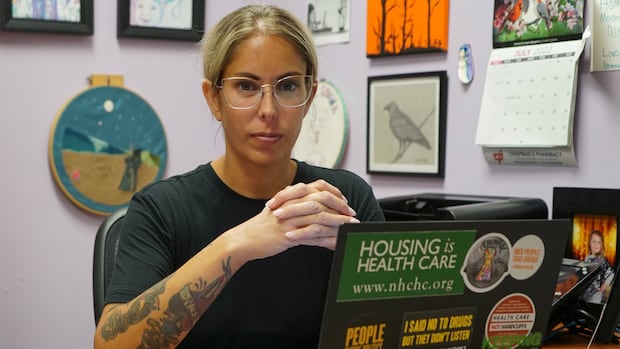
Health professionals and harm reduction advocates are worried that closing London’s Carepoint Consumption and Treatment Service will lead to more public drug use and put extra strain on an already overburdened health-care system.
In a letter sent out on Friday, Ontario’s Ministry of Health informed agencies that funding for the consumption and treatment services they provide will cease on June 13, leading to their shutdown.
“With the closure of these sites, we can expect not just an increase in overdose deaths, but more overdose calls going to EMS and police,” said Dr. Andrea Sereda, a physician who works with people with substance use disorder.
“Our emergency departments are going to be overwhelmed and our communities are going to see more public drug consumption because all of the consumption that was happening at these sites can no longer occur there.”
The province gave organizations 90 days notice for an “orderly transition” so clients can access other community health services, including those at local HART Hubs. Centres need to submit a plan by April 10 detailing assets purchased with ministry funds and estimated costs for winding down operations.
The Regional HIV/AIDS Connection (RHAC), which has been running Carepoint since 2019, reported reversing 218 overdoses last year along with over 15,000 visits. It also noted no new HIV infections linked to drug use.
Carepoint does much more than reverse overdoses and prevent infections, Sereda said. It’s also a place where individuals can find community support and form connections with caring people.
“I’m thinking about all the people I know who are outside right now, all the faces who go to Carepoint, all the people I know who are alive because they were able to go to that site. I worry about those people. I worry that the next time I’m going to hear about them, it will be because we’ve lost them,” Sereda said.
![]() London City Coun. Susan Stevenson says she hopes the province funnels funding previously allocated to sites like Carepoint into recovery and treatment services like HART hubs. (Andrew Lupton/)
Stevenson mentioned it’s tough for many individuals seeking transitional services when they’re ready for addiction treatment. Long wait times without clear pathways often force people back onto streets or into shelters filled with rampant drug use, she added.
“Right now we are funding programs and services that focus on reducing the stigma of illegal drug use and [trying] to make it safer for people, but we’re not focusing on recovery. There are huge gaps for people who want a long-term solution to their addiction,” Stevenson said.
She also called on Ontario’s government to invest more in hospitals and treatment centres.
Terence Kernaghan, NDP MPP for London North Centre agrees hospitals need better funding but believes it shouldn’t come at the cost of places like Carepoint.
“Carepoint does such amazing service for our community. They save lives and by taking away this necessary part of healthcare without providing alternatives, it’s going to create a significant public health crisis,” Kernaghan stated.
“The government can’t claim they’re strengthening addiction care while continuously shutting down programs like these that have been preventing overdose deaths.”
In 2024, Ford’s government prohibited consumption sites within 200 metres of schools or daycares. It opened up 19 Homeless Addiction Recovery Treatment (HART) hubs following an abstinence-based model-one being located in London.
London has secured $6.3 million annually over three years in HART hub funding which provides a total of 59 beds at Salvation Army’s Centre of Hope on Wellington Street.
London City Coun. Susan Stevenson says she hopes the province funnels funding previously allocated to sites like Carepoint into recovery and treatment services like HART hubs. (Andrew Lupton/)
Stevenson mentioned it’s tough for many individuals seeking transitional services when they’re ready for addiction treatment. Long wait times without clear pathways often force people back onto streets or into shelters filled with rampant drug use, she added.
“Right now we are funding programs and services that focus on reducing the stigma of illegal drug use and [trying] to make it safer for people, but we’re not focusing on recovery. There are huge gaps for people who want a long-term solution to their addiction,” Stevenson said.
She also called on Ontario’s government to invest more in hospitals and treatment centres.
Terence Kernaghan, NDP MPP for London North Centre agrees hospitals need better funding but believes it shouldn’t come at the cost of places like Carepoint.
“Carepoint does such amazing service for our community. They save lives and by taking away this necessary part of healthcare without providing alternatives, it’s going to create a significant public health crisis,” Kernaghan stated.
“The government can’t claim they’re strengthening addiction care while continuously shutting down programs like these that have been preventing overdose deaths.”
In 2024, Ford’s government prohibited consumption sites within 200 metres of schools or daycares. It opened up 19 Homeless Addiction Recovery Treatment (HART) hubs following an abstinence-based model-one being located in London.
London has secured $6.3 million annually over three years in HART hub funding which provides a total of 59 beds at Salvation Army’s Centre of Hope on Wellington Street.
Source link
Councillor supports shift towards ‘recovery-oriented’ approach
Coun. Susan Stevenson expressed her approval of the closure and mentioned that nearby businesses and residents have also felt relieved after previously voicing safety concerns regarding the site. She hopes this decision from the province will redirect funds toward treatment and recovery services instead. “I trust the health unit to be able to navigate and make sure that people are taken care of via other services which are desperately needed,” she said. “I’m hoping this move is an opportunity for London to shift and align with the province in terms of a recovery-oriented system of care.”Source link