




In Canada, cultural resource management archaeologists – the professional consultants who work on environmental assessments and compliance processes – are becoming more visible when their tasks intersect with infrastructure projects related to development or disaster response.
Conversations in the public eye often happen when construction delays arise from archaeological evaluations or opposition from Indigenous groups. However, many other developments proceed smoothly without any issues.
Currently, these worries are part of various challenges such as labor shortages, effective Indigenous engagement, and recent legislative changes that influence how development is carried out.
Addressing these issues is essential to ensure that development projects receive timely assessments and approvals through legally mandated processes, while still preserving archaeological sites – most of which hold significance for Indigenous peoples.
The need for archaeological professionals in Canada is growing rapidly, far exceeding the number of students graduating with degrees in archaeology or anthropology. A similar shortage has been observed in the United States.
Post-secondary institutions can help tackle this issue by revising and enhancing degree programs to equip students with the skills necessary for success in cultural resource management.
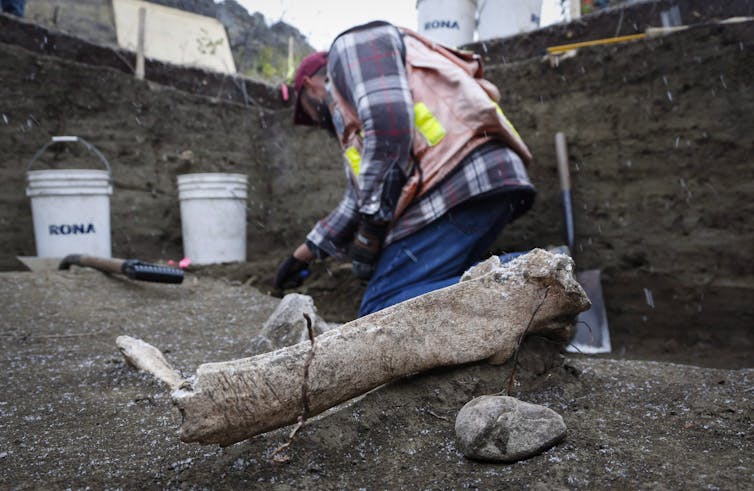 Archaeologists uncover bison bones during a project aimed at identifying archeological finds affected by flooding near Calgary during October 2016. THE CANADIAN PRESS/Jeff Mc Intosh
The curriculum offered by post-secondary institutions must expand beyond traditional academic settings so students can be better prepared for job markets after graduation. We’re not suggesting creating trade schools specifically for archaeologists; instead we believe minor adjustments to current curricula can improve student experiences without sacrificing academic standards or rigor.
Institutions should design degree programs aligned closely with industry-relevant skills while introducing CRM topics early on during undergraduate studies too-this approach would create well-rounded programs attracting more students interested in relevant education where they see promising career prospects within archaeology matching market demands.
Satisfying this market demand is crucial if we want timely regulatory approvals for development projects since skilled professionals working within CRM are vital toward fulfilling “nation-building” infrastructure initiatives effectively too! Failing to meet capacity means critical assessments may end up getting overlooked leading directly toward potential destruction occurring across important sites throughout this process alone!
Critics might argue it’s necessary cutting down bureaucratic hurdles speeding through regulatory approval timelines surrounding economically significant ventures thus devaluing CRM aspects involved-but we contend taking care assessing these resources stands integral amid contemporary approaches emphasizing engaging meaningfully alongside obtaining consent from local Indigenous populations prior moving forward.
Archaeologists uncover bison bones during a project aimed at identifying archeological finds affected by flooding near Calgary during October 2016. THE CANADIAN PRESS/Jeff Mc Intosh
The curriculum offered by post-secondary institutions must expand beyond traditional academic settings so students can be better prepared for job markets after graduation. We’re not suggesting creating trade schools specifically for archaeologists; instead we believe minor adjustments to current curricula can improve student experiences without sacrificing academic standards or rigor.
Institutions should design degree programs aligned closely with industry-relevant skills while introducing CRM topics early on during undergraduate studies too-this approach would create well-rounded programs attracting more students interested in relevant education where they see promising career prospects within archaeology matching market demands.
Satisfying this market demand is crucial if we want timely regulatory approvals for development projects since skilled professionals working within CRM are vital toward fulfilling “nation-building” infrastructure initiatives effectively too! Failing to meet capacity means critical assessments may end up getting overlooked leading directly toward potential destruction occurring across important sites throughout this process alone!
Critics might argue it’s necessary cutting down bureaucratic hurdles speeding through regulatory approval timelines surrounding economically significant ventures thus devaluing CRM aspects involved-but we contend taking care assessing these resources stands integral amid contemporary approaches emphasizing engaging meaningfully alongside obtaining consent from local Indigenous populations prior moving forward.
Wanton destruction caused against sacred indigenous sites only leads increased tensions resulting loss heritage overall-Canada stands benefit greatly protecting its own rich history cultivated over generations!By safeguarding heritage values embedded within archeological pursuits professionals achieve better outcomes everyone involved!
Source link
The politics of archaeology
Archaeologists at the site of the former parliament of the United Province of Canada in Montréal back in October 2017. THE CANADIAN PRESS/Graham Hughes Cultural resource management (CRM) focuses on identifying, preserving, and maintaining significant cultural heritage like ancestral artifacts and historic buildings. In Canada, this type of archaeological work is mandated before most infrastructure development under provincial and federal laws. Recent political shifts in Canada, such as federal bill C-5 along with similar legislation in Ontario and British Columbia, could affect the extent of environmental assessment work including associated archaeological efforts. To facilitate quicker economic growth, these laws permit governments to exempt certain infrastructure projects from undergoing archaeological assessments before construction begins and skip requirements for consulting Indigenous communities. This shifts decision-making about archaeological preservation away from trained professionals and Indigenous communities into political hands. This kind of exemption risks infringing on First Nations treaty rights and potentially causing irreparable damage to Indigenous ancestral sites without proper evaluation or consideration, which could lead to heightened conflicts between developers and Indigenous groups. These disputes may themselves result in further delays for infrastructure construction.Where are all the archaeologists?
A recent study suggests there are between 419 and 713 archaeologists working within cultural resource management across Canada. These numbers are likely undercounts. However, our findings also indicate that demand within the labor market is surpassing supply. Fifty-five employers nationwide reported having unfilled positions at various experience levels within their organizations. Overall, growth within the CRM labor market hasn’t kept up with rapid industry expansion. Colleges and universities have a crucial role to play by developing strong degree programs that highlight viable career paths in archaeology beyond academia. But schools face significant funding declines right now which leads to disappearing program opportunities. This situation contributes to graduates from archaeology and anthropology programs lacking essential skills needed for success within CRM roles upon completing their studies. Consequently, employers face a heavy burden regarding on-the-job training for new hires. A few exceptions exist like specialized undergraduate and graduate courses at Universities such as Lethbridge and Calgary focused specifically on CRM topics; however, overall there’s a concerning lack of CRM-focused offerings at post-secondary institutions given that most graduates remaining in archaeology will join CRM sectors where most Canadian archaeology occurs today.A path forward
 Archaeologists uncover bison bones during a project aimed at identifying archeological finds affected by flooding near Calgary during October 2016. THE CANADIAN PRESS/Jeff Mc Intosh
The curriculum offered by post-secondary institutions must expand beyond traditional academic settings so students can be better prepared for job markets after graduation. We’re not suggesting creating trade schools specifically for archaeologists; instead we believe minor adjustments to current curricula can improve student experiences without sacrificing academic standards or rigor.
Institutions should design degree programs aligned closely with industry-relevant skills while introducing CRM topics early on during undergraduate studies too-this approach would create well-rounded programs attracting more students interested in relevant education where they see promising career prospects within archaeology matching market demands.
Satisfying this market demand is crucial if we want timely regulatory approvals for development projects since skilled professionals working within CRM are vital toward fulfilling “nation-building” infrastructure initiatives effectively too! Failing to meet capacity means critical assessments may end up getting overlooked leading directly toward potential destruction occurring across important sites throughout this process alone!
Critics might argue it’s necessary cutting down bureaucratic hurdles speeding through regulatory approval timelines surrounding economically significant ventures thus devaluing CRM aspects involved-but we contend taking care assessing these resources stands integral amid contemporary approaches emphasizing engaging meaningfully alongside obtaining consent from local Indigenous populations prior moving forward.
Archaeologists uncover bison bones during a project aimed at identifying archeological finds affected by flooding near Calgary during October 2016. THE CANADIAN PRESS/Jeff Mc Intosh
The curriculum offered by post-secondary institutions must expand beyond traditional academic settings so students can be better prepared for job markets after graduation. We’re not suggesting creating trade schools specifically for archaeologists; instead we believe minor adjustments to current curricula can improve student experiences without sacrificing academic standards or rigor.
Institutions should design degree programs aligned closely with industry-relevant skills while introducing CRM topics early on during undergraduate studies too-this approach would create well-rounded programs attracting more students interested in relevant education where they see promising career prospects within archaeology matching market demands.
Satisfying this market demand is crucial if we want timely regulatory approvals for development projects since skilled professionals working within CRM are vital toward fulfilling “nation-building” infrastructure initiatives effectively too! Failing to meet capacity means critical assessments may end up getting overlooked leading directly toward potential destruction occurring across important sites throughout this process alone!
Critics might argue it’s necessary cutting down bureaucratic hurdles speeding through regulatory approval timelines surrounding economically significant ventures thus devaluing CRM aspects involved-but we contend taking care assessing these resources stands integral amid contemporary approaches emphasizing engaging meaningfully alongside obtaining consent from local Indigenous populations prior moving forward.Wanton destruction caused against sacred indigenous sites only leads increased tensions resulting loss heritage overall-Canada stands benefit greatly protecting its own rich history cultivated over generations!By safeguarding heritage values embedded within archeological pursuits professionals achieve better outcomes everyone involved!
Source link


