



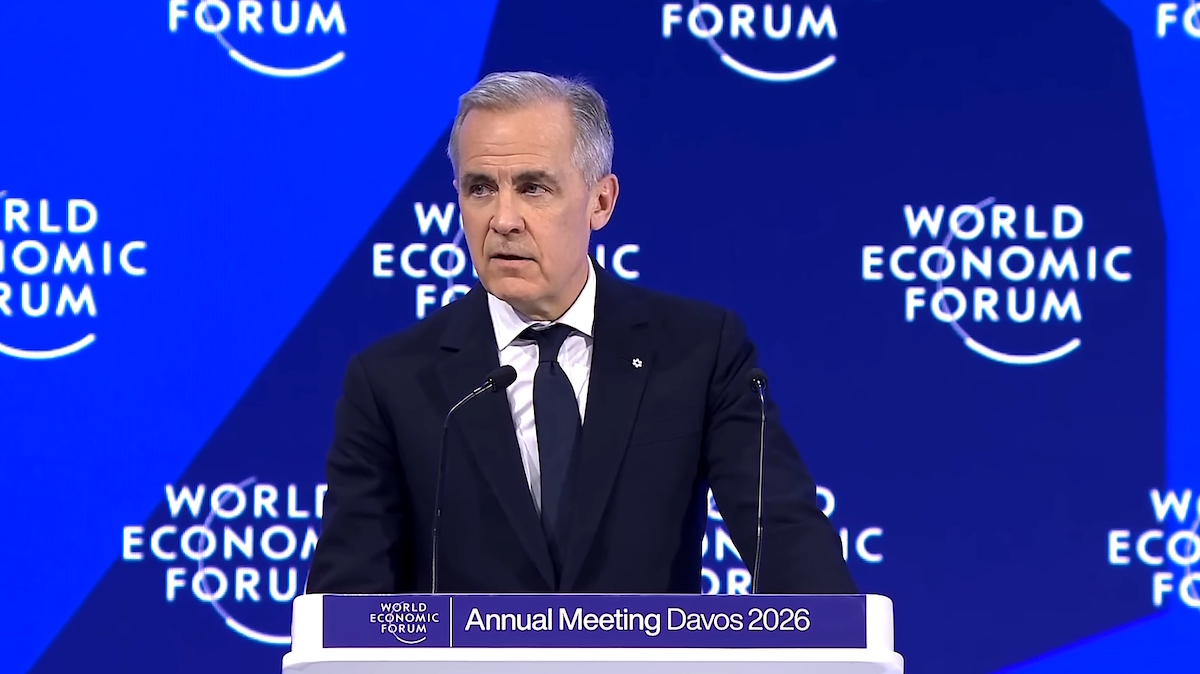
Mark Carney became prime minister of Canada a year ago today, and even his critics might have to acknowledge that he’s had quite a successful first year.
Journalist and author Martin Lukacs, moderator of the “Carney Agenda” panel at the March 4-6 Broadbent Summit in Ottawa (Photo: David J. Climenhaga).
Many progressive Canadians are uneasy about the path Mr. Carney is taking the country on, yet they can’t help but feel a bit satisfied as they watch him keep Conservative Leader Pierre Poilievre on the defensive.
It’s clear that Mr. Carney doesn’t always follow through on what he says. However, regardless of this Liberal prime minister’s Conservative-style policies, his time as a central banker has given him valuable experience with government operations. Consequently, Mr. Carney has managed to navigate through an unpredictable world – a situation worsened by the chaotic antics happening in Washington D. C.
Recent polling indicates many Canadians share this sentiment; they feel like responsible leadership has returned to Ottawa and are relieved that last spring didn’t see them jump from one unpopular government under Justin Trudeau into the hands of Mr. Poilievre’s MAGA-like plans.
If an election were to take place tomorrow, Mr. Carney would likely secure the majority he seeks by attracting MPs from other parties to join his Liberal team in the House of Commons.
As I’ve mentioned before here, Mr. Carney has once again shown that the L-shaped party continues to be Canada’s natural governing party.
But let’s take a moment to reflect on the Carney Agenda in light of what was discussed at the March 4-6 Broadbent Summit. There, some members of the federal New Democratic Party gathered in Ottawa to figure out how to recover from their self-inflicted decline, which saw them drop from 103 seats when the Broadbent Institute was founded in 2011 down to seven seats during this meeting and further reduced just this week to six.
On March 6, five social movement activists analyzed what they perceived as “the impacts and contradictions of the Carney Agenda.”
Elbows up? Or flooding the zone, as journalist and panel moderator Martin Lukacs described it, with “a veritable tsunami of pro-corporate policies and legislation under cover of disorientation caused by Trump’s attacks against Canada.”
Here are some observations made by those five panelists regarding our prime minister’s agenda, with minor edits for clarity. The full discussion can be found on a podcast released by The Breach.
These critiques of Prime Minister Carney’s agenda are severe but backed by solid evidence. Still, you can’t help but think things could have been worse – we almost experienced that!
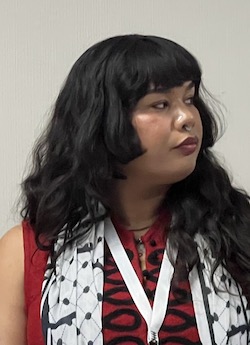 Panelist Janelle Lapointe (Photo: David J. Climenhaga).
Janelle Lapointe, climate justice and Indigenous rights organizer from Stellat’en First Nation and advisor for the David Suzuki Foundation:
“In this new circumstance where we have Carney as leader, he’s really weaponizing the threat of Donald Trump and saying we need these major projects, and we need them now. What that means is we now have this fast-tracking legislation … that puts these major resource projects forward and removes some of the safeguards that we had like environmental assessments and consultation processes that were already severely flawed.”
“So now we have these major projects that have extreme risks to our land, our waters, our culture, the safety of our women and girls … And we’re told that’s a gift to us!”
“I think what’s most sinister about it is how the Carney Government has repackaged this as generosity and reconciliation; now we’re in a situation where Indigenous governments may end up taking out massive loans for some of these projects … We call that predatory lending; we do not call that economic reconciliation. And when I put it like that it makes sense why our banker prime minister has been so good at using this tactic!”
Panelist Janelle Lapointe (Photo: David J. Climenhaga).
Janelle Lapointe, climate justice and Indigenous rights organizer from Stellat’en First Nation and advisor for the David Suzuki Foundation:
“In this new circumstance where we have Carney as leader, he’s really weaponizing the threat of Donald Trump and saying we need these major projects, and we need them now. What that means is we now have this fast-tracking legislation … that puts these major resource projects forward and removes some of the safeguards that we had like environmental assessments and consultation processes that were already severely flawed.”
“So now we have these major projects that have extreme risks to our land, our waters, our culture, the safety of our women and girls … And we’re told that’s a gift to us!”
“I think what’s most sinister about it is how the Carney Government has repackaged this as generosity and reconciliation; now we’re in a situation where Indigenous governments may end up taking out massive loans for some of these projects … We call that predatory lending; we do not call that economic reconciliation. And when I put it like that it makes sense why our banker prime minister has been so good at using this tactic!”
 Panelist Atiya Jaffar (Photo: National Observer).
Atiya Jaffar , Canada country manager for 350. org , an international climate justice organization :
” What we’re seeing in Carne y isthatheis fully regressing us back , tearing apart every climate policy we’ve won overthe last decade. Butthe thingis , these were all mediocre policies.. I would say , in cl imate movement , howwe’re viewingthe Car ney Agenda it’sanagendaof rampant deregulationand rapidderegulationtoexpand extractivism, andweknow he’s borrowingfrom Trump’splaybook, buthe’salsosayingthathe’s fighting back, andthat’swhyhewontheelection.”
” What he’s calling nation-buildingprojectsare essentially justprojectsthataretearingapartour communitiesand worseningtheclimateemergency.. Sowebuilding resiliencyagainst Trumpin America, butwe’realsosupporting American fossil fuelprojects. Thelogicjustdoesn’tstand.”
” Afterthisofcourse, wehadthe Alberta-Canada Mo Uwith Danielle Smith. Car neydeepenedhiscommitmenttoderegulationthroughthisinalignmentwiththedemandsofthefossilfuelindustry. Sothis Mo Uledtothescrappingofthepollutioncaponthefossilfuel industry, scrappingtheclean-electricityregulations. Andperhapsmostalarmingisthe Alberta-Canada Mo Ujustputanew West Coastpipelineonthetable. Thismysteryprojectisintendedtobring Canadiantarsands oilto Asianmarketsthroughthe Pacific Coast.”
” Oneofthe biggest strugglesthat we’re facingintheclimatemovementisknowingthatpublicopinionseemsbeon Carneyside. Carne ysagendaseemsto beresonantamongst manymainstreamandevenprogressive leaning Canadians, p eoplearegraspingforsomeeconomicstability, andthelogic seemstomakesensetopeople.”
Panelist Atiya Jaffar (Photo: National Observer).
Atiya Jaffar , Canada country manager for 350. org , an international climate justice organization :
” What we’re seeing in Carne y isthatheis fully regressing us back , tearing apart every climate policy we’ve won overthe last decade. Butthe thingis , these were all mediocre policies.. I would say , in cl imate movement , howwe’re viewingthe Car ney Agenda it’sanagendaof rampant deregulationand rapidderegulationtoexpand extractivism, andweknow he’s borrowingfrom Trump’splaybook, buthe’salsosayingthathe’s fighting back, andthat’swhyhewontheelection.”
” What he’s calling nation-buildingprojectsare essentially justprojectsthataretearingapartour communitiesand worseningtheclimateemergency.. Sowebuilding resiliencyagainst Trumpin America, butwe’realsosupporting American fossil fuelprojects. Thelogicjustdoesn’tstand.”
” Afterthisofcourse, wehadthe Alberta-Canada Mo Uwith Danielle Smith. Car neydeepenedhiscommitmenttoderegulationthroughthisinalignmentwiththedemandsofthefossilfuelindustry. Sothis Mo Uledtothescrappingofthepollutioncaponthefossilfuel industry, scrappingtheclean-electricityregulations. Andperhapsmostalarmingisthe Alberta-Canada Mo Ujustputanew West Coastpipelineonthetable. Thismysteryprojectisintendedtobring Canadiantarsands oilto Asianmarketsthroughthe Pacific Coast.”
” Oneofthe biggest strugglesthat we’re facingintheclimatemovementisknowingthatpublicopinionseemsbeon Carneyside. Carne ysagendaseemsto beresonantamongst manymainstreamandevenprogressive leaning Canadians, p eoplearegraspingforsomeeconomicstability, andthelogic seemstomakesensetopeople.”
![]()
Panelist Janelle Lapointe (Photo: David J. Climenhaga).
Janelle Lapointe, climate justice and Indigenous rights organizer from Stellat’en First Nation and advisor for the David Suzuki Foundation:
“In this new circumstance where we have Carney as leader, he’s really weaponizing the threat of Donald Trump and saying we need these major projects, and we need them now. What that means is we now have this fast-tracking legislation … that puts these major resource projects forward and removes some of the safeguards that we had like environmental assessments and consultation processes that were already severely flawed.”
“So now we have these major projects that have extreme risks to our land, our waters, our culture, the safety of our women and girls … And we’re told that’s a gift to us!”
“I think what’s most sinister about it is how the Carney Government has repackaged this as generosity and reconciliation; now we’re in a situation where Indigenous governments may end up taking out massive loans for some of these projects … We call that predatory lending; we do not call that economic reconciliation. And when I put it like that it makes sense why our banker prime minister has been so good at using this tactic!”
Panelist Atiya Jaffar (Photo: National Observer).
Atiya Jaffar , Canada country manager for 350. org , an international climate justice organization :
” What we’re seeing in Carne y isthatheis fully regressing us back , tearing apart every climate policy we’ve won overthe last decade. Butthe thingis , these were all mediocre policies.. I would say , in cl imate movement , howwe’re viewingthe Car ney Agenda it’sanagendaof rampant deregulationand rapidderegulationtoexpand extractivism, andweknow he’s borrowingfrom Trump’splaybook, buthe’salsosayingthathe’s fighting back, andthat’swhyhewontheelection.”
” What he’s calling nation-buildingprojectsare essentially justprojectsthataretearingapartour communitiesand worseningtheclimateemergency.. Sowebuilding resiliencyagainst Trumpin America, butwe’realsosupporting American fossil fuelprojects. Thelogicjustdoesn’tstand.”
” Afterthisofcourse, wehadthe Alberta-Canada Mo Uwith Danielle Smith. Car neydeepenedhiscommitmenttoderegulationthroughthisinalignmentwiththedemandsofthefossilfuelindustry. Sothis Mo Uledtothescrappingofthepollutioncaponthefossilfuel industry, scrappingtheclean-electricityregulations. Andperhapsmostalarmingisthe Alberta-Canada Mo Ujustputanew West Coastpipelineonthetable. Thismysteryprojectisintendedtobring Canadiantarsands oilto Asianmarketsthroughthe Pacific Coast.”
” Oneofthe biggest strugglesthat we’re facingintheclimatemovementisknowingthatpublicopinionseemsbeon Carneyside. Carne ysagendaseemsto beresonantamongst manymainstreamandevenprogressive leaning Canadians, p eoplearegraspingforsomeeconomicstability, andthelogic seemstomakesensetopeople.”