



The U. S. military’s actions in Venezuela to oust Nicolás Maduro are likely to be met with mixed feelings from an American public that is already torn about foreign involvement, cautious about escalation, and more focused on restraint than on projecting power.
This is particularly true considering President Trump’s reasoning for the intervention – securing access to the country’s oil reserves. This isn’t just a simple regime change. Trump stated that members of his cabinet would govern the nation for “a period of time.” He also claimed that the expenses would be covered by the revenue from the oil.
While the visuals and news reports are striking, underlying public opinion indicates this isn’t an action that most Americans were looking for.
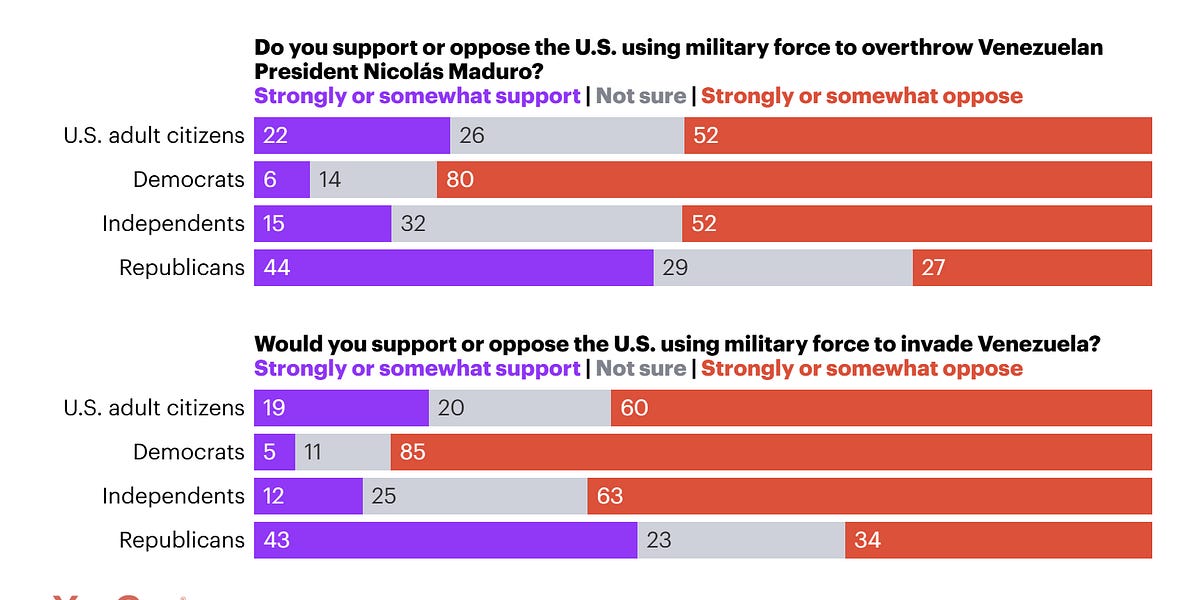
Surveys done by You Gov for The Economist just days prior to the intervention revealed clear majorities opposing military force to invade Venezuela or remove Maduro.
Only about one in five Americans supported either course of action.
Most people didn’t see Venezuela as a national crisis, and nearly three-quarters believed a president should seek congressional approval before initiating military action.
This context is crucial. The public sentiment was wary before any strikes began, not supportive.
Initial reactions will likely be driven more by curiosity than excitement. Why now? What sparked this move? What happens next? And how long will it last?
With Trump declaring that the U. S. will indefinitely “run the country” of Venezuela after capturing President Nicolás Maduro, this adds another layer of complexity to public response and political ramifications.
Americans have learned through experience that foreign interventions seldom conclude where they start. Even those who dislike Maduro or think his removal is morally justified might still have concerns about costs, risks, and setting precedents. Is this another Iraq?
The political landscape in America means partisan reactions will matter, but they may not align neatly with expected lines. Democrats are likely to voice significant criticism, especially regarding process and legality. Whether Congress authorized this move will be central in shaping its narrative. If Congress was bypassed or only informed afterward, opposition may quickly solidify, raising alarms about executive overreach.
Share
Republicans-especially MAGA Republicans-represent a more intriguing and unpredictable audience when considering political impact.
Lately, this group has shown skepticism toward foreign military actions due to a strong America First stance and weariness from endless conflicts.
Polls indicate that even among MAGA Republicans, a majority believe Congress should have input before military force is employed. This instinct now collides with loyalty towards Donald Trump and trust in his decisions.
The resolution of this tension depends on future developments. If the intervention appears quick, effective, and contained, some resistance might ease up. However, if it looks prolonged or costly without clear outcomes, even Trump’s base could revive their anti-intervention sentiments.
Was it really about oil? Is that justification valid? Does it distract from affordability issues under Trump?
The main question is whether support for Trump outweighs doubts regarding intervention or if this becomes an unusual situation where parts of his coalition feel uneasy but aren’t sure how to articulate it.
What does this mean for Canada?
The implications likely extend beyond U. S borders.
In Canada, the intervention unfolds within an environment marked by widespread disdain for Donald Trump as well as caution towards unilateral U. S.-led military actions.
<img src="https://ontariochronicle. ca/wp-content/uploads/2026/01/https://substack-post-media. s3. amazonaws. com/public/images/ac069aba-32c7-408b-ae34-c959cffa5eed_1280. jpeg" width="1280" height="720" data-attrs="{" src":" https://substack-post-media. s3. amazonaws. com/public/images/ac069aba-32c7-408b-ae34-c959cffa5eed_1280x720. jpeg"," src No Watermark": null," fullscreen": null," height":720," width":1280}" alt="" title="" loading="lazy" class="sizing-normal"/
Pierre Poilievre has praised the outcome in Venezuela while framing Maduro’s exit as a good thing.
But supporting a Trump-led intervention which many around the globe (and I suspect most Canadians-including those vital Baby Boomers watching these events unfold on TV) view with skepticism may not offer all the political benefits some expect.
</ Get 20% off for 1 year<img src=" https://ontariochronicle. ca/wp-content/uploads/ 2026/01/ https://substack-post-media. s3. amazonaws. com/public/images/ 079d88f4-232f-4ed7-bdaa- 6137ff43ac13_1175. jpeg" width=" 1175" height=" 769" data-attrs="{& qout;"src"& qout "https:/subtack-pos….”t”
..![]() ..….. ‘.. ‘..’….’ .. }….)….. [ad 2]
..….. ‘.. ‘..’….’ .. }….)….. [ad 2]
Source link
In Canada, the intervention unfolds within an environment marked by widespread disdain for Donald Trump as well as caution towards unilateral U. S.-led military actions.
<img src="https://ontariochronicle. ca/wp-content/uploads/2026/01/https://substack-post-media. s3. amazonaws. com/public/images/ac069aba-32c7-408b-ae34-c959cffa5eed_1280. jpeg" width="1280" height="720" data-attrs="{" src":" https://substack-post-media. s3. amazonaws. com/public/images/ac069aba-32c7-408b-ae34-c959cffa5eed_1280x720. jpeg"," src No Watermark": null," fullscreen": null," height":720," width":1280}" alt="" title="" loading="lazy" class="sizing-normal"/
Pierre Poilievre has praised the outcome in Venezuela while framing Maduro’s exit as a good thing.
But supporting a Trump-led intervention which many around the globe (and I suspect most Canadians-including those vital Baby Boomers watching these events unfold on TV) view with skepticism may not offer all the political benefits some expect.
</ Get 20% off for 1 year<img src=" https://ontariochronicle. ca/wp-content/uploads/ 2026/01/ https://substack-post-media. s3. amazonaws. com/public/images/ 079d88f4-232f-4ed7-bdaa- 6137ff43ac13_1175. jpeg" width=" 1175" height=" 769" data-attrs="{& qout;"src"& qout "https:/subtack-pos….”t”
..
Source link


