




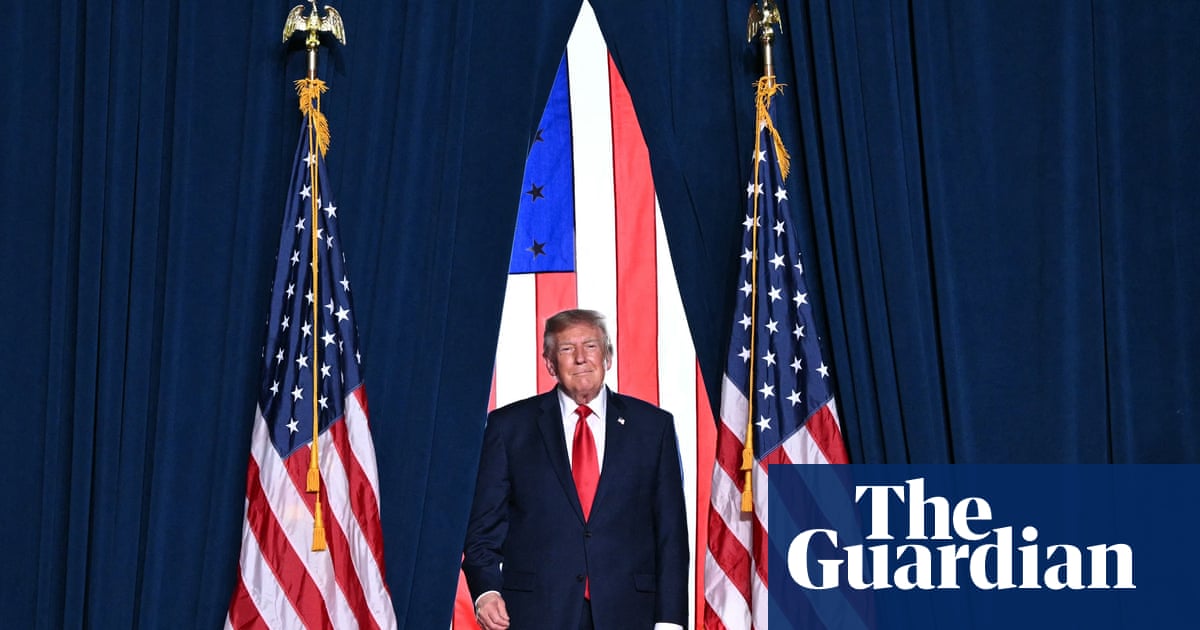
There’s a frantic vibe to Donald Trump’s hurried attempts to show he can alleviate the challenges his policies have created for struggling Americans as the midterm elections approach in November.
The US president suggested lowering restrictions on beef imports to combat rising meat prices, only to think about reversing this after pushback from cattle industry advocates. He proposed halting diesel exports but discovered that oil companies weren’t interested. He relaxed fuel efficiency rules, claiming it would lower the cost of new cars (while ignoring that it would also increase gas expenses.) In early October, he began sending out $500 checks to almost a million people while bragging about his healthcare “victories.” Plus, he assured adult Americans a $5,000 check if Republicans keep Congress. That promise likely won’t materialize either.
Faced with these obstacles, perhaps Trump felt compelled to prove he could still achieve something. However, it’s curious that the administration, through Vice-President JD Vance, chose to highlight its one tangible result: kicking over 750,000 individuals off the Affordable Care Act (ACA) health insurance marketplaces by claiming they’re ineligible for federal aid.
Trump might say these cuts align with the administration’s stated goal of restoring fiscal responsibility. But that part of their platform – which came when Treasury Secretary Scott Bessent promised to reduce the budget deficit to 3% of US gross domestic product – was never more than just talk.
The pre-midterm removal of ACA enrollees by Trump’s “fraud taskforce” seems politically reckless considering ongoing economic worries expressed by voters from both parties across the nation.
The savings expected from this ACA move are estimated at around $2.2 billion annually; however, that’s small change compared to Trump’s major fiscal initiative – the One Big Beautiful Bill Act set for 2025 that is anticipated to increase budget deficits by $4.1 trillion over ten years mainly due to tax reductions favoring wealthier Americans.
Contrary to Bessent’s claims, the budget deficit is quickly escalating and is projected to hit around $2 trillion in fiscal year 2026-about 6% of GDP and roughly 18% higher than in fiscal 2024, which will be Biden’s final year in office.
Instead of curbing budgetary losses, it appears Trump aims to extend suffering beyond the 3 million Americans who lost their health insurance after his administration terminated subsidies previously provided by Biden’s team.
Kimberly Brandt of the Centers for Medicare & Medicaid Services holds up a poster depicting a headshot of Cory Lloyd, convicted of Affordable Care Act fraud, as Mehmet Oz speaks during a conference on 22 September in Washington DC. Photograph: Andrew Harnik/Getty Images
This effort resembles strategies seen with Elon Musk’s Doge. His vow to eliminate “waste” and “fraud” likely contributed to countless children dying in developing nations after USAID was dismantled but had little effect on reducing government spending. While it may serve as a lesson in provocation rather than policy success, it’s not winning any votes.
A part of Trump seems aware of this reality. He partly funded his massive tax cut under the “beautiful” bill by slashing budgets for Medicaid and food stamp programs aimed at low-income families. Yet most cuts were timed for after midterms so their political fallout would be minimized. The idea was that lower-income voters would favor Republicans because they received slightly larger tax refunds this year and temporary breaks for overtime and tips (which are cleverly set to expire when Trump’s term ends) without realizing impending cuts affecting essential programs they depend on.
skip past newsletter promotion Free newsletter |Every weekday
Sign up to Business Today
Get set for your workday – we’ll direct you toward all necessary business news and analysis each morning
after newsletter promotion
However, recent evictions from ACA suggest that darker motives are taking charge within him. This emphasizes Trump’s belief that targeting those less fortunate could benefit him politically. Instead of promoting sound financial policies or providing support for families struggling economically or offering any coherent economic plan at all, Trump’s latest move against “fraud” indicates a strategy centered on punishing individuals he can label as “bad.” Deeply unpopular regarding his chaotic handling of economic issues among other factors, he seems convinced his last ace up his sleeve is inflicting harm upon groups disliked by his base-primarily immigrants and low-income citizens-and consequently ICE plans on adding another 5,000 agents before year’s end.
The president may be onto something here since surveys from Pew Research Center reveal about two-thirds of Republicans think aiding those in poverty does more harm than good. Despite numerous reports showing abuse committed by federal agents only 19% believe Trump’s administration has been too aggressive with deportations concerning undocumented immigrants living within America illegally. The most extreme right-wing supporters fully endorse mass deportation efforts while rejecting any notion that federal authorities should provide healthcare assistance for Americans.
Perhaps there truly lies darkness within Trump’s heart. Yet doubling down on tactics meant solely please radical elements within his base ultimately exposes how fragile Trump’s standing actually is nationwide-it seems even he realizes he’s lost much broader public support overall; targeting impoverished communities along with an unlikely $5,000 rescue attempt appears like all he’s got left.
Source link