





Experts have pointed out a “missing middle” in the care and housing options for seniors in Ontario, which could help thousands of older adults avoid long-term care waitlists and significantly reduce costs for institutions.
Enhanced Assisted Living (EAL) provides support for older adults who require more assistance than what home care offers but aren’t yet ready for a long-term care bed.
Eric Mariglia is the senior director of public affairs at Wood Green Community Services, which recently co-authored a policy paper discussing the advantages of EAL and urging the province to expand successful initiatives.
“We’re supporting clients that, without these wrap-around supports, often then end up in the hospital or put on a long-term care waiting list,” he told CBC Toronto. “We’re alleviating pressure off of the hospital, off of long-term care, and serving clients in the community where they want to be.”
WATCH | Toronto senior centre loses city funding: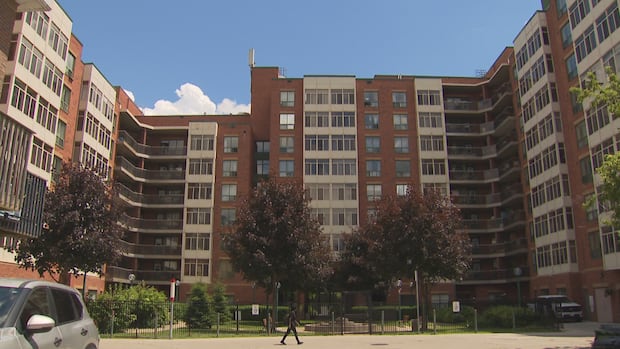
This Toronto senior centre lost its city funding. Here’s why
A group of Toronto seniors is trying to get the city to change course after a centre that provides programming lost its funding and was ordered to cease operations. CBC’s Naama Weingarten breaks down what both the city and the staff have to say about the decision.
The report – created jointly by Wood Green, the Ontario Community Support Association, and Advant Age Ontario – reviews two decades of effective EAL models but highlights that these services still operate as isolated offerings. It calls on the province to establish an official definition and provide consistent operational funding.
In response to this report, Ministry of Health spokesperson Lily Barnes mentioned recent investments from the government, including $5.6 billion this year aimed at enhancing home and community care services along with around $724 million in provincial and federal funds for community housing and other forms of assistance.
The statement did not directly address inquiries about the policy paper.
The report examined five different EAL models, such as Wood Green’s “cluster care” model – where eight to ten seniors live together in a facility offering private rooms alongside shared living spaces and 24/7 personal support workers. This approach has been shown to prevent 83 percent of residents from needing long-term care homes.
It also found that implementing widespread EAL programs would be far less costly for taxpayers compared to relying mostly on long-term care options available today.
Experts Say EAL Models Halve Costs for Taxpayer
“[EAL costs the healthcare system] about $92 to $169 per day,” Mariglia said. “That’s around half the cost of long-term care and of course a lot cheaper than those clients ending up in the hospital with nowhere to go.”
Dr. Samir Sinha, director of health policy research at the National Institute on Aging, told CBC Toronto he’s advocated for greater investment into EAL – or supportive housing services – for years.
“For a lot of my patients, it’s either you’re in your own home getting a few hours a week of home care or you end up in a nursing home. It’s one or the other,” he said. “We haven’t spent enough time in Ontario thinking about how we build out that ‘missing middle.’
“
Dr. Samir Sinha says there’s not enough focus on this senior demographic’s needs (Ousama Farag/CBC)
“When government says we’re going spend $6.4 billion building 30,000 long-term care beds that’s where all oxygen room goes,” he said.”If took fraction money invested it home community we’d actually divert thousands people ever needing those beds first place.”Lisa Levin CEO Advant Age Ontario told CBC Toronto current system creates series barriers new EAL projects.
“If you want build long term care there’s department you can go talk,” she said.”If want build hospital…you go Ministry Health talk them,” she added.”There’s no pathway get kind funding.”
Levin acknowledged most existing EAL models secured some government funding but described patchwork “knit-together” from different sources.”
She also highlighted part report shows appropriate channel new programs could rolled out across quickly. “Could take existing buildings retrofit units create cluster living model calling,” Levin said.”You don’t necessarily have construct whole new building.”
Getting done also matter urgency she added noting Ontario’s population expected grow 4 million next years-up from documented 2024.
Source link