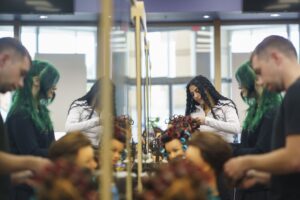



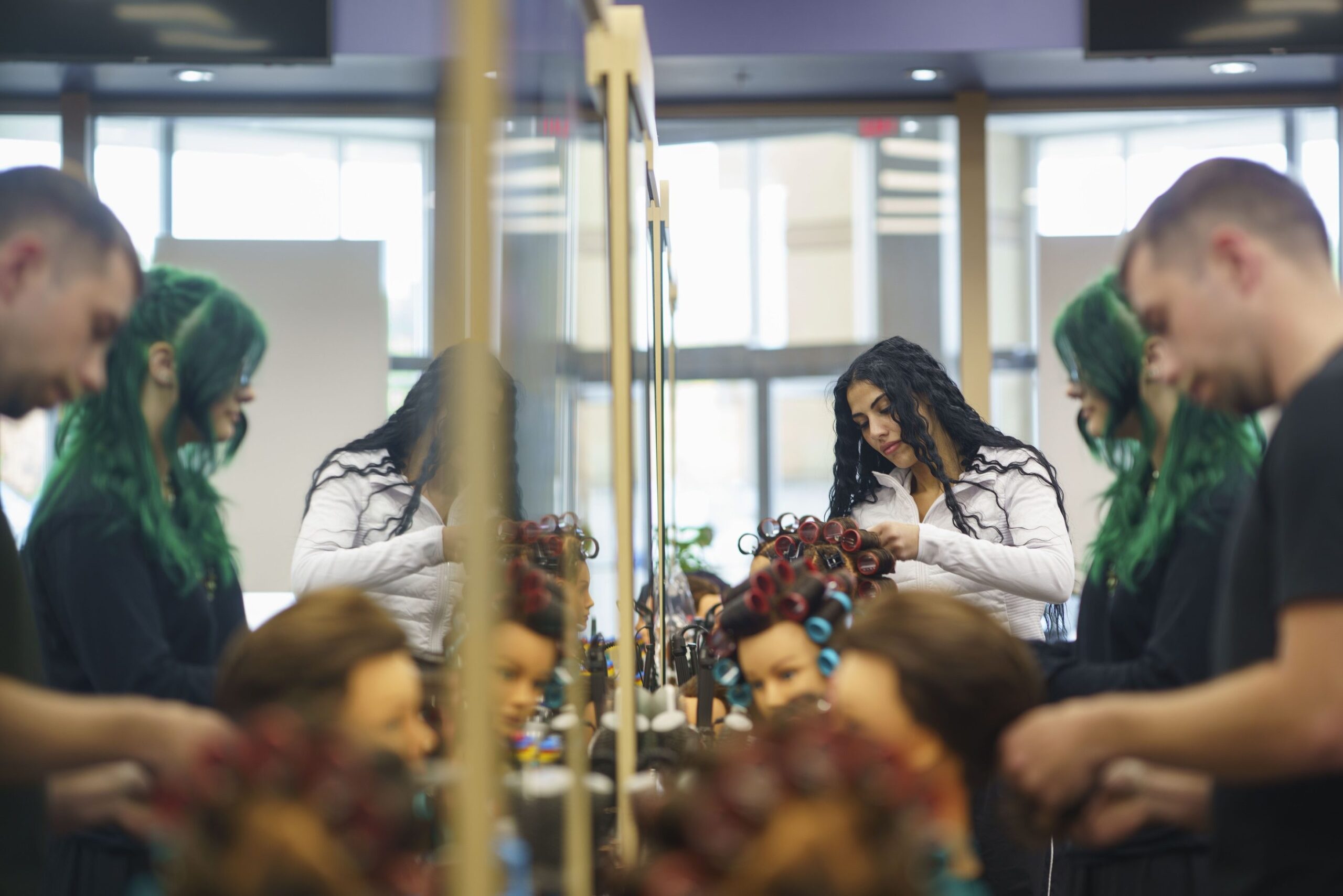
A group of twelve hairstyling students in London are worried they might have to drop out due to the government halting funding for private postsecondary schools while an audit is ongoing.
“Going forward, all private postsecondary institutions will have to meet stricter criteria before regaining OSAP eligibility,” Nolan Quinn, Minister of Colleges, Universities, Research Excellence and Security, stated on Tuesday. “Further details will be provided at a later date.”
For Nour Haidar, 27, this pause in funding could spell disaster.
As a single mother of three – with two kids under four and a six-year-old – she can’t work since starting her 40-hour-a-week hairstyling program at Beauty Academy London just a month ago. She had applied for and received approval from OSAP, the Ontario Student Assistance Program, to help cover her $16,000 tuition.
“I’m broke,” Haidar shared. “I have a negative (money) in my bank account; I can’t afford to live.
“We’ve been in this course for four weeks now, and I haven’t heard anything from OSAP.”
Without child support coming in, she depends on the province’s child tax benefit just to get by.
“It’s not enough,” Haidar remarked. “Three days after the child tax is deposited into my account I have zero dollars left.”
Maddie Grann, 21, finds herself in a similar situation.
“Most of us, including myself, haven’t been able to make any other payments,” she said. “It makes it really uncertain if I can stay in the program and pursue what I want for my future.”
The ministry has announced it is exploring options for providing low-interest loans through third parties for students at private postsecondary schools.
“We’re discussing with financial institutions to facilitate these loans,” Quinn explained. “More information will be made available to students when ready.”
Editor’s Picks
Robbie Fraser, director of the vocational school, mentioned that each year they send their lesson plan along with support and job placement data to OSAP officials.
“Every year we get it approved by the end of July for September programs – but this year the approval never came through,” he noted. “They are approving individual students for funding for our program but until our program gets approved the funding doesn’t get released.”
Twelve out of twenty-two students at the beauty school – many who left jobs to enroll – are impacted by this funding issue.
Without receiving their cost-of-living portions, students struggle with paying rent as well as childcare costs and groceries among other daily expenses according to Fraser.
If they decide to leave their courses though, students would still owe $4,000 for books and supplies.
Fraser added that without some income from students the school can’t keep operating as is.
“This isn’t sustainable long-term and soon we’ll need either payments from these struggling students or we may have no choice but to force them out of the program,” he warned.
Quinn stated that in 2024 there was an increase in complaints regarding OSAP applications at private career colleges.
“On January 15th of next year Career Colleges Ontario raised concerns about specific institutions,” he said.
In August 2026, they engaged KPMG as an independent auditor “to evaluate overall integrity issues related to OSAP applications at private postsecondary institutions.”
“Preliminary findings have identified serious concerns about integrity within OSAP’s system among private postsecondary entities,” Quinn said.
These issues include common ownership ties with immigration services firms as well as inadequate validation processes regarding student enrollment and outcomes plus unusually high concentrations of applications from specific geographic areas.
Source link