



The top candidates for Toronto’s next mayor are proposing bold ideas to tackle the housing crisis, but there’s a twist: the mayor doesn’t always have the final say.
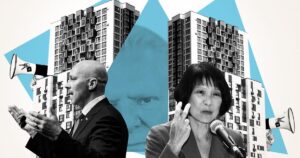
Olivia Chow is focusing on public land, non-profit housing, tenant protections, and collaborations with other levels of government. Brad Bradford is concentrating on private market construction, increasing density, speeding up development, and lowering costs for buyers.
However, neither method falls entirely within the mayor’s authority. From a campaign pledge to handing over keys to a resident in Toronto, there’s a lengthy series of decisions involved, many taking place outside of City Hall.
“Whatever the city does, it’s through the powers of the province,” stated Frank Clayton, a housing consultant and senior research fellow at Toronto Metropolitan University’s Centre for Urban Research and Land Development.
A survey conducted by Ipsos for the Toronto Regional Real Estate Board (TRREB) found that nearly 70 percent of voters consider housing to be a critical issue in this municipal election.
Gaining support from voters beyond downtown is key due to basic electoral math in post-amalgamation Toronto, according to experts.
Gaining support from voters beyond downtown is key due to basic electoral math in post-amalgamation Toronto, according to experts.
The future mayor will have significant influence over how neighborhoods are zoned in Toronto, which projects get approved, how city-owned land gets utilized, and what taxes or development fees are imposed. However, provincial regulations can alter those decisions at any time; notably more so under Ford’s administration than previous governments.
“A local politician may stand up and say they don’t like a decision, but if it’s aligned with provincial policy direction then our decisions at the city level must be consistent,” explained Gregg Lintern who served as Toronto’s chief planner from 2017 until 2023.
This leads us to ask: which candidate can truly fulfill their promises within what powers are afforded by being mayor?
Provincial Authority Takes Charge
Lintern noted that current provincial policies increasingly favor allowing market forces to drive housing development while also enforcing stricter requirements in certain areas-like mandating higher density around major transit stations.
“When the current government states there should be more density near transit stations, it’s something that cities must comply with,” Lintern said.
The Caledonia LRT station stands with Fairbank lowrise rental apartments visible just west of Caledonia Road along Eglinton Avenue.
R. J. Johnston/ file photo
He pointed out that sometimes it’s not just about following provincial mandates; there have been occasions where Toronto has implemented policies exceeding those set by the province or addressed specific challenges only for Queen’s Park later on changing regulations.
For instance , while the province allows up to three homes on one lot , Toronto extended this rule allowing four units plus backyard suites when applicable. In terms of garden suites , Lintern mentioned how city regulation initially enforced angular planes limiting neighbor impacts-but then it was removed by the province. p >
“It reached right into zoning nuances,” Lintern remarked.
He also referenced Toronto’s green-roof regulation which was initially authorized by former premier Dalton Mc Guinty allowing specifics addressing stormwater issues as well as urban heat effects ; yet after fifteen years , Ford’s administration revoked this authority. p >
Back in 2019 , changes were made by the province regarding Midtown plans affecting downtown core areas drastically altering height limitations aimed at preserving neighborhood character whilst ensuring enough infrastructure supported new developments. Those modifications resulted in taller structures being allowed -in some parts even doubling maximum building heights compared prior restrictions set forth. p >
Former chief planner Gregg Lintern asserts that provincial policy increasingly prioritizes letting markets dictate housing production.
R. J. Johnston/ file photo
Lintern recalled how numerous alterations were made without any city consultation regarding Yonge & Eglinton along with other core regions – “In my experience collaboration often shifts; however it seems constraints have intensified over time.”
He clarified this dynamic between both governmental tiers isn’t unusual yet relies heavily upon effective cooperation efforts among them.
The Star simplified
Breaking news , interactive polls , video clips & voice notes ! Follow stories you want shared directly via Whats App! P >
Jennifer Keesmaat-former chief planner from 2012-2017-now heads an urban planning consultancy firm explaining how federal/provincial resolutions significantly affect Torontonian real estate even though City Hall lacks direct control over these matters such as immigration policies impacting population growth leading towards increased demand resulting pressure on available resources.
She noted municipalities end up facing consequences stemming from higher-level decisions since they do impact urban outcomes profoundly influencing conditions present within cities themselves;
Keesmaat added seeing provinces take stronger stances lately towards matters once left mainly unto municipalities creates tension especially when pushing densification coupled alongside removing bureaucratic barriers notwithstanding unintended side effects leading slower developments occurring nonetheless ! P >
“Whenever announcements emerge stating upcoming rezoning initiatives come forth developers might hesitate investing into projects anticipating potential shifts causing uncertainty,” Keesmaat explained further emphasizing despite municipality holding several essential mechanisms like modifying zoning laws approving applications dedicated toward affordable programs implementing related taxes thus maintaining revenue streams accompanying same controls doesn’t guarantee successful completion either!”
“Collaboration remains paramount across varying governing layers!” Keesmaat concluded summing insights gathered through discussions held.”
What Actions Can Be Taken By The City Regarding Zoning Laws?
Zoning regulations along with related charges represent two vital instruments wielded here determining types permitted throughout various districts influencing prices linked accordingly!
Chow emphasizes advancing existing initiatives concerning partnerships crucially focused on facilitating progress whereas Bradford argues supporting quicker permits lowering expenses diversifying options including multiplexes townhouses amongst smaller apartment complexes desired too.
Keesmaat believes misperceptions exist believing merely obtaining approvals equates translating into tangible construction subsequently reality highlights escalating project economics particularly owing rising costs associated financing juxtaposed against charged developmental fees.”.