





TORONTO – Students enrolled in the numerous private career colleges across Ontario can no longer access financial support from the province’s student assistance program.
All grants and loans provided through the Ontario Student Assistance Program (OSAP) that students at private career colleges relied on for tuition and other expenses have been suspended until those institutions comply with stricter new OSAP eligibility standards, which have not yet been disclosed.
Students attending any of Ontario’s 24 publicly-funded colleges remain unaffected by this change.
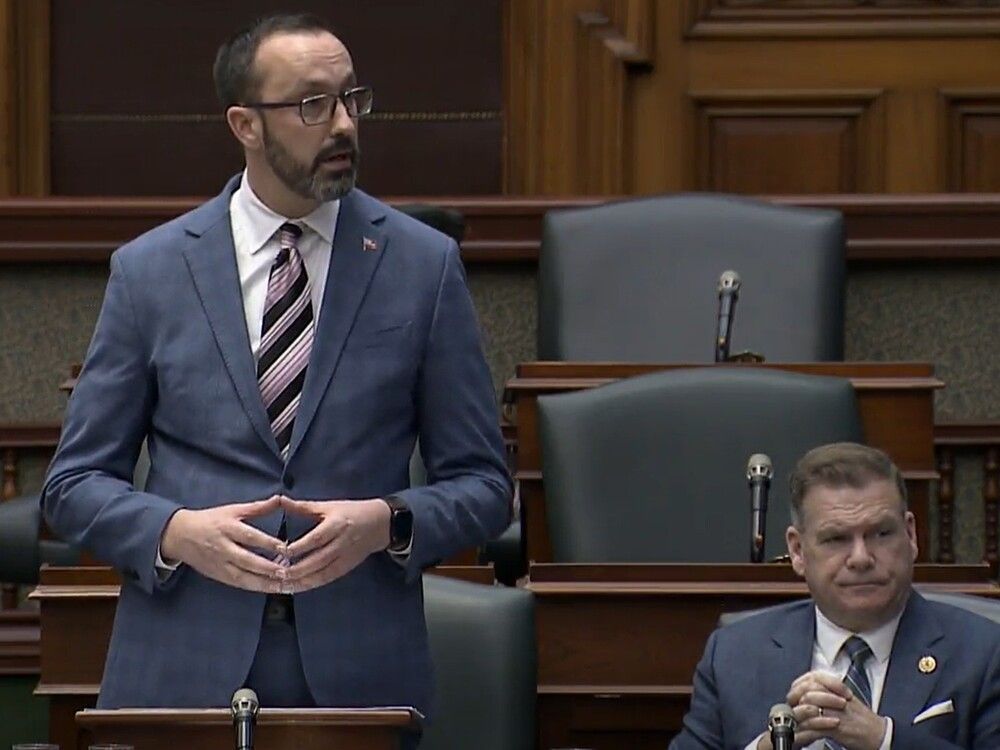
“This is not a decision we made lightly, but it is necessary to support the integrity of the OSAP system,” said Colleges and Universities Minister Noalan Quinn on Tuesday.
“While this may seem like a drastic measure, let me be clear: It was an entirely necessary one.”
Private career colleges are independent institutions offering shorter, practical courses designed to prepare students for specific careers. They were also involved in the federal government’s recent restrictions on international students coming to Canada.
Quinn acknowledged that this decision could “likely have an impact on enrollment and therefore on financial viability of certain institutions,” but emphasized it was needed in a sector where “OSAP usage and enrollment have grown out of control.”
“Especially for institutions that may have misused OSAP,” added Quinn.
“Any misuse of OSAP is entirely unacceptable. It is an affront to students, to taxpayers and to the integrity of our world-class post-secondary system.”
Editor’s Picks
The Ford government has also requested that the Ontario Provincial Police investigate concerns raised during multiple reviews and audits of career colleges since late 2024. The minister referred to these issues as “criminal allegations” but did not clarify what specifically they want the OPP to look into. However, he mentioned that reviews revealed problems such as:
The involvement of immigration services firms. Co-location between private career colleges and immigration recruitment or immigration services firms. Inadequate student validation and verification regarding course enrollment and outcomes. Unusually high concentrations of OSAP applications submitted from similar geographic areas.
Another concern involves online classes where student attendance isn’t clearly documented.
Quinn indicated that plans are underway to introduce legislation this fall making online programs at these career colleges ineligible for OSAP.
In 2020, the Ford government eliminated OSAP’s requirements for in-person instruction. Initially intended as a temporary solution during the COVID-19 pandemic, it has remained unchanged until now.
Quinn stated that while they stand by that decision, “bad actors have taken advantage” of it.
To ensure that students relying on financial aid aren’t left stranded, the government is negotiating with unnamed financial institutions to offer “low-interest, third-party loans” for those attending career colleges, according to Quinn. However, it’s unclear when these loans will become available.
Student groups express concern that many young individuals are already juggling multiple jobs or scaling back their education plans due to previous changes made by the province regarding OSAP-most financial aid under this program has shifted from grants into loans needing repayment instead of being free money.
“Students should not be expected to take on a significant amount of debt at 17, 18, or 19 years old simply because they chose to pursue an education,” said Marian Saleem, president of the Mc Master University Students Union earlier this week.
MPP Tyler Watt, who critiques colleges and universities for Liberals at Queen’s Park, expressed his belief that previous reforms made by the government regarding OSAP were driven by underlying issues within some private career colleges.
“Instead of cracking down on (a few) private career colleges at the centre of OSAP spending increases, the government took a hatchet to a problem that required a scalpel and ruined OSAP for everyone,” noted Watt.
Quinn maintained that there are no plans currently being considered to reverse any prior changes related to OSAP.
(“These are separate conversations,” he clarified.)
Source link