





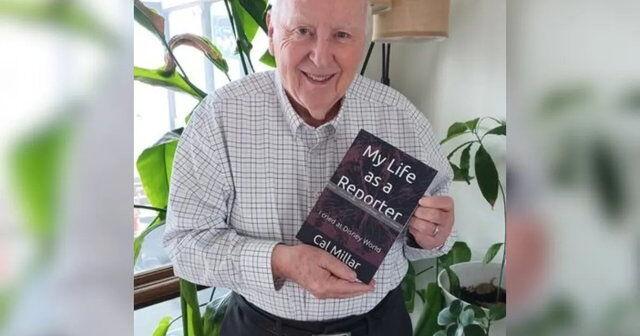
Most folks don’t think about how a news story gets onto the page. But for Cal Millar, former reporter, the journey from tip-off to headline has always been a story worth sharing. Now 82, Millar reveals his experiences in his new memoir, My Life as a Reporter, providing an insider’s view of the craft, chaos, and camaraderie behind the byline.
Millar started his journalism career in 1965 when he transitioned from sports reporting in Chatham to covering news at the ’s Leamington Bureau. “I like to be out and about,” he laughs as he reminisces about those early days. It was a smart choice-leaving the Greater Toronto Area for Essex County opened up more opportunities, more action, and some unforgettable stories.
He has fond memories of working with the people at the Star. “The editors were phenomenal. They believed in hiring young reporters fresh out of J-School, and that meant tremendous opportunity.” He credits those initial years filled with support from seasoned editors and guidance from experienced reporters as essential to his growth.
However, it wasn’t all fun and games in the newsroom. Millar faced his first major challenge just before Christmas 1966 when a school bus accident near Windsor rocked the community. A dump truck lost control on ice, flipped over, and dumped 25 tons of sand onto a bus full of children. Eight kids lost their lives while 16 others survived thanks to brave emergency crews. This December marks 60 years since that tragedy.
“That was one of my first stories…and it was horrific,” Millar remembers. “I had no idea how serious it was-it was mayhem.” Yet amid all this chaos, he uncovered the heart of the story: the bus driver who shared heartfelt memories of the children he’d transported for years. “He just opened his heart to me. It was Christmas time. That kind of access, that trust is something reporters were given back then.”
Another early assignment took him into a storm in Wheatley. “There wasn’t any rolling news coverage or cell phones back then. I remember sitting in a local family’s kitchen calling in my report while waves washed away their porch.”
He recalls standing outside houses and fields jotting notes down quickly while racing against deadlines. Finding a phone booth to report stories became part of everyday life.
Working at the Star as a solo reporter in Leamington was both tough and fulfilling. “You had to dig deeper for those hidden human-interest angles that others might miss-and one story always seemed to lead into another.”
After Windsor came an opportunity at Toronto Telegram-the largest paper in Canada at that time. When it closed down, he helped start up and later joined it again where he reported on significant events throughout the late 20th century.
From covering devastating tornadoes in Edmonton back in ’87 to reporting on a tragic schooner sinking off Bermuda, Millar often found himself amidst breaking news stories. But nothing compared to September 11th, 2001; he was en route to New York when his assignment changed unexpectedly directing him toward Shanksville, Pennsylvania where United Airlines Flight 93 crashed.
“I filed that story using a Radio Shack TRS-80 computer-what a game changer! It had an eight-inch screen with a telephone coupler; you’d just hope your connection would hold steady. Before this technology existed you dictated every single word over phone calls to rewrite desks.”
The industry has seen huge changes according to Millar’s observations: “The speed at which news travels today is astonishing-everyone’s trying hard to break stories faster than ever before! But some basics remain unchanged-building close connections with sources who have inside info-that’s what makes someone great at this job.”
He does worry about what’s missing these days: “Local coverage isn’t what it used to be anymore; our industry is still looking for new business models while obtaining information freely can be tricky due growing privacy issues.”
So does he have any tips for aspiring journalists?
“There are still chances out there but you need flexibility-one piece written across multiple platforms works best nowadays! Keep being curious! Ask tough questions; don’t take ‘no comment’ easily-digging deeper can lead you somewhere valuable! And understand it’s demanding work-you’ll miss lots during family life-you’re almost never off duty even when home-it’s not always stable but honestly? For me personally? It’s been such an amazing adventure!”
The essence behind My Life as a Reporter goes beyond mere headlines; it’s truly focused on trust between reporter & source along with seeking truth through compelling storytelling! Cal Millar reminds readers that each byline hides someone passionate about crafting great narratives-a reporter armed only with their notebook & deadline!
You can find My Life as a Reporter on Amazon.
If you’d like reach out directly? Cal Millar is available via email at cal. millar@sympatico. ca.
Source link