



The cycle of animosity
The cycle of animosity, created by our research team at the Canadian Institute for Advanced Research BMB Program, sheds light on why negative feelings towards Americans intensified so rapidly in Canada and why these sentiments might endure. This cycle illustrates how social, political, and historical factors can perpetuate hostility over time. (Canadian Institute for Advanced Research BMB Program), CC BY-NC Animosity isn’t just an impulsive feeling that appears out of nowhere. It arises from a mix of social, political, and historical circumstances. These factors can be cultivated and driven by individuals and institutions. This cycle consists of four connected elements: the current context, a call to arms, justification, and history. Once initiated, these elements feed into one another continuously-making it harder to overcome hostility.The current context
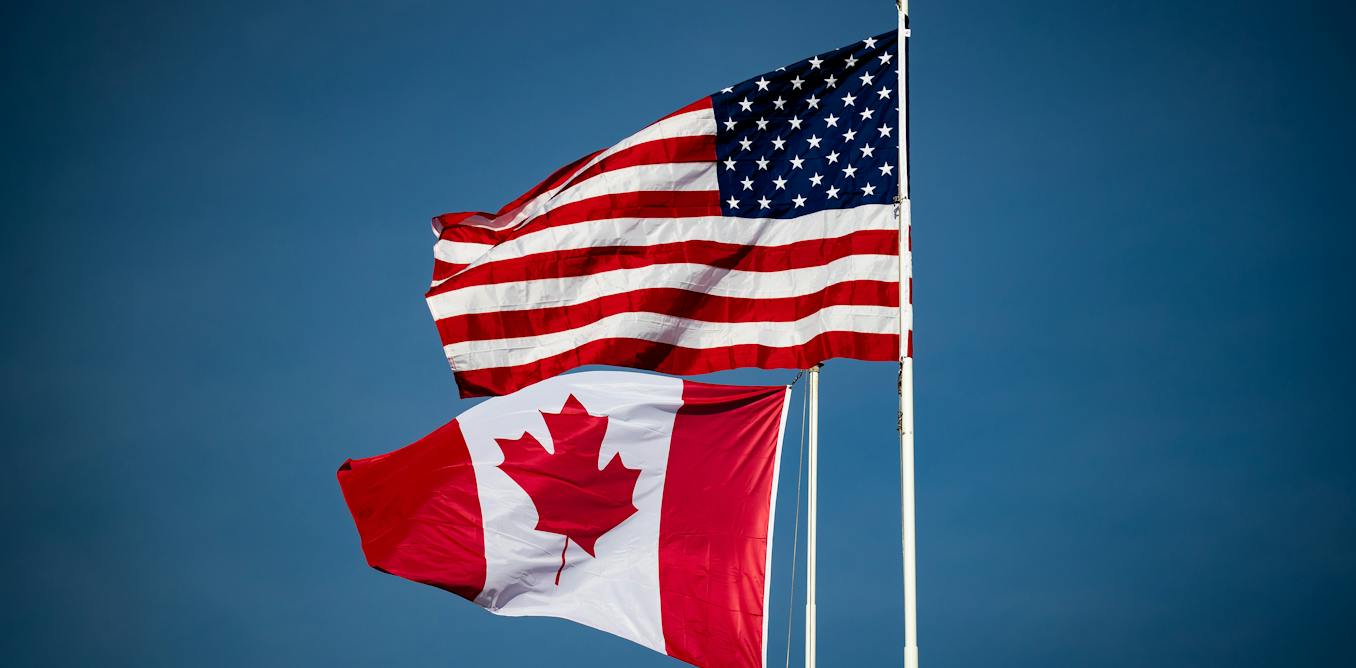
The present state of Canada-U. S. relations includes many conditions that can ignite hostility: perceived threats to identity and shared values, competition alongside loss, feelings of powerlessness, and uncertainty. U. S. President Donald Trump has often suggested that Canada should become America’s 51st state while sharing maps depicting Canada under the American flag. He has also referred to Canada’s Prime Minister as “governor.”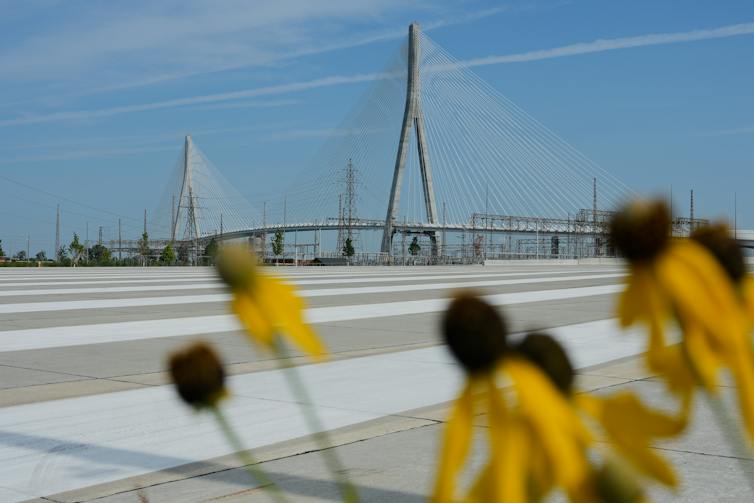 The Gordie Howe International bridge connecting Detroit and Windsor is shown on July 24, 2026. (AP Photo/Paul Sancya)
These remarks challenge Canada’s sovereignty status along with Carney’s role as head of an independent nation. Many Canadians perceive these statements as threats against their identity or breaches in diplomatic norms between friendly neighbors.
Simultaneously, American tariffs have heightened feelings related to economic rivalry and insecurity. Polls indicate growing frustration among Canadians coupled with anger along with anxiety about their situation-these emotions can quickly escalate negative sentiments toward Americans.
The Gordie Howe International bridge connecting Detroit and Windsor is shown on July 24, 2026. (AP Photo/Paul Sancya)
These remarks challenge Canada’s sovereignty status along with Carney’s role as head of an independent nation. Many Canadians perceive these statements as threats against their identity or breaches in diplomatic norms between friendly neighbors.
Simultaneously, American tariffs have heightened feelings related to economic rivalry and insecurity. Polls indicate growing frustration among Canadians coupled with anger along with anxiety about their situation-these emotions can quickly escalate negative sentiments toward Americans.
A call to arms
As threatening situations arise within this context comes the next phase-a “call to arms.” This happens when leaders rally people around defending themselves against what they perceive as threats. In response to rising tensions with the U. S., Canadian political leaders have used language highlighting resistance against competition or danger. Carney has claimed that Canada is engaged in a trade war with America that wasn’t initiated by us. “You’re at war when you get attacked. We got attacked.” The hockey phrase “Elbows Up” popularized by comedian Mike Myers was adopted by Carney as representing Canada’s need for self-defense against American aggression-a strategy reinforcing resilience themes during politically charged times. There have also been instances showing resistance such as boycotts against American goods or travel cancellations to the U. S. When there’s a rallying cry established , the following stage involves rationalizing hostility. Hostility becomes easier to sustain when framed as necessary. Current reasons behind anti-American sentiment often hinge upon moral arguments. Hatred appears justified because Canada aims to protect its sovereignty , values , and dignity. Movements like “Buy Canadian” or “Don’t Travel To The U. S.” assume patriotic undertones where resisting is presented by some as civic duty.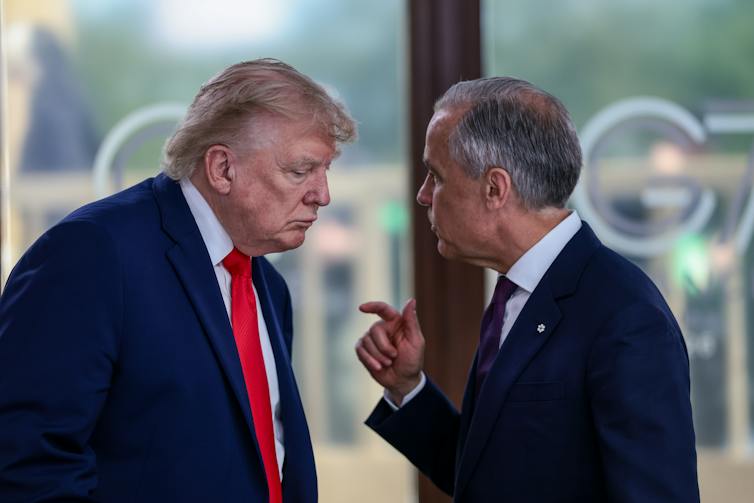 Carney talks with Trump during lunch among G7 leaders in Evian-les-Bains on June 16 ,2026. (Evelyn Hockstein/Pool Photo via AP)
Canadians haven’t widely dehumanized Americans ; however , similar things cannot be said regarding Americans themselves. For instance , recently U. S Treasury Secretary Scott Bessent compared Canada to yappy little dachshund attempting battle against German Shepherds.
Such comparisons strengthen perceptions involving disrespect deepening antagonism existing between groups.
Carney talks with Trump during lunch among G7 leaders in Evian-les-Bains on June 16 ,2026. (Evelyn Hockstein/Pool Photo via AP)
Canadians haven’t widely dehumanized Americans ; however , similar things cannot be said regarding Americans themselves. For instance , recently U. S Treasury Secretary Scott Bessent compared Canada to yappy little dachshund attempting battle against German Shepherds.
Such comparisons strengthen perceptions involving disrespect deepening antagonism existing between groups.
The past
The fourth part within this cycle entails history : how present conflicts become embedded into group identities forming collective memories. Ongoing tensions may integrate into Canadian historical narratives wherein it sees itself having resisted pressures originating from America. As former MP Charlie Angus articulated :When disputes become part collective memory they continue influencing attitudes long after original incidents fade away.“We are making history right now. And our grandchildren will hear stories regarding how we conducted ourselves. They’ll learn about standing firm defending lands knowing what elbows up signifies amidst injustices ”.
Busting out from animosity’s grip
Some analysts argue both nations find themselves entrenched within positions making worsening public opinions likely blocking paths back toward dialogue table opportunities.Should this cycle persist Canadian public might prefer staying stuck here rather than confronting these issues directly; yet being ensnared doesn’t mean viewing Americans permanently adversarial shouldn’t happen either.
< Marking focus around mutual identities could aid breaking free from hate cycles; recognizing both countries share interdependence ensuring well-being together ; strengthens relationships overall irrespective events bringing tensions previously faced. Emphasizing this inclusive identity alongside valuing cooperation must occur whenever circumstances shift allowing them regain trust once more going forward!
Source link