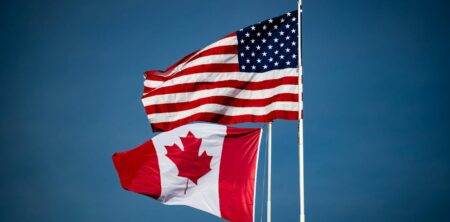



WASHINGTON – Relations between the U. S. and Canada, already strained, are expected to worsen after the United States implemented a ban early Tuesday on nearly $1 billion worth of Canadian imports, including alcoholic drinks, dairy items, and motorcycles.
Though this ban represents a minor issue in the context of $880 billion in annual trade between the two nations, it signals another escalation in President Donald Trump’s trade conflict with a long-standing ally.
Trade attorney Patrick Childress, who is a partner at Holland & Knight and previously worked as a U. S. trade official, said the import ban “certainly won’t do anything to help the trade tensions between the United States and Canada.”
The recent conflicts began over the summer when Trump invoked an old law from the Great Depression to impose 50% tariffs on around $20 billion worth of Canadian goods, claiming that Canada unfairly discriminates against American dairy, auto, and alcohol producers. In response, Canada enacted its own tariffs ranging from 15% to 50%, countering U. S. imports dollar for dollar.
To retaliate against Canada’s actions following his tariffs, Trump opted to ban certain Canadian products starting at 12:01 a. m. Eastern time on Tuesday.
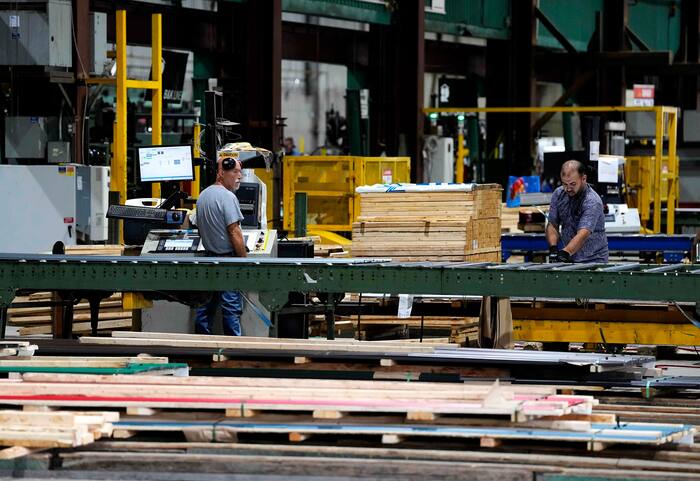
The economic effects are expected to be minimal. Childress pointed out that many of the banned items were already facing Trump’s tariffs. “For a lot of these goods, the 50% was already acting as a de facto ban by making importation from Canada into the United States uneconomical,” he noted.
Jacob Jensen from the American Action Forum estimates that this ban will cover about $967 million worth of Canadian imports according to projections for 2025. Out of this amount, around 87% consists of alcoholic beverages targeted due to some Canadian provinces responding to Trump’s provocations by blocking U. S. liquor from their stores.
The list also includes some dairy products – such as whey protein. The two countries have had ongoing disputes over Canada’s efforts to safeguard its dairy sector through high tariffs once dairy imports surpass specific quotas.
Motorcycles are included in this import ban as well. Bombardier Recreational Products (BRP) based in Quebec confirmed that its Can-Am Spyder and Canyon three-wheel motorcycles “will be excluded from importation into the U. S.” However, BRP mentioned that any impact may not be felt until next year since most production and shipments for this season have been completed.
“This marks yet another escalation in the trade war that may result in further retaliation on the Canadian side,” Jensen stated. He anticipates that both Canadian exporters and U. S. importers affected by these bans will be eager for officials on both sides to find some sort of resolution for this situation.
This stalemate threatens efforts to renew the US-Mexico-Canada Agreement (USMCA), which Trump pushed hard for during his first term and touted as “the most modern, up-to-date, and balanced trade agreement in our country’s history.”
The agreement allowed most goods to move across North American borders without duties but since returning to office last year, Trump has introduced various tariffs clouding future trade prospects in this region.
Trump has mainly directed his criticism toward Canada while openly encouraging manufacturing jobs to shift southward. His comments suggesting Canada should become America’s 51st state have only intensified public sentiment against him there.
Canadian Prime Minister Mark Carney took office last year vowing to stand firm against Trump’s policies. Besides retaliating against Trump’s tariffs – with China being another nation taking similar action but with different outcomes – Carney has aimed at decreasing Canada’s dependence on U. S., which made up over 70% of Canadian exports last year.
“There is now a price to be paid for access to the United States market,” Carney remarked earlier this month while expressing ambitions of doubling non-U. S. trading partnerships within ten years.
Carney is open about exploring possibilities for Canada becoming an associate member with the European Union.
Source link